
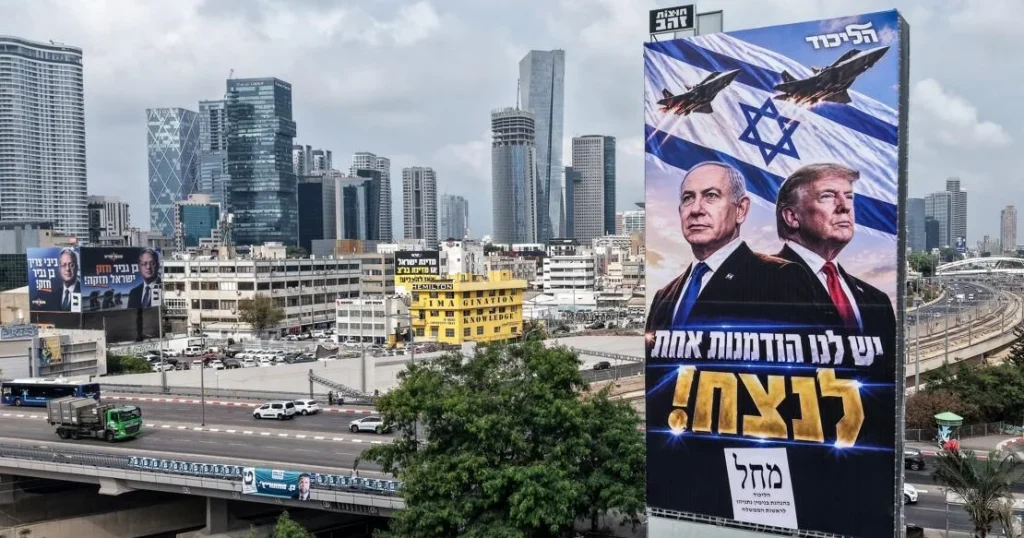
Israel’s Election Could Decide Netanyahu’s Future
Wertynews.com – Israel s election is wide open, with voters choosing a government after years dominated by war and regional instability. The result could determine whether Prime Minister Benjamin Netanyahu remains in office or whether a broad opposition coalition can replace him.
Polling has pointed to an extremely tight race. Right-leaning surveys have shown Netanyahu’s religious and right-wing bloc ahead, while polls linked to the left have given an advantage to parties seeking to end his leadership. Neither side is consistently projected to secure the 61 seats needed for a majority in the 120-seat Knesset.
If no bloc reaches a clear majority, Israel could face difficult coalition negotiations, a minority government, cross-party compromises or another election.
“It looks like an indecisive outcome is the most likely outcome,” said Yohanan Plesner, president of the Israel Democracy Institute.
Security Dominates Israel’s Election Campaign
This is Israel’s first national election since the Hamas attacks of Oct. 7, 2023, which authorities have described as the country’s most serious security failure since Israel was established in 1948. The vote comes as Israel remains involved in conflicts connected to Gaza, Lebanon and Syria, after two direct rounds of confrontation with Iran.
Netanyahu has argued that further confrontation with Iran may be necessary. He has presented the election as a choice over who can manage Israel’s security during a period of continuing uncertainty.
For many voters, the war in Gaza, military policy, Iran’s nuclear ambitions and Israel’s relationship with the United States are central concerns. Israel s election is wide in its consequences because it may shape both domestic leadership and the country’s approach to these security challenges.
Netanyahu Seeks Another Right-Wing Coalition
Netanyahu, Likud’s leader and Israel’s longest-serving prime minister, is trying to build a coalition similar to his current government. His political strength depends heavily on ultranationalist and Jewish religious parties.
His campaign has focused on two main points: forming a government without Arab parties and maintaining leadership continuity during the conflicts involving Gaza, Lebanon and Iran. Netanyahu argues that Israel’s military campaigns are unfinished and require experienced leadership.
President Trump endorsed Netanyahu late in the campaign, reaffirming support for the war the two leaders launched jointly against Iran nearly eight months earlier. Trump also suggested that continued American involvement could depend on Netanyahu remaining in office.
“If Israel has the wrong Leader, which would be anyone other than Bibi, America will have to do this work ourselves, and I am not inclined to do so,” Mr. Trump said.
Netanyahu has used the endorsement to support his argument that he is best positioned to work with Trump and prevent Iran from obtaining a nuclear weapon. Many Israelis see that possibility as an existential threat.
His Hebrew campaign slogan frames the choice starkly: “Either right wing or Palestine, either right wing or a nuclear bomb.” Netanyahu also shared an AI-generated image of a mushroom cloud over Tel Aviv, repeating his warning about Iran.
Opposition Faces Its Own Coalition Test
The parties opposing Netanyahu include Arab, centrist, left-wing and right-wing groups. Their shared objective is to remove him from power, but their ideological differences could make governing together difficult.
Former Israeli military chief Gadi Eisenkot is the leading candidate to head an anti-Netanyahu coalition. As leader of the centrist Yashar party, he brings military credentials and personal experience of the Gaza war: his son and two nephews were killed while serving there.
Eisenkot also served with Netanyahu in Israel’s war cabinet during much of the first year of the Gaza conflict. That background may appeal to voters looking for a security-focused alternative to the prime minister.
FAQ: What Could Happen After Israel’s Election?
How many seats are needed to form a government?
A governing coalition usually needs support from at least 61 members of the 120-seat Knesset.
Why are coalition talks so important?
Israel’s political system includes many parties, so the largest party often cannot govern alone. Coalition agreements can decide who becomes prime minister and what policies a government pursues.
Could Israel hold another election?
Yes. If competing blocs cannot form a stable government, Israel could return to the polls. That possibility is one reason Israel s election is wide open despite intense campaigning by both sides.