
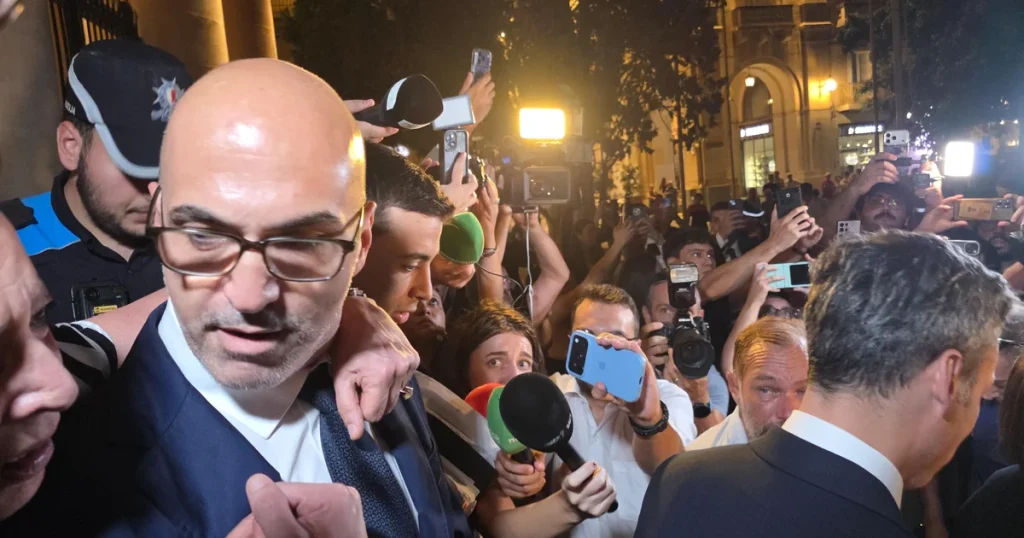
Malta’s Longest-Running Murder Trial Ends Without a Conviction
Wertynews.com – In a verdict that will deepen the wound already inflicted on Malta’s public trust in its institutions, a jury in Valletta returned an acquittal on Wednesday for Yorgen Fenech, the wealthy businessman prosecutors had identified as the architect of the October 2017 car-bomb assassination of investigative journalist Daphne Caruana Galizia. The panel voted 8-to-1 to clear Fenech on both counts — complicity in murder and criminal conspiracy — closing what had been the final prosecution in a case that consumed nearly a decade of national attention.
The outcome lands in a country still grappling with the aftershocks of that killing. Caruana Galizia’s murder did not merely remove a single voice from Maltese public life; it detonated a political crisis that ultimately forced the resignation of then-Prime Minister Joseph Muscat and laid bare what observers described as a systemic tolerance for impunity in the European Union’s smallest member state.
The Journalist Who Became a Target
Caruana Galizia, who was 53 at the time of her death, had built a reputation as a relentless expositor of corruption in Malta’s intertwined political and commercial spheres. Her investigative reporting zeroed in on figures within Muscat’s inner circle, alleging that they held offshore entities in tax havens — details later corroborated by the Panama Papers disclosure. She also scrutinized opposition politicians and corporate leaders, earning the moniker “one-woman WikiLeaks” from those who admired her output.
At the moment the bomb was detonated beneath her vehicle on October 16, 2017, as she drove near her residence, Caruana Galizia was already navigating more than 40 libel actions filed against her. The cumulative pressure of those suits, combined with the personal animosity her reporting generated, painted a picture of a journalist increasingly cornered by the very subjects of her work.
Her son Paul described the atmosphere surrounding her final months in a 2018 interview with “60 Minutes”:
“She knew that the powerful people that she was writing about were closing in on her. They were using every possible means to shut her down. She knew that, and that frightened her deeply.”
Her other son, Matthew Caruana Galizia, offered a different lens in a 2020 conversation with the same program, suggesting that her gender shaped how certain targets responded to her reporting — that being a woman investigating entrenched male power structures in a small island society added a layer of vulnerability.
The Trial and Its Verdict
Fenech, among the wealthiest individuals in Malta, had been indicted in 2021 after years of investigation. Prosecutors contended that he had ordered the killing and personally financed it. He maintained his innocence throughout. His earlier arrest in 2019 — carried out while he was aboard his yacht departing Maltese waters — had ignited mass street protests that persisted until Muscat stepped down from office.
Fenech had also been linked to a consortium that secured a contentious government contract to construct a power station, a connection prosecutors wove into their narrative of motive and opportunity. He was the final defendant among roughly six individuals charged in connection with the plot to reach a courtroom.
Outside the Valletta courthouse on Wednesday, the scene turned volatile. Jeers greeted Fenech as he exited, and the opposition Nationalist Party organized a silent march later that evening. One of his counsel, Gianella De Marco, told reporters the family of lawyers welcomed the outcome:
“We are happy that justice has prevailed.”
De Marco added that the verdict reflected the jury’s skepticism toward a principal prosecution witness who had received a presidential pardon in exchange for his testimony — a fact that will fuel debate over whether the state’s own clemency power compromised the integrity of the case.
Family and Opposition React
Caruana Galizia’s sons were present in the courtroom when the verdict was read but departed without addressing reporters. Hours later, the family issued a statement on Facebook, framing the acquittal not as closure but as a continuation of institutional failure:
“Nine years after Daphne’s brutal assassination, the institutional failures that enabled her murder remain unaddressed and unreformed. Lasting justice means no person should ever face the same risks again. Our country failed to protect Daphne. It owes it to her to prevent other lives being lost.”
The Nationalist Party, in its own statement accompanying the silent march, said it respected the jury’s decision while pressing for answers about who ultimately ordered the assassination:
“After years of investigations, inquiries and judicial proceedings, justice has still not reached where it needed to reach — neither for Daphne’s family nor for our country.”
What the Acquittal Means for Malta
An independent commission of inquiry published in 2021 had concluded that the Maltese state “has to bear responsibility” for the assassination, attributing the killing to a culture of impunity radiating from the highest echelons of government. The commission stopped short of finding direct state involvement in ordering the murder but determined that the political environment created a “favorable climate” in which such a killing could be planned and executed. The acquittal of the last remaining defendant now leaves that finding without a corresponding criminal conviction to anchor it.
For a nation of roughly half a million residents, where personal relationships between political leaders, business figures, and media personalities are difficult to insulate from one another, the verdict raises questions that extend beyond a single case. It asks whether Malta’s judicial architecture can withstand the pressure of well-resourced defendants, whether presidential pardons granted to cooperating witnesses erode prosecutorial credibility, and whether the libel-suit machinery that Caruana Galizia endured in life continues to operate unchecked in practice.
The former prime minister and his wife, Michelle Muscat, had publicly denied holding any Panamanian entities. That denial, offered years after the Panama Papers revelations, remains part of the unresolved factual landscape surrounding the case.
For now, the question Malta must answer is not whether one jury reached the correct verdict on two counts, but whether the structures that allowed a journalist to be silenced — and then allowed the case to drag on for nearly a decade without producing a conviction — will be reformed before the next story is never told at all.
Related Reading
Frequently Asked Questions
What is Malta businessman found not guilty in car?
Malta businessman found not guilty in car is the main topic of this guide. The article explains the context, practical details, and next steps readers should understand.
Why does Malta businessman found not guilty in car matter?
Malta businessman found not guilty in car matters because readers are looking for a useful answer, not just a short summary. Good content should match search intent and help them decide what to do next.