
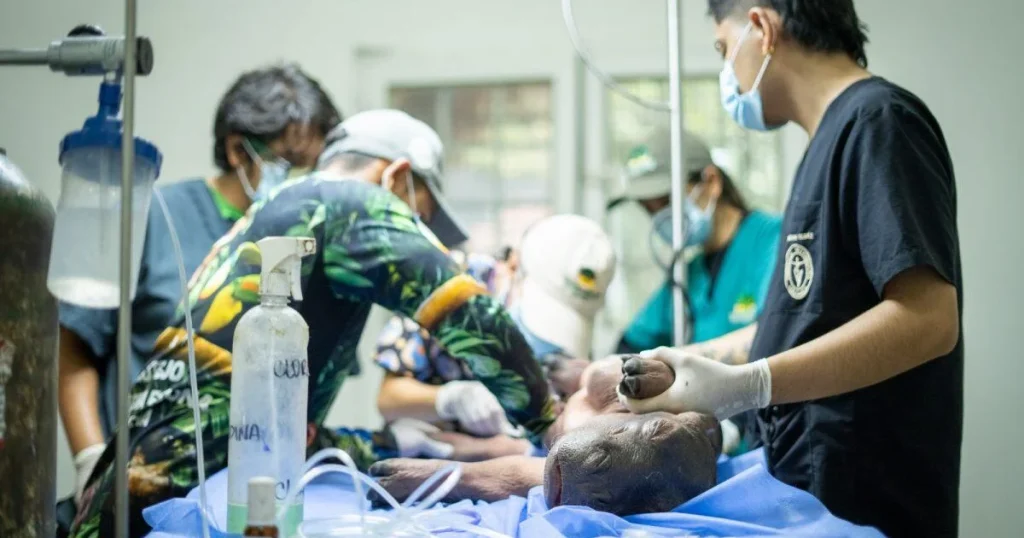
Rescue of Newborn Cocaine Hippo Linked to Drug Lord Pablo Escobar in Colombia
Wertynews.com – Authorities in northwestern Colombia have successfully rescued a newborn cocaine hippo linked to drug lord Pablo Escobar, marking another chapter in the remarkable story of these African animals that have made Colombia their home. The tiny hippopotamus was discovered alone by local fishermen on the banks of a river, showing clear signs of malnutrition and dehydration. This rescue highlights the ongoing challenges faced by Colombia’s growing hippo population, which continues to expand despite various management efforts.
Colombia is home to approximately 200 so-called “cocaine hippos” living in the wild, according to the Environment Ministry. All of these animals descended from a colony originally brought to South America by the slain cocaine kingpin Pablo Escobar in the 1980s for his private zoo at Hacienda Napoles. After Escobar’s death in 1993, the animals escaped and settled along the banks of the Magdalena River, where they have since disrupted the local ecosystem and even attacked residents on occasion.
Discovery and Treatment of the Newborn Hippo
Fishermen found the small hippo separated from its mother and hidden in the bushes along the riverbank in a rural area of the Puerto Nare municipality in Antioquia, said Javier Valencia, director of the regional environmental authority, in a statement on Tuesday. The discovery came as a relief to local conservationists who have been monitoring the hippo population in the region.
Veterinarians immediately began treating the newborn for “advanced dehydration and malnutrition,” according to an official statement. After being stabilized, the animal was transferred to a hippo sanctuary at Hacienda Napoles, the estate previously owned by Escobar and which is now a popular theme park. This location holds special significance as it is where the original hippo colony was established decades ago.
Independent journalist Audrey Huse, who has lived in Colombia for years, previously told CBS News that because the hippos roam freely, they end up killing fish and threatening endemic species like manatees, otters and turtles. “Because they have no natural predators here, as they would in Africa, the population is booming and it’s affecting the local ecosystem,” Huse said. “Because they are such large animals, they consume considerable amounts of grassland and produce significant waste, which then poisons the rivers.”
The government has taken several measures to address the growing hippo population. They are now considered an invasive species and are destabilizing native ecosystems, prompting the government this year to approve a plan to cull around 80 of them after attempts to curb their reproduction through sterilization failed. The government previously arranged for the possible transfer of hippos to overseas sanctuaries, though the cost of deporting the hippos is also expensive — an estimated $3.5 million.
FAQ: Understanding Colombia’s Cocaine Hippos
Q: How did hippos end up in Colombia? A: Pablo Escobar imported four hippos in the 1980s for his private zoo at Hacienda Napoles. After his death in 1993, the animals escaped and established a wild population.
Q: What is the current hippo population in Colombia? A: Colombia has around 200 so-called “cocaine hippos” living in the wild, making it the largest hippo colony outside Africa.
Q: What threats do these hippos pose to the ecosystem? A: The hippos kill fish, threaten endemic species like manatees and turtles, consume large amounts of grassland, and produce waste that poisons rivers.
Q: What measures is the government taking? A> The government has approved a plan to cull around 80 hippos and previously arranged for possible transfer to overseas sanctuaries.