
North Korea Continues Weapons Tests With Missile Launches
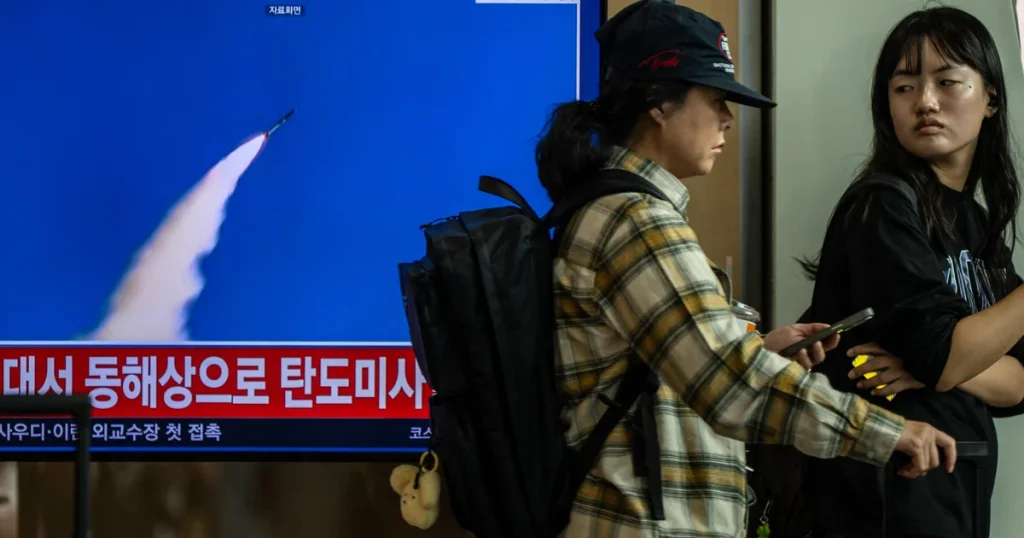
Wertynews.com – North Korea continues streak of weapons tests after launching multiple ballistic missiles toward waters off its east coast on Monday, according to South Korean and Japanese officials. The activity adds to concern across the Korean Peninsula as diplomacy between Pyongyang, Seoul and Washington remains stalled.
South Korea’s Joint Chiefs of Staff said the missiles were launched from an area near Pyongyang. North Korea has previously used the capital’s airport area for missile activity, demonstrating its ability to conduct military operations near major government and population centers.
Officials did not immediately confirm how many missiles were launched or how far they traveled. Japan’s Defense Ministry said it detected at least two projectiles and assessed that they landed outside Japan’s exclusive economic zone.
Launches Follow South Korean Hypersonic Test
The missile firings came days after South Korea tested its first domestically developed hypersonic weapon. Such systems are designed to travel at least five times the speed of sound and may be harder for missile-defense networks to detect and intercept because of their speed and maneuverability.
President Lee Jae Myung described South Korea’s test as an important advance for the country’s conventional defense. His government has argued that Seoul should strengthen its independent military capabilities while reducing its reliance on the United States.
North Korea continues streak of weapons development as military competition between the two Koreas intensifies. While missile launches do not necessarily indicate an imminent conflict, they can increase mistrust and further complicate efforts to restart diplomacy.
North Korea Expands Nuclear-Capable Arsenal
Pyongyang has continued to pursue weapons capable of carrying nuclear warheads while taking a hard line toward South Korea. On Oct. 3, North Korea tested what it called a hypersonic intermediate-range missile, saying the weapon was intended to defeat missile defenses in South Korea and Japan.
The test followed other military activity, including missile launches, live-fire drills and the commissioning of a new warship. Leader Kim Jong Un has continued to highlight the country’s nuclear program while rejecting renewed outreach from the United States and South Korea.
For governments in the region, the concern extends beyond the number of launches. Missiles with greater range, speed or maneuverability can make early-warning systems more difficult to operate and require military planners to reconsider potential responses.
North Korea has demanded that Washington abandon its “hostile” policy toward Pyongyang and stop requiring denuclearization before talks can begin.
Kim has halted diplomacy and cooperation with South Korea in recent years, describing the neighboring country as a permanent enemy. The shift has taken place during a prolonged deadlock over North Korea’s nuclear weapons program.
Border Incidents Deepen Tensions
Tensions have also risen along the heavily fortified inter-Korean border. Three South Korean soldiers were injured last month in land mine explosions near the boundary.
South Korea’s military and the U.S.-led United Nations Command concluded that the explosions were caused by mines planted by North Korea. Pyongyang denied responsibility and mocked Seoul’s demand for an apology.
The incident has created added pressure for Lee, who has favored engagement with North Korea and moderated his language toward Pyongyang. He faces calls to maintain strong deterrence while seeking ways to reduce tensions.
FAQ: What the Latest Launches Mean
Where did the missiles land?
Japan’s Defense Ministry said at least two projectiles landed outside Japan’s exclusive economic zone. Officials did not immediately provide confirmed details about the total number of missiles or their flight distances.
Why are hypersonic weapons a concern?
Hypersonic weapons travel at speeds of at least five times the speed of sound and can maneuver during flight. Those features may make them more difficult for existing missile-defense systems to track and intercept.
Are talks between North Korea and the United States active?
Diplomatic efforts remain uncertain. President Trump has sought to revive talks that collapsed in 2019, but Kim has not responded, maintaining that Washington must change its approach before meaningful negotiations can resume.