
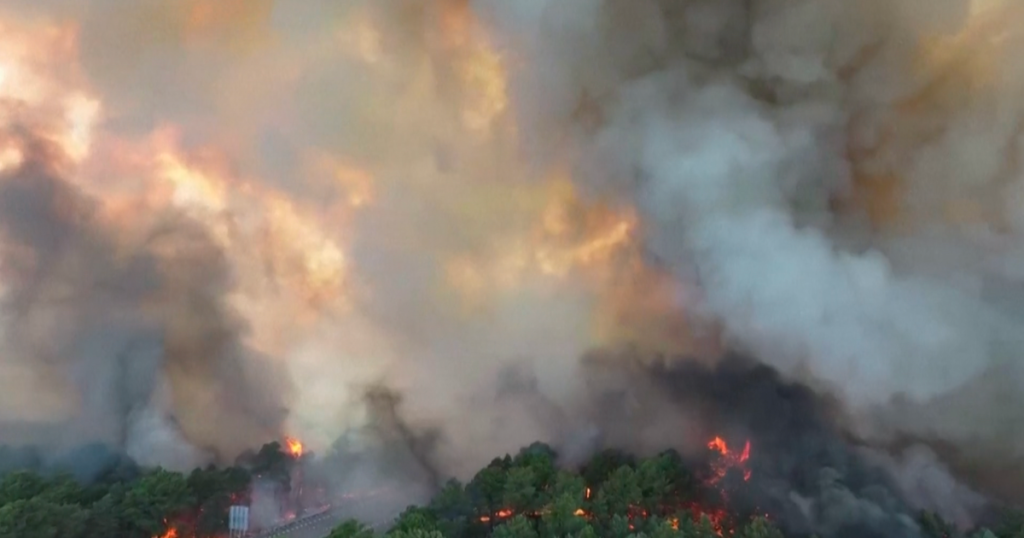
Wildfire of Exceptional Scale Burning Near Paris
Wertynews.com – A significant wildfire of exceptional scale broke out in the Fontainebleau forest, situated approximately 40 miles southeast of Paris, late in the afternoon on Sunday. Officials described the blaze as “exceptional scale” and “very virulent,” emphasizing its rapid spread and the challenges it posed for emergency responders. The fire erupted during a high-traffic summer travel weekend, disrupting local traffic and escalating concerns about the region’s vulnerability to extreme weather conditions. As the flames consumed vast areas of vegetation, the situation highlighted the growing threat of wildfires in a climate-altered world.
The Fire’s Spread and Response Efforts
By early Monday, the wildfire had already consumed over 1,900 acres, with its intensity fueled by record-breaking temperatures and dry conditions. Firefighters faced immense difficulty in containing the blaze, as the flames advanced rapidly through dense underbrush and pine forests. To combat the spread, emergency crews deployed water-dropping aircraft and ground teams, but the extreme heat limited their effectiveness during nighttime operations. The partial closure of a key highway further strained the region’s infrastructure, forcing commuters and travelers to seek alternative routes and adding to the logistical challenges posed by the ongoing heatwave.
The nearby village of Vaudoue became a focal point of the crisis, with residents being evacuated from around 15 homes due to the proximity of the flames. Local authorities prioritized the safety of civilians, coordinating with the Seine-et-Marne fire service to establish evacuation routes and secure temporary shelters. Despite the efforts, the fire continued to threaten additional towns, prompting a multi-agency response that included regional emergency teams and even support from neighboring provinces. The situation underscored the need for improved wildfire preparedness in densely populated areas.
Climate Change and the Heatwave’s Impact
Wildfires of exceptional scale near Paris are not an isolated incident but part of a broader trend linked to climate change. Scientists have pointed to the June heatwave as a critical factor in the fire’s rapid escalation, noting that such extreme weather conditions would have been “virtually impossible” without the influence of global warming, according to the World Weather Attribution group. The prolonged heatwave, which has gripped Europe for the third time since May, has pushed temperatures to record levels, creating a tinderbox environment that accelerates the spread of flames.
Record-breaking average temperatures across Europe during the heatwave have also contributed to a surge in other wildfires, placing additional strain on firefighting resources. The interconnected nature of these events highlights how climate change is intensifying the frequency and severity of natural disasters. As the fire raged near Paris, experts warned that the region is likely to experience more frequent and larger wildfires in the coming decades, urging governments to invest in long-term mitigation strategies and early warning systems.
The Paris region’s vulnerability to wildfires is further compounded by its dense urban sprawl and the presence of flammable vegetation near populated areas. While the immediate focus remains on extinguishing the current blaze, the incident has sparked discussions about the need for climate adaptation measures. Local officials and environmental groups have called for increased funding for fire prevention programs, including controlled burns and vegetation management, to reduce the risk of future disasters. The wildfire of exceptional scale burning near Paris serves as a vivid example of the consequences of inaction in the face of rising temperatures.
As the heatwave continues, the impact on both human activity and the natural environment becomes more pronounced. Air quality in the region deteriorated rapidly due to the smoke generated by the fire, prompting health advisories for residents and visitors. Schools and businesses in affected areas were forced to close temporarily, while the high-speed rail network experienced delays, disrupting travel plans and economic activities. The combination of high temperatures, low humidity, and strong winds created ideal conditions for the fire to spread, demonstrating how interconnected climate factors can amplify disaster risks.
Experts have also raised concerns about the long-term implications of the wildfire for the region’s ecosystems. The Fontainebleau forest, a vital natural reserve, faces the potential loss of biodiversity and soil degradation due to the intense heat and smoke. Conservationists warn that repeated wildfires could alter the region’s landscape permanently, reducing the area’s capacity to support wildlife and absorb carbon dioxide. The incident near Paris is a stark reminder of the urgent need to address climate change, as its effects are increasingly visible in everyday environmental challenges.