
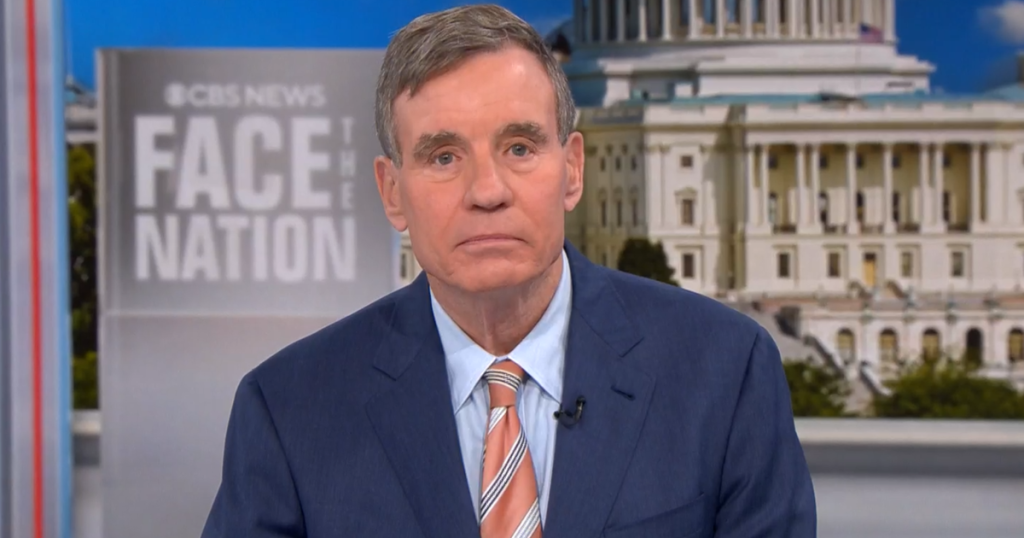
Transcript of Face the Nation Interview: Sen. Mark Warner, June 14, 2026
Warner’s Analysis of the Ceasefire Efforts
Wertynews.com – The transcript of Sen. Mark Warner’s June 14, 2026, interview on “Face the Nation” offers a detailed look at his perspectives on U.S. foreign policy, particularly the ongoing conflict with Iran. Margaret Brennan, the host, began the discussion by referencing the recent ceasefire proposals and the critical role of diplomacy in stabilizing the region. Warner emphasized that while the ceasefire represents progress, it is only a temporary solution to a complex issue. The transcript highlights his concerns about the current administration’s approach, noting that the agreement lacks long-term commitments and could be undermined by shifting priorities.
Warner pointed out that the administration’s reliance on military strategy has created a challenging environment for diplomatic negotiations. “If the President can declare victory, so be it,” he stated, echoing the sentiment that the war’s outcome must be evaluated based on tangible results. The transcript reveals his frustration with the lack of evidence supporting the war’s success, especially as tensions remain high and the situation in the region continues to evolve. He also critiqued the decision to grant a 60-day extension for talks, arguing that this delay risks further destabilization and economic strain on both American and allied nations.
Congressional Oversight and Sanctions Debate
Brennan shifted the conversation to the role of Congress in shaping the war’s trajectory, particularly its stance on sanctions. The transcript underscores Warner’s belief that legislative action is essential to hold the administration accountable. “The President initiated this war without imminent Iranian threats,” Warner remarked, stressing that Congress should have been involved earlier. He questioned the likelihood of the agreements negotiated by Steve Witkoff, Jared Kushner, and JD Vance gaining approval, highlighting the Senate’s skepticism toward their approach.
Warner argued that the current transcript demonstrates a clear disconnect between the executive branch and Congress. “These three individuals, lacking deep negotiation experience, are challenging a seasoned Iranian team,” he said, underscoring the need for specialists in nuclear talks to be at the table. The transcript also touches on the broader implications of the war, including its impact on global energy markets. “Gas prices have risen from $2.80 to $4.20, and may climb further as reserves decline,” Warner noted, emphasizing how the conflict affects everyday Americans. This section of the transcript highlights his call for greater congressional oversight and transparency in decision-making processes.
International Alliances and Strategic Risks
In the transcript, Warner addressed the importance of maintaining international alliances during the war. He acknowledged the U.S. intelligence assessment that Iran aims to develop nuclear capabilities rather than possess them outright, but expressed concern about America’s isolation in the conflict. “We had a coalition including Europe, Russia, and China under the JCPOA,” he recalled, contrasting the current reliance on Israel as a key partner. The transcript reveals his worry that unilateral actions may weaken U.S. influence and make the nation more vulnerable to strategic miscalculations.
Warner also discussed the potential consequences of failing to secure a lasting agreement. “If we don’t establish a clear framework, we risk prolonged hostilities,” he warned, citing the regime’s radicalization as a key factor. The transcript includes a quote from him about the need for sustained diplomacy: “I’ll gladly revisit this on the show and retract my stance if Iran gives up enriched uranium within the next 60 days.” This statement reflects his willingness to adjust positions based on evidence, a theme that recurs throughout the interview and reinforces the transcript’s credibility.
Jay Clayton’s Nomination as Director of National Intelligence
Brennan then turned to the appointment of Jay Clayton as the next Director of National Intelligence, a move that has sparked debate among lawmakers. The transcript features Warner’s sharp critique of Clayton’s qualifications, arguing that his background in law enforcement and financial regulation does not fully prepare him for the role. “Not only do I oppose Clayton’s nomination, but all Republican senators who understand national security also disagree,” Warner asserted, highlighting the potential risks of entrusting the DNI to someone without a proven track record in foreign policy.
Warner emphasized that the transcript underscores the need for a leader with expertise in global conflicts. “Clayton’s experience is valuable, but it’s not enough,” he said, calling for a more strategic approach to intelligence leadership. The discussion also touched on the implications of the appointment for U.S. decision-making in the region, with Warner suggesting that it could affect the administration’s ability to coordinate with allies effectively. This section of the transcript serves as a reminder of the critical role that intelligence leadership plays in shaping national security outcomes.
Public Accountability and the War Powers Act
Warner’s comments in the transcript reflect his broader commitment to public accountability in foreign policy decisions. He criticized the administration for not adequately presenting its case to lawmakers and the American public, arguing that the War Powers Act should be a central tool in ensuring transparency. “Congress has underperformed in this area,” he stated, noting that the Senate is slowly gaining support for the act. The transcript reveals his hope that legislative reforms will help prevent future conflicts from escalating without proper oversight.
Throughout the interview, Warner’s transcript maintains a consistent focus on the importance of evidence-based policymaking. He urged viewers to scrutinize the claims made by the administration, emphasizing that the war’s success must be measured by its impact on global stability and economic conditions. By weaving his concerns into the narrative, Warner ensures that the transcript not only captures his voice but also serves as a critical analysis of the administration’s actions and their broader implications.