
Humpback Whale Freed from Fishing Rope in Massachusetts: Rescue Team Celebrates Success
Wertynews.com – On Sunday, a juvenile humpback whale, ensnared in fishing rope, was successfully freed off the coast of Massachusetts by a dedicated team of marine biologists and rescuers. The incident occurred near the Stellwagen Bank National Marine Sanctuary, a critical habitat for these majestic creatures. The Center for Coastal Studies, based in Provincetown, played a pivotal role in coordinating the rescue, which highlights the ongoing efforts to protect marine life from human-made threats.
Rescue Operation Details
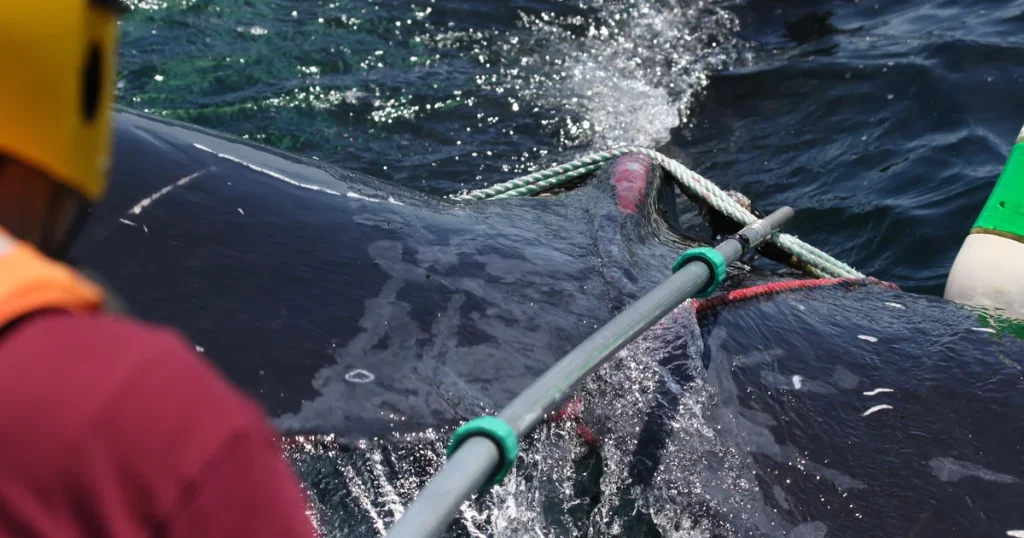
The whale, identified as being in distress, was discovered by boaters who noticed the entangling rope wrapped tightly around its tail. This situation left the animal immobilized, unable to move freely in the water. The team, including experts from the Marine Animal Entanglement Response (MAER) program, quickly assessed the scenario and determined that immediate action was necessary to prevent further harm. With the approaching storms posing a risk to the whale’s survival, the rescue team worked under time constraints to free the creature.
Using specialized tools, the rescuers attached a hook-shaped blade to a 30-foot pole and executed a series of precise cuts to the rope. This method, often employed in such operations, allows for controlled disentanglement without causing additional injury. After several attempts, the whale was finally released, and the team monitored its movements to ensure it could swim away unaided. The successful outcome of the operation is a testament to the skill and coordination of the responders involved.
“It was an honor to assist this whale and to continue our collaborative work with other teams,” said Maria Harvey, a responder from the Hawaiian Islands Humpback Whale National Marine Sanctuary. Her comments reflect the dedication of the group, which has been instrumental in numerous disentanglement efforts across the region.
The Growing Threat of Fishing Gear Entanglements
Entanglement with fishing gear remains one of the most significant threats to humpback whales and other marine mammals. According to recent reports, over 300 incidents of entanglement are documented annually in the North Atlantic, with fishing ropes being a common cause. These incidents can lead to severe injuries, infections, and even death if not addressed promptly.
The Stellwagen Bank National Marine Sanctuary, where the rescue took place, is particularly vulnerable to such threats due to its high concentration of marine life and frequent fishing activity. The sanctuary’s boundaries span 842 square miles, making it a crucial area for conservation. The Center for Coastal Studies and MAER teams have been working tirelessly to mitigate these dangers, often responding to calls from observers who spot entangled whales in the wild.
One of the key challenges in these rescues is the time-sensitive nature of the operation. As the whale’s condition can deteriorate quickly, especially with the risk of storms or strong currents, responders must act swiftly. In this case, the team’s rapid response was critical in ensuring the whale’s survival. The incident also underscores the importance of public awareness and community involvement in reporting such events.
Following the successful disentanglement, the team conducted a brief examination of the whale to assess its health. Despite the prior injuries from a previous entanglement, the animal showed signs of recovery and was able to swim away on its own. This positive outcome is encouraging for conservationists, who continue to emphasize the need for preventative measures and improved fishing practices to reduce the risk of future entanglements.
As the humpback whale returned to the open waters, the rescue team reflected on the importance of their work. The event serves as a reminder of the delicate balance between human activities and marine ecosystems. With ongoing efforts to monitor and rescue entangled whales, there is hope that these interventions will help ensure the survival of the species in the face of increasing environmental challenges.