
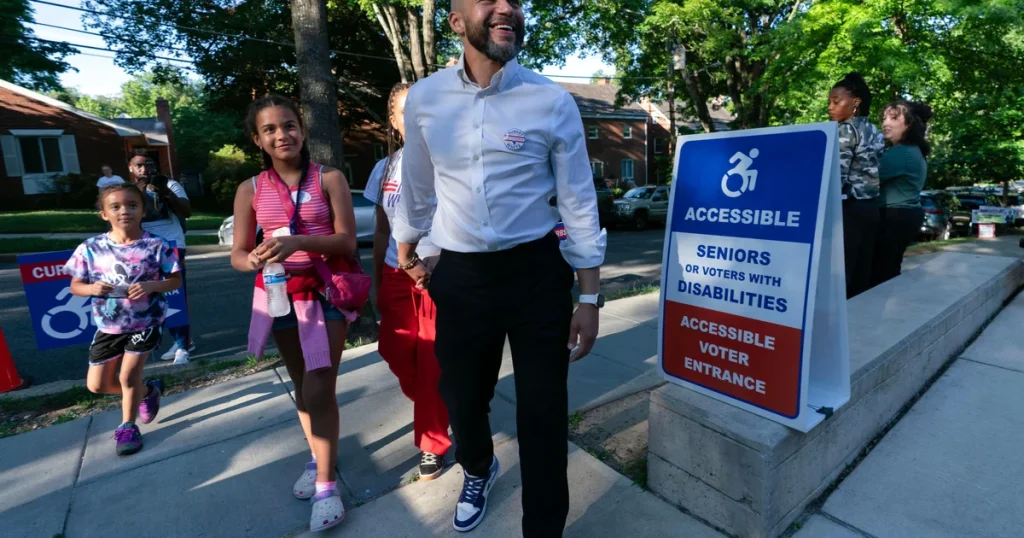
Robert White Wins DC Delegate Primary
Wertynews.com – Robert White wins Democratic primary for D.C. delegate to Congress as Eleanor Holmes Norton steps down, marking a pivotal moment in the city’s political landscape. The election, held on Tuesday, saw White emerge as the victor in a race that has been a focal point of D.C. residents’ efforts to assert greater control over their representation. His win not only signals a generational change in the delegate role but also underscores growing public support for policies aimed at reducing federal oversight. With Norton’s retirement, the new delegate will carry the responsibility of advocating for the interests of D.C.’s 700,000 residents in the U.S. Congress, a role that has long been seen as a stepping stone toward full statehood.
Historical Context and Campaign Priorities
The delegate seat has historically been a symbol of D.C.’s struggle for self-governance, with Norton, a longtime champion of civil rights, serving since 1991. Her decision to retire, citing concerns over federal interference under the Trump administration, has shifted the focus of the campaign to restoring local autonomy. White’s platform centered on resisting federal overreach, particularly in areas such as budget control and lawmaking. He argued that the current system allows Washington, D.C. to be governed by policies that do not reflect the will of its residents, a sentiment echoed by many voters during the campaign.
White’s victory highlights the strong Democratic base in the city, where the candidate’s message resonated with voters disillusioned by the Trump era’s expansion of federal influence. His campaign emphasized the need for a delegate who would prioritize D.C. residents’ interests in Congress, contrasting with Norton’s more centrist approach. The election results reflect a broader movement toward reshaping the political landscape, with younger voters and community leaders playing a crucial role in the shift.
Ranked-Choice Voting and Election Dynamics
The primary election introduced ranked-choice voting for the first time, a system designed to ensure a majority winner by allowing voters to rank candidates. This added complexity to the race, with officials noting delays in finalizing results as the process unfolded. The system also amplified the importance of each vote, as it required candidates to gain support across different segments of the electorate. For White, the ranked-choice process was a test of his appeal beyond traditional party lines, though his victory suggests he has already captured a significant majority.
The delegate race coincided with the city’s first vote for a new mayor in over a decade, creating a unique political environment. While the mayor’s race remains unresolved, the primary results highlight the growing alignment between D.C. voters and candidates who prioritize autonomy. White’s win is a testament to the changing priorities of the district’s electorate, who increasingly view the delegate role as a critical battleground for statehood and representation. His platform also included proposals to strengthen local governance and increase transparency in federal decision-making.
“This is a new chapter for D.C., and Robert White has shown he can lead us toward greater independence,” said a voter from the Anacostia neighborhood, who supported White during the campaign. The sentiment reflects a broader consensus among residents that the delegate seat must be filled by someone committed to advancing the city’s interests in Washington, D.C.
White’s success has sparked discussions about the future of D.C. politics, with analysts noting the potential for a more progressive voice in Congress. The delegate’s role, though non-voting, remains vital in shaping legislation that affects the district’s budget, education, and healthcare policies. As the city prepares for the general election, the focus will shift to whether White can maintain his momentum and secure the position that has long been a symbol of D.C.’s quest for full representation.
Robert White wins Democratic primary in a closely watched race that has drawn attention from across the nation. His victory comes at a time when D.C. residents are increasingly demanding a say in the federal government’s decisions that impact their daily lives. The election also serves as a barometer for the political climate in the nation’s capital, with candidates’ platforms reflecting the priorities of a diverse and engaged electorate. As the city moves forward, the focus will remain on ensuring that its voice is heard and that its autonomy is preserved in the years to come.