
Trump-backed Populist Wins Tight Colombia Presidential Election, Sparking Protests
Wertynews.com – The Trump-backed populist candidate Abelardo de la Espriella narrowly claimed victory in Colombia’s highly anticipated presidential runoff, setting off immediate protests across the country. With 49.66% of the vote, the U.S.-supported lawyer edged out his leftist opponent, Senator Ivan Cepeda, who received 48.70%, in a closely contested race that highlighted the deepening political divide. The razor-thin margin has intensified calls for transparency and fueled unrest among voters who believe the result may not reflect a majority consensus. De la Espriella’s win signals a shift toward right-wing policies and raises concerns about the future of Colombia’s peace process.
Protest Movements Reflect Divided Nation
As the final tally was announced, crowds erupted in protest in major cities like Bogotá, Medellín, and Cali, where demonstrations turned violent in some areas. Protesters, many of whom were supporters of Cepeda, accused the electoral system of bias and demanded a recount, claiming the outcome favored a candidate aligned with U.S. interests. In Cali, demonstrators burned American flags and clashed with police, while in Bogotá, groups of activists used steel bars to block roads and set tire fires in their frustration. Despite de la Espriella’s promise to prioritize national security, the protests underscore the challenges of reconciling Colombia’s ideological rifts.
“For those who have sown violence, terror, drug trafficking, and corruption all these years, their time is up!”
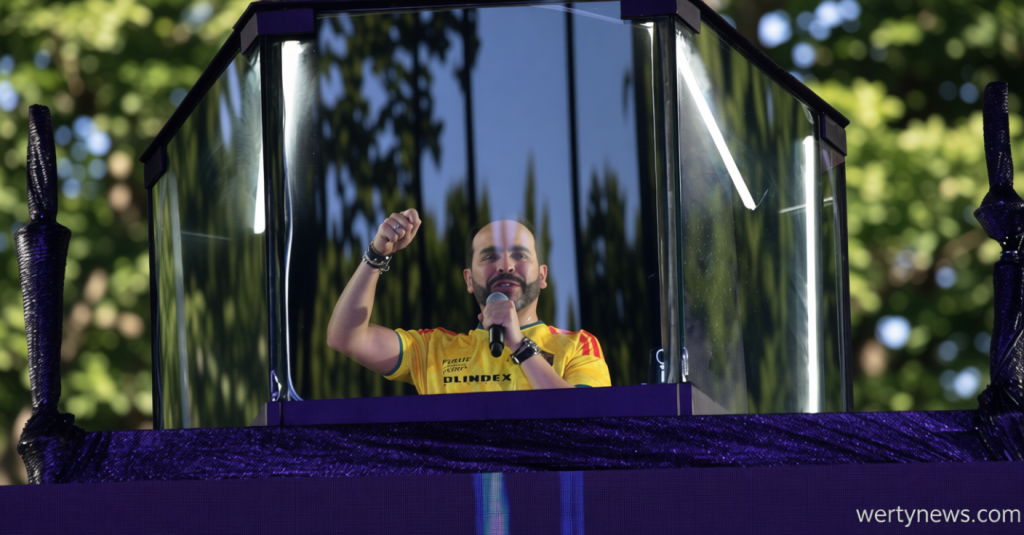
The candidate, speaking behind bulletproof glass in Barranquilla, reiterated his commitment to combating drug-running guerrilla groups and restoring economic stability. His supporters, clad in the canary-yellow football jerseys he popularized during his campaign, waved flags and cheered, dubbing him “The Tiger” in hopes of reigniting national pride. However, the victory has left many left-leaning voters feeling marginalized, with some accusing the administration of sidelining social reforms in favor of security-centric agendas.
Historical Context and Electoral Significance
De la Espriella’s triumph marks a return to right-wing governance in Colombia, a political trend that has persisted for over a century despite intermittent leftist leadership. The election outcome reflects growing public support for candidates who promise to address crime and corruption, issues that have plagued the country for decades. With 26 million voters participating—63% of the registered electorate—the result highlights the intensity of political competition and the increasing polarization of Colombian society. The tight margin also underscores the nation’s deep ideological divides, which have been exacerbated by recent economic challenges and security concerns.
“Mine will be an absolutely democratic government and a guarantor of freedom and institutional order,”
De la Espriella asserted during his campaign, positioning himself as a reformer who would streamline bureaucracy and strengthen alliances with the United States. His victory, however, has sparked debates about the future of Colombia’s peace process, which has seen significant progress since the 2016 FARC agreement. Analysts warn that his security-first approach could strain negotiations with remaining leftist groups, potentially threatening the fragile stability that has been achieved over the past decade.
Implications for Colombia’s Peace Process
The peace agreement with the Revolutionary Armed Forces of Colombia (FARC) has been a cornerstone of Colombian politics, but de la Espriella’s win may challenge its trajectory. His campaign emphasized the need to dismantle rebel infrastructure and revive military operations, a stance that contrasts with the inclusive policies of his predecessor. While the election results are not yet definitive, the potential shift in leadership has raised alarms among peace advocates, who fear that the new administration could prioritize state security over reconciliation efforts. This could reignite tensions in rural areas, where guerrilla groups continue to operate despite the official ceasefire.
“Colombia’s best days are ahead,”
declared U.S. Secretary of State Marco Rubio, celebrating the election as a step toward strengthening bilateral ties. De la Espriella, a dual U.S.-Colombian national, had previously called for a 90-day campaign of airstrikes targeting drug cartels, a strategy that resonated with many voters. However, his opponent Cepeda refused to accept the result immediately, arguing that the final count would be confirmed only after rigorous checks. This delay has kept the momentum of protests alive, with protests expected to continue in the coming days as supporters of both candidates demand clarity and accountability.