
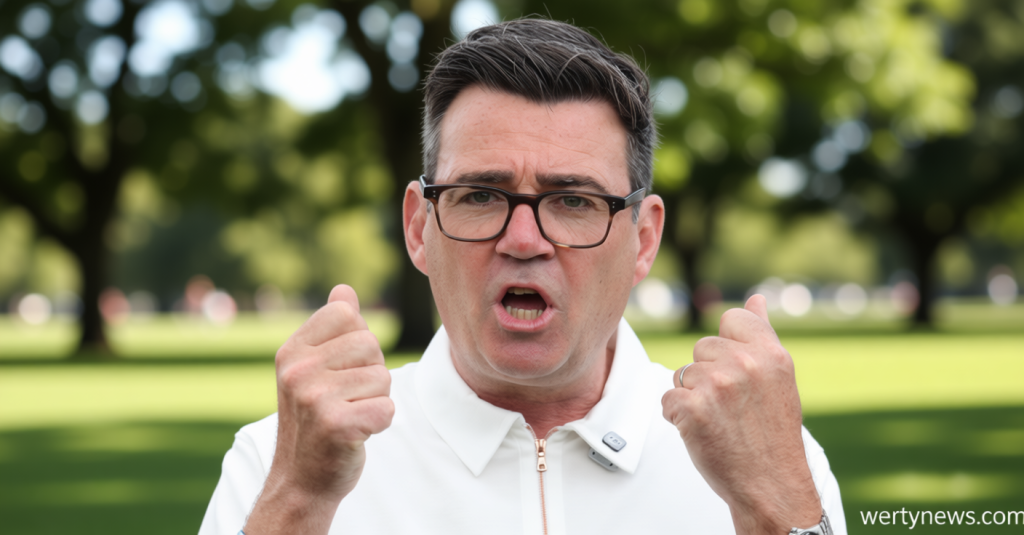
Who is Andy Burnham, the man likely to replace British Prime Minister Keir Starmer after his resignation?
Wertynews.com – British Prime Minister Keir Starmer announced his resignation on Monday, less than two years after steering the Labour Party to a landmark general election victory. The decision has sparked immediate speculation about his successor, with Andy Burnham emerging as the frontrunner. Known for his pragmatic leadership and deep ties to northern England, Burnham is now positioned to lead the party and potentially become the next prime minister. His candidacy has gained traction amid growing public frustration with economic challenges and Labour’s handling of immigration issues.
Andy Burnham’s Political Career and Leadership Style
Andy Burnham, a seasoned Labour politician, has built his reputation through years of service in local and national government. Elected as Manchester’s mayor in 2012, he became a vocal advocate for regional devolution, a policy that emphasizes empowering cities like Manchester to manage their own affairs. His leadership style is often described as collaborative, bridging gaps between different factions within the party. Burnham’s recent by-election win in Makerfield, Greater Manchester, has further bolstered his credibility as a leader capable of uniting diverse voter bases.
Burnham’s political journey is marked by both resilience and adaptability. While he initially gained national attention as a rising star in the Labour Party, he faced setbacks in previous leadership contests. However, his return to prominence after a period of relative obscurity suggests a renewed focus on grassroots engagement and policy clarity. His ability to connect with working-class communities, particularly in the north of England, positions him as a key figure in Labour’s strategy to reclaim electoral ground in regions that have traditionally leaned Conservative.
Key Constituencies and Policy Priorities
Burnham’s political appeal lies in his alignment with key constituencies within the Labour Party. His background as a local leader has made him a champion of issues such as public services, housing, and economic stability. Critics argue that his focus on regional autonomy may overshadow national priorities, but supporters claim this approach is essential for addressing the disparities between urban and rural areas. His emphasis on pragmatic governance and a more centrist platform has also drawn comparisons to previous Labour leaders, positioning him as a bridge between progressive ideals and centrist pragmatism.
Burnham’s campaign in Makerfield highlighted his ability to navigate complex political landscapes. The by-election victory, which saw him secure a majority in a historically Labour stronghold, underscored his effectiveness in mobilizing voters disillusioned with the party’s central London-centric policies. Analysts note that his success in this region could signal a shift in Labour’s strategy, with a greater emphasis on reclaiming support in the north and addressing concerns about immigration and economic management.
Challenges and Opportunities Ahead
As the likely next leader of the Labour Party, Burnham faces significant challenges. The party must now address internal divisions while positioning itself to win the next general election. Burnham’s focus on regional devolution and his critique of national political polarization could help mend fractures within the party. However, his ability to maintain Labour’s progressive stance while appealing to a broader electorate will be critical. His leadership will also need to navigate the complexities of Britain’s post-Brexit political climate and the evolving relationship with the United States.
“The future of Labour depends on leaders who can unite communities and deliver tangible results,” Burnham remarked during a recent speech, emphasizing his vision for a more inclusive and effective party.
Additionally, Burnham’s role in shaping Labour’s strategy on issues like economic recovery and immigration reform will be pivotal. His approach to balancing these priorities could determine his success in both the leadership contest and the subsequent general election. With the party’s unity under threat, his ability to communicate a clear and compelling vision will be tested, though his grassroots connections provide a strong foundation for leadership.