
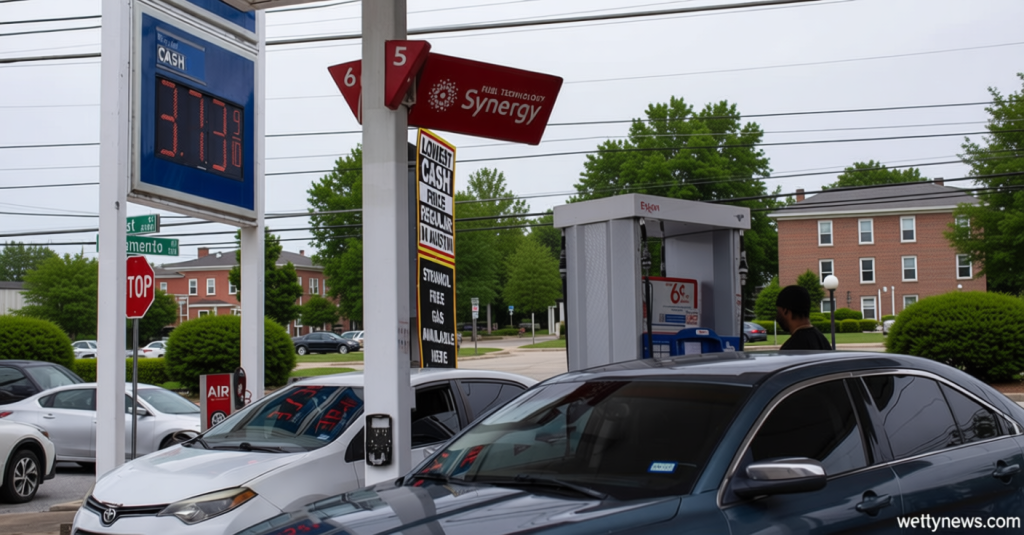
Trump to ask Congress to make 15% ethanol-gas blend permanent
Wertynews.com – President Donald Trump has signaled his intent to ask Congress to make the year-round use of E15, a fuel blend containing 15% ethanol, a permanent policy. This initiative, outlined by a U.S. official familiar with the administration’s plans, aims to shift the regulatory framework that currently limits the availability of E15 to specific seasons. The move comes as part of a broader strategy to combat rising gasoline prices, which have been exacerbated by the ongoing tensions with Iran and other geopolitical factors. By securing legislative approval for E15 to remain in circulation throughout the year, the Trump administration hopes to stabilize fuel costs for American consumers while advancing its domestic energy agenda.
Understanding E15 and Ethanol Blends
E15, which is a mix of 15% ethanol and 85% gasoline, has long been a topic of debate in the energy sector. While the 10% ethanol blend (E10) is permitted for year-round use, E15 requires special waivers due to its higher volatility. These waivers were typically granted during the summer months to reduce air pollution and smog, as ethanol evaporates more quickly under heat. The EPA had previously mandated seasonal restrictions on E15, but the administration’s proposal would eliminate those limitations, allowing E15 to compete with traditional gasoline year-round. This change is expected to have significant implications for both the environment and the economy.
Support from Corn-Producing States and Industry Advocates
Support for Trump’s proposal to make E15 permanent has been strong among corn-producing states, which see the blend as a critical driver of rural economic growth. Ethanol production is heavily concentrated in states like Iowa, Nebraska, and Illinois, where it provides jobs and supports agricultural infrastructure. Industry advocates, including the Renewable Fuels Association (RFA), argue that E15 offers a more affordable alternative at the pump, often priced 25 cents per gallon lower than regular gasoline. They also highlight that the blend could save drivers an estimated $20 billion annually in fuel expenses, a figure that has gained traction in policy discussions.
“E15 provides consumers with a cost-effective option while also supporting agricultural communities,” noted a spokesperson for the Renewable Fuels Association. “Making it a permanent part of the fuel market will ensure long-term economic benefits for both farmers and everyday Americans.”
The administration’s push to make E15 permanent aligns with its broader efforts to promote domestic energy sources and reduce reliance on foreign oil. Ethanol, derived from corn, has been a key component of U.S. energy policy for decades, with the Renewable Fuel Standard (RFS) mandating its use in transportation fuels. Trump’s proposal to expand E15’s availability could further bolster this standard, providing a financial incentive for ethanol producers while offering consumers a cheaper fuel option. However, the decision to prioritize E15 over other blends has sparked discussions about its environmental trade-offs and long-term sustainability.
Challenges and Criticisms of the E15 Expansion
Despite its potential benefits, the proposal to make E15 permanent faces opposition from various stakeholders. Critics, including some in the oil industry, argue that ethanol blends like E15 may not be as efficient as traditional gasoline, potentially leading to higher emissions and reduced fuel economy. Additionally, concerns about the compatibility of E15 with older vehicles have been raised, with some automakers warning that the fuel could cause engine damage if used in vehicles not designed for higher ethanol content. These arguments highlight the complexities of implementing a permanent policy change that balances economic and environmental priorities.
Environmental groups have also expressed reservations about the expansion of E15. While ethanol is often promoted as a cleaner alternative to gasoline, its production process can lead to increased water usage and greenhouse gas emissions, depending on the source of the corn. Some advocates emphasize that the benefits of E15 may be offset by its impact on air quality and climate change, especially if the blend’s higher volatility leads to increased evaporative emissions. Nonetheless, the administration maintains that the long-term economic advantages of E15 outweigh these concerns, particularly in the context of rising fuel prices and the need for affordable energy solutions.