
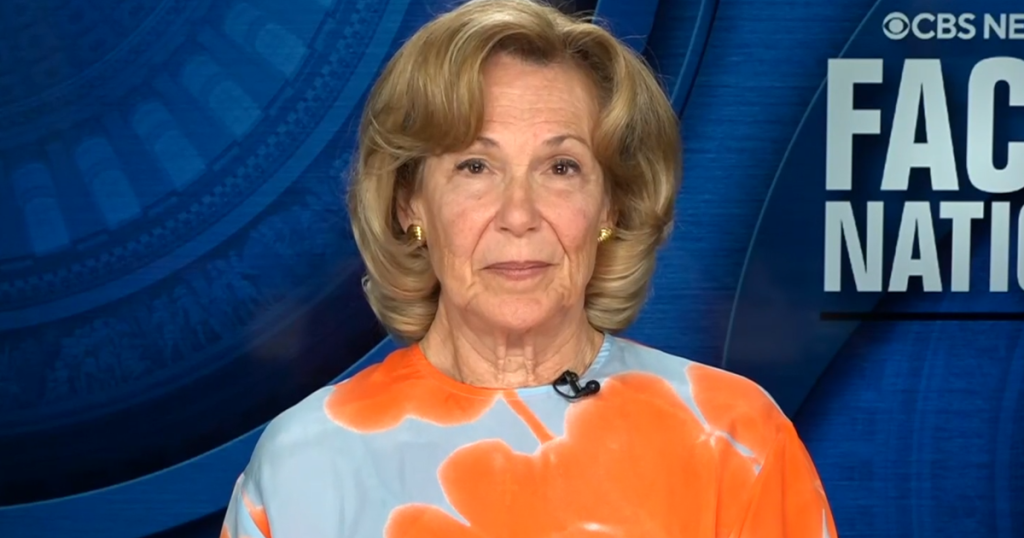
Transcript: Dr. Deborah Birx on “Face the Nation with Margaret Brennan,” May 24, 2026
The Escalating Ebola Situation in the DRC
Wertynews.com – On May 24, 2026, “Face the Nation with Margaret Brennan” featured a segment addressing the growing Ebola crisis in the Democratic Republic of the Congo. The discussion began with Nancy Cordes highlighting the alarming figures: nearly 750 suspected cases and approximately 200 deaths have been reported across the region. Joining Cordes to analyze the situation was Dr. Deborah Birx, a former White House coronavirus response coordinator and former Global AIDS Coordinator. Cordes welcomed Birx, who responded with a warm acknowledgment.
“Good to be with you, Nancy.”
When asked how the current outbreak compares to past instances, Birx emphasized the challenges posed by delayed detection. She explained that the outbreak had already undergone two to three cycles of transmission before it was officially recognized. This means the numbers now being reported reflect a backlog of cases, rather than a real-time snapshot of the virus’s spread. “A lot of the numbers you’re seeing, and the rapid rise in cases, is because it went undetected and underreported for three to four weeks,” she noted. This delay, she argued, creates a skewed understanding of the outbreak’s current trajectory, as the cases being observed today likely originated from infections two weeks prior.
Travel Restrictions and Domestic Preparedness
The conversation shifted to the recent incident involving a flight from Paris to Detroit, which had to divert to Montreal after a traveler from the DRC boarded without proper screening. Cordes inquired about the implications for the U.S., noting the public concern over the virus’s potential spread domestically. Birx addressed the issue, highlighting the lessons learned from the pandemic.
“Ever since COVID, I can understand why people are worried,” Birx said. “But remember, the DRC has experienced 17 to 18 similar outbreaks in the last 20 to 30 years. This is actually quite common, although this one is notably large.”
She explained that the U.S. has taken proactive measures to mitigate risks. “We’ve significantly improved hospital infrastructure, including the deployment of bio-container facilities in multiple locations,” Birx stated. These facilities are designed to handle infectious diseases efficiently, ensuring rapid containment if the virus were to enter the country. However, she stressed the importance of consistent enforcement of travel restrictions. “A travel ban is just one part of a broader strategy,” she said, adding that the U.S. has already sent a DART team to the region within four days of the outbreak’s discovery. This team, composed of USAID personnel and State Department experts, is actively working alongside the CDC in Kinshasa to manage the crisis.
Cordes then questioned whether the travel ban was sufficient to prevent the virus from reaching American shores. Birx acknowledged the ban’s role but emphasized it was part of a larger effort. “It’s part of a comprehensive response,” she clarified, noting that the U.S. had deployed resources swiftly. Yet, she also pointed out the logistical complexities of maintaining such measures, particularly when dealing with international travel and cross-border movement of people.
Policy Shifts and Their Impact on Response Efforts
Cordes turned the focus to the Trump administration’s actions over the past year and a half, which she claimed had weakened key agencies critical to combating infectious diseases. “The Trump administration significantly reduced USAID’s capacity and withdrew from the World Health Organization,” she said, referencing the cuts to funding for the DRC and Uganda. She posed a direct question: Could these decisions have contributed to the delayed reporting of the outbreak and the shortage of supplies in the region?
“Recently, the administration put out 50 or 100 million dollars immediately and sent people as part of the response,” Birx replied. “But the bigger question is why the African CDC—something we invested heavily in—failed to detect this earlier. Hundreds of millions of dollars were allocated to build laboratory capacity in the DRC, and yet, we’re still grappling with a late identification of this outbreak.”
Birx argued that the delayed reporting reflects a failure in the system, despite prior investments. She highlighted the African CDC as a cornerstone of regional preparedness, noting that its infrastructure was meant to prevent such crises. “The fact that this outbreak was not caught sooner is a significant concern,” she said. “We need to understand what went wrong with the detection process, especially given the resources already in place.”
Cordes pressed further, asking whether the cuts to USAID and the World Health Organization were directly linked to the current challenges. Birx acknowledged the role of these decisions in hampering the response, even as the administration continued to allocate funds in emergencies. “While the U.S. has taken action when needed, the long-term disinvestment in organizations like USAID and WHO has created a gap in sustained support,” she explained. This gap, she suggested, could have weakened the ability to monitor and respond to outbreaks effectively.
Birx also stressed the importance of maintaining a coordinated international effort. “The U.S. has always been a key player in global health, but when agencies are downsized, it affects the speed and scope of our collective response,” she said. Her comments underscored the need for continued investment in public health infrastructure, both domestically and internationally, to prevent future crises from escalating as quickly as the current one.
As the interview concluded, Birx reiterated the urgency of the situation. “We’re looking at this outbreak with old data, which makes it harder to predict how it will evolve,” she said. “But with the right resources and vigilance, we can still turn the tide.” Her insights provided a sobering assessment of the challenges ahead, while also offering hope in the form of preparedness and collaboration.
The discussion highlighted the complex interplay between early detection, resource allocation, and policy decisions. While the U.S. has taken steps to mitigate risks, Birx’s testimony left no doubt that the global health community must remain vigilant to avoid repeating past mistakes.