
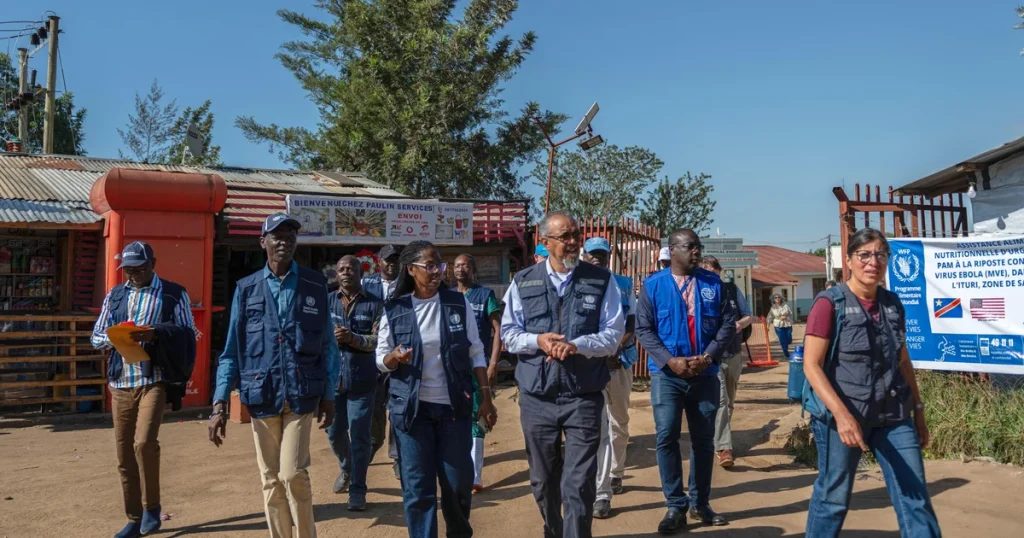
Recent Developments in the Global Ebola Outbreak
Wertynews.com – Health officials in Brazil recently announced a significant update regarding potential Ebola cases within the country. One of two individuals under observation for possible exposure to the virus in Sao Paulo and Rio de Janeiro has received negative test results, according to government statements. This development has raised questions about the virus’s ability to spread beyond its central African epicenter, where the outbreak has remained concentrated. Despite the initial concerns, authorities have emphasized that the risk of the disease entering Brazil and the broader South American region remains low.
Tracking Possible Cases in Brazil
The Brazilian health department confirmed that a 37-year-old man from the Democratic Republic of the Congo, where the outbreak has been most active, displayed symptoms consistent with Ebola. These included fever, which is a primary indicator of the illness. While initial tests did not detect the virus in the patient, he is being monitored at a specialized facility as a precautionary measure. This step was taken to ensure that any potential spread is contained promptly.
In Rio de Janeiro, another case emerged after a man from Uganda showed signs of viral symptoms such as coughing, chills, and diarrhea. The city government reported that the patient tested positive for malaria on Saturday evening, though the case is still under investigation. Brazil’s Health Minister stated that the man’s Ebola tests were negative, but he will remain in quarantine until the investigation concludes. This highlights the importance of thorough testing even when preliminary results are negative.
WHO Updates on Recoveries in Congo
On the same day as Brazil’s developments, the World Health Organization (WHO) highlighted a breakthrough in the treatment of the Bundibugyo strain of Ebola, which is driving the current outbreak. Director-General Tedros Adhanom Ghebreyesus announced that five patients had recovered from the virus, a rare strain that has yet to have an approved treatment or vaccine. These recoveries underscore that the disease is not always fatal and that medical interventions can still lead to positive outcomes.
“Four people will be discharged today and there was one that was discharged the day before yesterday,” Tedros stated during the inauguration of a new Ebola treatment center in Bunia, the provincial capital of Ituri in eastern Democratic Republic of the Congo, where the outbreak is currently centered.
Tedros emphasized that while vaccines and treatments are still under development, recovery from Ebola is still possible. He urged communities to take an active role in combating the virus, stating that early detection and timely support are critical to successful treatment. “If you come to health facilities when you have symptoms, you can get the support and recover,” he explained. “So the key is to come forward as early as possible and to get the necessary support.”
Global Statistics and Challenges
According to the WHO, at least 906 suspected cases of Ebola have been reported in the Democratic Republic of the Congo, with 223 deaths among those suspected. The agency also noted that 134 confirmed cases have been documented, along with 18 fatalities in the confirmed group. Uganda, a neighboring country, has reported nine confirmed cases and one death, according to its Health Ministry. These figures illustrate the scale of the outbreak and the need for continued vigilance.
However, the progress in recovery has not been matched by the speed of the response. Doctors Without Borders, or MSF, expressed concerns that the virus is spreading faster than the efforts to contain it, even with improved health infrastructure and new aid arriving in the region. The organization called for immediate expansion of testing capacity, faster deployment of medical personnel, and sustained supply chains to ensure that critical resources reach affected areas.
Community engagement has become a vital component of the outbreak response. Tedros highlighted the importance of involving local populations in efforts to combat the disease, noting that residents have often been critical of strict medical protocols. These protocols, which require the safe handling of infected bodies, sometimes conflict with traditional burial practices. As a result, residents have launched at least three attacks on health centers, further complicating the response.
The situation in Ituri province has been particularly challenging due to ongoing conflicts. Attacks by the Allied Democratic Forces, a rebel group linked to the Islamic State, and a coalition of ethnic militias have disrupted healthcare operations. The virus has also been reported in the Congolese provinces of North Kivu and South Kivu, located south of Ituri. In these areas, the Rwanda-backed M23 rebel group controls key cities such as Goma and Bukavu. The rebels have confirmed two cases of Ebola, adding to the complexity of the regional response.
Despite these obstacles, officials in the Democratic Republic of the Congo remain hopeful. Pierre Akilimali, the Incident Manager at the National Institute of Public Health, expressed confidence in the community’s ability to overcome the crisis. “The final message we would like to share with the Ituri community is that there is hope,” he said during the center’s opening ceremony. “With the right support and collaboration, we can make progress in containing the outbreak.”
The WHO’s focus on recovery and containment efforts has been bolstered by recent advancements in the treatment of the Bundibugyo strain. While no specific cure has been developed, the reported cases of recovery provide a glimmer of optimism. Tedros noted that these cases demonstrate that the disease can be managed effectively, even in the absence of a vaccine. “Of course, we’re still working on vaccines and treatments, but that doesn’t mean that people cannot recover from Ebola,” he added.
As the global health community continues to monitor the situation, the balance between prevention and treatment remains a key priority. The successful management of cases in Brazil and the documented recoveries in Congo serve as reminders that early intervention and community involvement are crucial to mitigating the impact of the outbreak. With sustained efforts and expanded testing, there is potential to reduce the spread of the virus and improve outcomes for those infected.