
Ancient Egypt Burials Unearthed: Clues to Changing Traditions
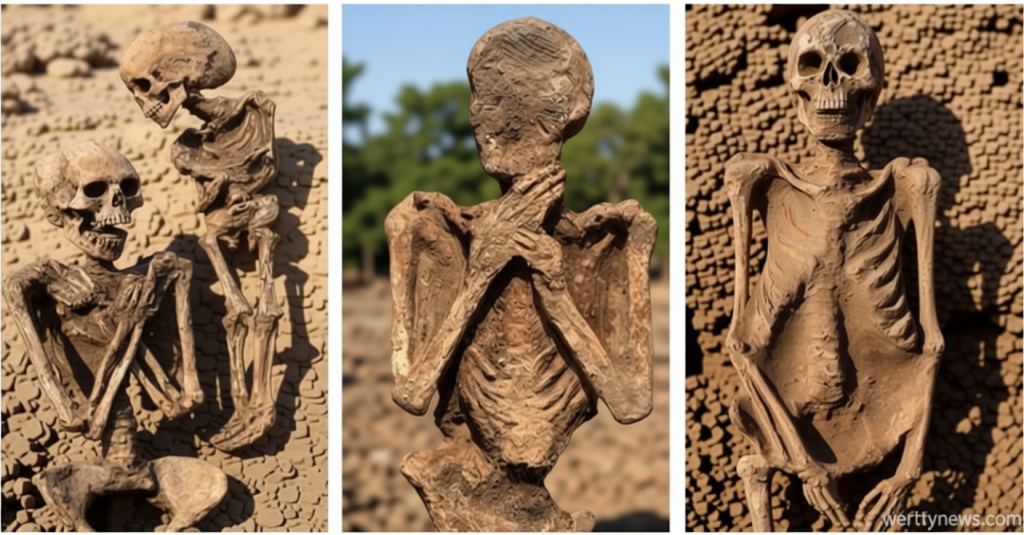
Wertynews.com – Remarkable photos of ancient human burials have revealed a wealth of archaeological findings at the Kom Aziza site in Egypt, offering a glimpse into centuries of evolving funerary traditions. The discovery in the Nile Delta, specifically within the northern Beheira province, dates back over 2,300 years and spans from 332 B.C. to 395 A.D. These remains, along with numerous artifacts, highlight the site’s transformation from a settlement hub into a significant burial ground, reflecting its enduring cultural and religious importance across multiple eras.
Excavations Reveal Diverse Burial Practices
The recent excavation at Tell Kom Aziza has exposed a variety of burial methods, from simple pit burials to more intricate techniques involving mudbrick-lined graves and painted plaster coffins. Dr. Hisham El-Leithy, Secretary General of the Supreme Council of Antiquities, noted that the site features both individual and collective burials, with orientations ranging from north-south to east-west axes. These variations in positioning and hand placement—such as folded arms or the Osirian pose—suggest shifts in cultural and spiritual practices over time.
The Enigmatic Role of Wild Boars in Ancient Burial Rituals
Among the most intriguing discoveries were the complete skeletal remains of two wild boars, a rare find at an ancient Egyptian funerary site. These animals were linked to Seth, the god of chaos and violence, during periods of their worship. While the exact reason for their burial remains under investigation, their presence at the site raises questions about the potential connection between animal remains and ritualistic practices. Mohamed Abdel Badi, Head of the Egyptian Antiquities Sector, emphasized that the context of these boars demands a deeper analysis of their symbolic and practical significance in the region’s ancient traditions.
“This discovery is vital because it illuminates the site’s history and provides deeper understanding of its role,” stated Nevine El-Aref, media adviser to the Minister of Tourism and Antiquities. “It demonstrates how a settlement evolved into a central burial ground across multiple eras.”
Artifacts and Daily Life: A Window into Ancient Egyptian Society
The site has also yielded a range of pottery fragments and domestic items, spanning from the Old Kingdom (circa 2686–2181 B.C.) to the Greco-Roman period (around 2,000 years later). These artifacts, including amphorae, burial jars, bread molds, and trays, suggest that the area was not only a place for the deceased but also a site of ongoing activity for the living. The continuity of such items over millennia indicates that the burial ground remained in use for centuries, adapting to the changing needs and beliefs of the community.
Archaeologists continue to analyze the diverse burial practices at Kom Aziza, which reflect broader social and cultural transformations. The variations in methods—ranging from modest pit burials to more elaborate tombs—may indicate differences in status, changes in ceremonial customs, or regional adaptations within a shared funerary tradition. As the excavation progresses, researchers hope to uncover more about the interplay between human activity and ritual, providing a comprehensive narrative of the site’s role in ancient Egyptian life.