
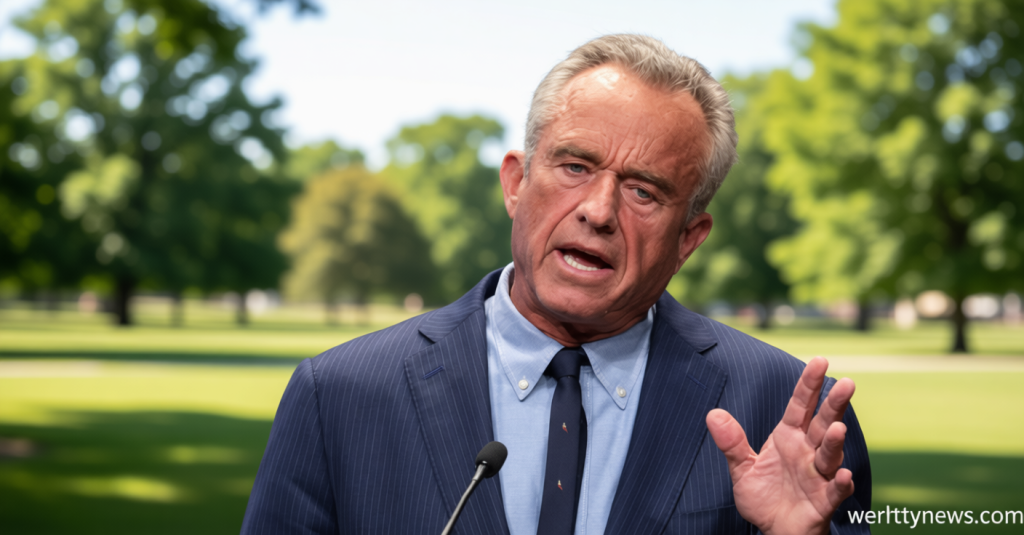
Internal Emails Reveal RFK Jr.’s Influence on CDC’s Vaccine Policies
Wertynews.com – Recently disclosed internal communications provide insight into how the Centers for Disease Control and Prevention (CDC) managed pivotal public health choices during President Trump’s second term, while facing pressure from Health and Human Services Secretary Robert F. Kennedy Jr. and his advisors. The documents, shared by Democrats on the Senate Committee on Health, Education, Labor, and Pensions, were obtained from Dr. Debra Houry, who previously led the CDC’s medical operations before resigning following the departure of Director Susan Monarez in August 2025.
Suspending Flu Vaccine Campaigns
During the flu season of early 2025, CDC communications official Nicole Coffin noted in an email that Health and Human Services (HHS) communications chief Andrew Nixon had directed the removal of all advertising campaigns related to flu vaccinations. The request, she explained, originated directly from Kennedy, aiming to shift focus toward “informed consent” messaging. Another CDC official highlighted potential fallout, warning that halting ongoing flu initiatives could harm the agency’s reputation and trigger legal challenges tied to contracts and funding.
“Given the severity of the flu season, stopping a current campaign poses significant reputational risk. Legal issues with contracts and appropriated funds are also likely,” wrote the official.
Later, Coffin sought clarification from Nixon about the CDC’s ad strategies, noting his eagerness to review the materials. Nixon confirmed the directive came from Kennedy, who wanted to ensure alignment with his views. Despite this, the pro-vaccine campaign “Wild to Mild” was paused, while “Get My Flu Shot” continued.
Reorganizing the Vaccine Advisory Panel
Months after taking office, Kennedy replaced all 17 members of the Advisory Committee for Immunization Practices (ACIP), which sets national vaccine guidelines. A memo from his team suggested the move was strategic, as the panel had only one vacancy post-2024, with new openings delayed until 2027. This allowed Kennedy to dominate ACIP decisions until 2028.
“This gives Biden appointees significant sway over ACIP and its recommendations until 2028,” stated the draft memo.
Internal meeting notes indicated Kennedy’s team was frustrated by the Biden administration’s last-minute appointments before Trump’s re-election. “They think recent selections were a way to block. Didn’t ask us for help,” summarized a CDC official. The notes also noted Kennedy’s intent to replace 10 ACIP members, with a ready list of 10 replacements. “He doesn’t care which members,” the text added.
Impact and Legal Challenges
Stuart Burns, a Kennedy advisor, drafted a memo to justify the ACIP overhaul, aiming to “depoliticize” the committee by appointing individuals more in line with Kennedy’s priorities. ACIP recommendations hold sway because they directly shape federal policies, such as vaccine coverage mandates by insurers. Kennedy defended the change in an op-ed, claiming, “A clean sweep is needed to re-establish public confidence in vaccine science.”
A federal judge later ruled in March that the ACIP modifications were unlawful, citing the Trump administration’s failure to follow proper procedures. The decision underscored the controversy surrounding Kennedy’s influence on the CDC’s vaccine guidelines.