
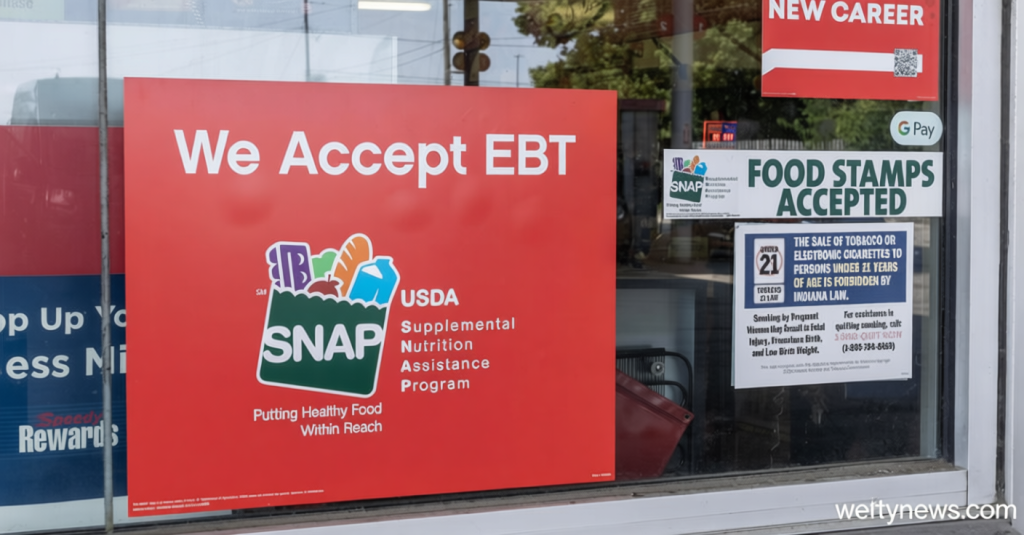
The Trump Administration Accuses SNAP of Fraud: Is It True?
Wertynews.com – The Trump administration has claimed that the Supplemental Nutrition Assistance Program (SNAP), commonly known as food stamps, is rife with fraud and waste. This assertion has sparked debate, as advocates for low-income families argue that the program’s issues are more complex than the administration suggests. According to the Department of Agriculture, the payment error rate for SNAP in fiscal year 2025 reached 10.6%, nearly doubling the 6% benchmark set by the Republicans’ 2025 “Big, Beautiful Bill Act” (OBBBA). While the administration highlights these errors, critics emphasize that they often stem from unintentional mistakes rather than deliberate misconduct.
Payment Errors vs. Fraud: Understanding the Difference
Payment errors occur when households receive incorrect benefits due to administrative miscalculations or data discrepancies. These errors are distinct from fraud, which involves intentional actions like selling EBT cards or using fake documents to siphon funds. The Trump administration’s focus on reducing payment errors has led to criticism, with some arguing that the label of “fraud” may be overused to justify stricter oversight. For instance, a family might receive an overpayment if their employment status changes or an address is missing from a form, but this does not equate to fraudulent behavior.
Fiscal Impact and Potential Savings
Republicans argue that addressing both payment errors and fraud could save millions in taxpayer dollars. The Department of Agriculture reported that improper payments in 2024 totaled over $10 billion, accounting for roughly 10.6% of the program’s $95.7 billion budget. While these errors may not always be intentional, they still contribute to financial inefficiencies. For example, the OBBBA’s strict requirements have forced states to prioritize error reduction over fraud prevention, shifting resources away from efforts to combat deliberate misuse. Critics, however, say this focus may inadvertently penalize honest recipients.
“Payment errors are mostly unintentional because the policy is very complex, and there are a lot of reporting requirements that households may not be aware of,” explained Brian Jones, a SNAP quality control expert with the American Public Human Services Association (APHSA). This perspective underscores the need for clearer guidelines rather than immediate blame on beneficiaries.
State Challenges and Program Adjustments
Under the OBBBA, states have had to reallocate efforts from fraud investigations to correcting payment errors. Alexis Kuznick, policy director at APHSA, noted that this shift has created additional strain on state resources. “States are having to take folks off of their work on reducing, preventing or responding to fraud and move them over to the quality control side,” she said. This change has raised concerns about the potential impact on the program’s ability to identify and address genuine fraudulent activity, particularly in cases where beneficiaries knowingly misrepresent their circumstances.
Estimated Costs of Fraud and Error
While payment errors are a significant concern, actual fraud also contributes to financial losses. A 2024 Government Accountability Office (GAO) report estimated that the program lost approximately $1 billion annually to fraudulent activity. Additional potential issues, such as duplicate enrollments or invalid Social Security numbers, could add up to $3 billion in improper payments each year, according to a USDA report published in May. These figures highlight the dual challenges of ensuring accuracy and preventing intentional misuse within the SNAP system.
Advocates Defend the Program’s Integrity
Anti-hunger groups stress that payment errors should not be conflated with fraud. “We should not confuse payment errors with fraud,” said Gina Plata-Nino, SNAP director for the Food Research & Action Center (FRAC). “Fraud involves intentional wrongdoing—payment errors often result from complicated rules, changing work hours, missed paperwork, or agency mistakes.” This distinction is critical in shaping public perception and policy decisions. Advocates argue that the Trump administration’s emphasis on errors may overshadow the program’s broader role in reducing food insecurity, especially for vulnerable populations who rely on SNAP for daily sustenance.
“The food stamp program is a lifeline for millions of Americans, and labeling it as rife with fraud can create a narrative that deters enrollment,” added FRAC’s Plata-Nino. “It’s important to recognize that most errors are due to system complexity, not individual dishonesty.”
Repaying Overpayments and Administrative Hurdles
Under federal law, recipients who receive excess benefits must repay the overpaid amount. States typically reduce monthly payments until the funds are recovered, a process that can create administrative challenges for participants. Critics argue that this system may disproportionately affect low-income families, who might struggle to navigate the repayment process. While accountability is essential, some experts suggest that the Trump administration’s approach could lead to unintended consequences, such as pushing eligible individuals into poverty or discouraging participation in the program.