
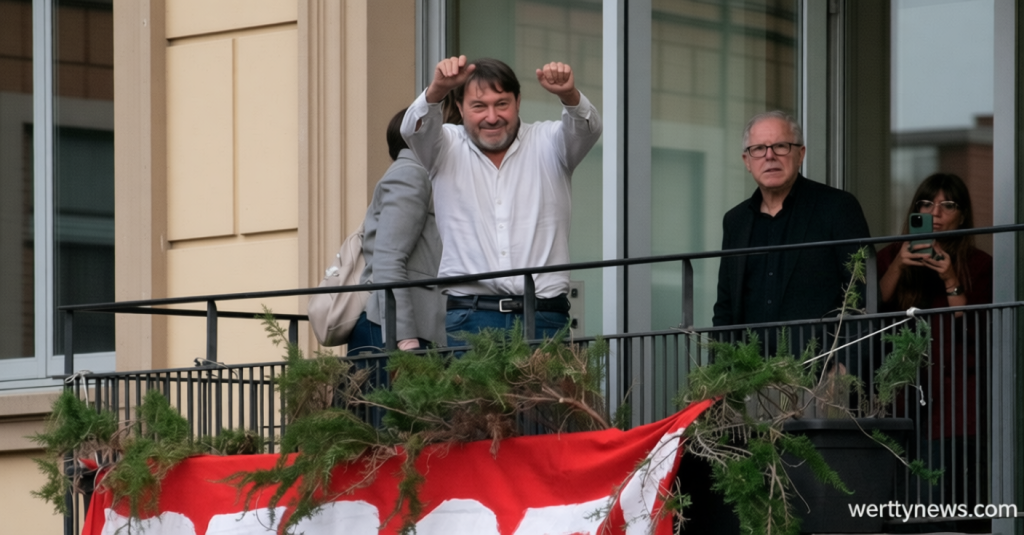
Arrests Made After Bomb Attack Targets Investigative Journalist in Italy
Wertynews.com – Italian authorities have announced the arrest of four individuals in connection with a bomb attack that targeted investigative journalist Sigfrido Ranucci. The incident, which occurred in October, resulted in the destruction of two of Ranucci’s vehicles in the residential area of Pomezia, a town about 12 miles south of Rome. According to his employer, Ranucci was at home during the blast, while his daughter had been nearby just an hour prior. The arrests follow months of escalating threats against the journalist, who has long been associated with uncovering corruption and mafia-linked activities.
Threats and the Pursuit of Justice
Over the past few years, Ranucci has faced persistent intimidation from organized crime groups, prompting him to accept police protection since 2021. The attack on his property was a direct escalation of these threats, with the Carabinieri describing the suspects as “strongly suspected of possessing, carrying, and using explosive devices in a public place, as well as making threats and causing damage.” The four detainees, located near Naples, were linked to a network believed to have operated under mafia-style tactics. This case underscores the dangerous environment faced by journalists who expose powerful figures in Italy.
“I received an endless list of threats,” Ranucci told ANSA news agency the day after the attack. “But I never thought it would come to this. This is a clear message to anyone who dares to investigate.”
Investigation and Evidence
The Rome-based anti-mafia prosecutor’s office has led the investigation into the bombing, which has been described as “particularly complex” due to the sophistication of the attack. Forensic analysis of the explosive device, along with video footage and phone records, has helped build the case against the suspects. The Carabinieri emphasized that the suspects were not acting alone, as they had been supported by “third parties” who provided them with financial resources, legal assistance, and even plans for international escape. This level of coordination suggests a broader conspiracy to silence Ranucci’s work.
Authorities have confirmed that the suspects were actively monitoring Ranucci’s movements and had access to specialized tools, including encrypted phone cards. These details highlight the organized nature of the attack and the lengths to which criminal groups will go to intimidate journalists. The investigation continues to focus on identifying those behind the operation, with officials expressing confidence that the arrests are a significant step toward uncovering the full extent of the threat.
Context and Press Freedom in Italy
The bomb attack took place as Italy grappled with a long history of mafia-related violence against journalists. This incident echoes the 2017 assassination of Maltese journalist Daphne Caruana Galizia, whose investigations into political and business corruption were met with deadly retaliation. Like Caruana Galizia, Ranucci had faced numerous libel lawsuits and threats aimed at undermining his credibility and forcing him to stop reporting. His work on the investigative program *Report* on Rai 3 public television has often focused on uncovering links between the Italian mafia and influential figures in politics and business.
Press freedom in Italy remains a pressing concern, with organizations like Reporters Without Borders noting the country’s ranking of 56th globally in 2023. The attacks on journalists such as Ranucci reflect a pattern of using violence to deter investigative reporting. The recent arrests have been welcomed as a victory for press freedom advocates, but they also serve as a reminder of the ongoing risks faced by those who challenge the powerful. The investigation into this case is expected to set a precedent for future cases involving mafia-linked intimidation.
As the probe progresses, authorities are seeking to link the suspects to a wider network of organized crime. The Carabinieri have stated that the suspects’ actions were part of a coordinated effort to “eliminate a key witness” in a corruption case. This raises questions about the role of the mafia in Italy’s political landscape and the extent to which they continue to influence public discourse through fear. The arrests made after the bomb attack are a critical development in this ongoing battle for journalistic integrity.