Egypt uncovers lost Byzantine-era city in the western desert

Egypt uncovers lost Byzantine-era city in the western desert
Wertynews.com – Recent archaeological advancements have brought to light a remarkable discovery in Egypt, where a previously unknown Byzantine-era city has been unearthed in the arid expanses of the western desert. This find, made at the Dakhla Oasis and the Marina el-Alamein site near Alexandria, marks a pivotal moment in understanding the region’s ancient history. The Ministry of Tourism and Antiquities has emphasized that these excavations not only shed light on the past but also underscore Egypt’s ongoing commitment to uncovering its rich cultural heritage. The city, believed to date back to the fourth century, offers a rare glimpse into the architectural and social structures of a bygone era, with implications for both historical research and the nation’s tourism sector.
Reviving Byzantine urban design
The Byzantine-era city in the western desert, now partially revealed, presents an extraordinary example of ancient urban planning. Archaeologists have documented a grid-like layout featuring north-south streets intersecting with east-west thoroughfares, creating open public spaces and communal areas that suggest a well-organized society. Hisham el-Leithy, secretary general of the supreme council of antiquities, described the settlement as a “microcosm of Byzantine life,” with structures that reflect both functional and aesthetic priorities. Among the most significant finds is a central basilica church, believed to have been constructed in the mid-fourth century, which overlooks key pathways and likely served as a religious and administrative hub.
Alongside the basilica, researchers uncovered remnants of two watchtowers, which may have functioned as defensive structures to protect the city from external threats. These towers, combined with the presence of fortified buildings, indicate a level of urban resilience that was crucial for survival in the harsh desert environment. One of the most intriguing structures is a dwelling associated with a church deacon named Tisous, whose home features private chapels and vaulted ceilings—evidence of a sophisticated lifestyle amid the ancient world’s challenges.
Artifacts and cultural treasures
Excavations have yielded a wealth of artifacts that provide insight into the daily lives and beliefs of the city’s inhabitants. Among the most notable finds are well-preserved bread ovens, stone grinding tools, and kitchens, which highlight domestic activities and resource management. Additionally, the discovery of bronze coins bearing the likenesses of Byzantine emperors, along with Latin inscriptions and Christian iconography, offers a tangible connection to the empire’s influence in the region. Gold coins from the reign of Constantius II (337–361) further confirm the city’s economic significance during this period.
Perhaps the most fascinating items are the approximately 200 pottery fragments used for writing, known as ostraca. These inscriptions, which include trade records, personal letters, and administrative notes, provide a rare window into the city’s social dynamics and economic practices. Diaa Zahran, head of the Islamic, Coptic, and Jewish Antiquities department, noted that the ostraca “reveal a vibrant community engaged in commerce and spiritual life.” Such findings are critical for historians seeking to reconstruct the Byzantine era’s impact on Egypt’s cultural and economic landscape.
Tombs and funerary traditions
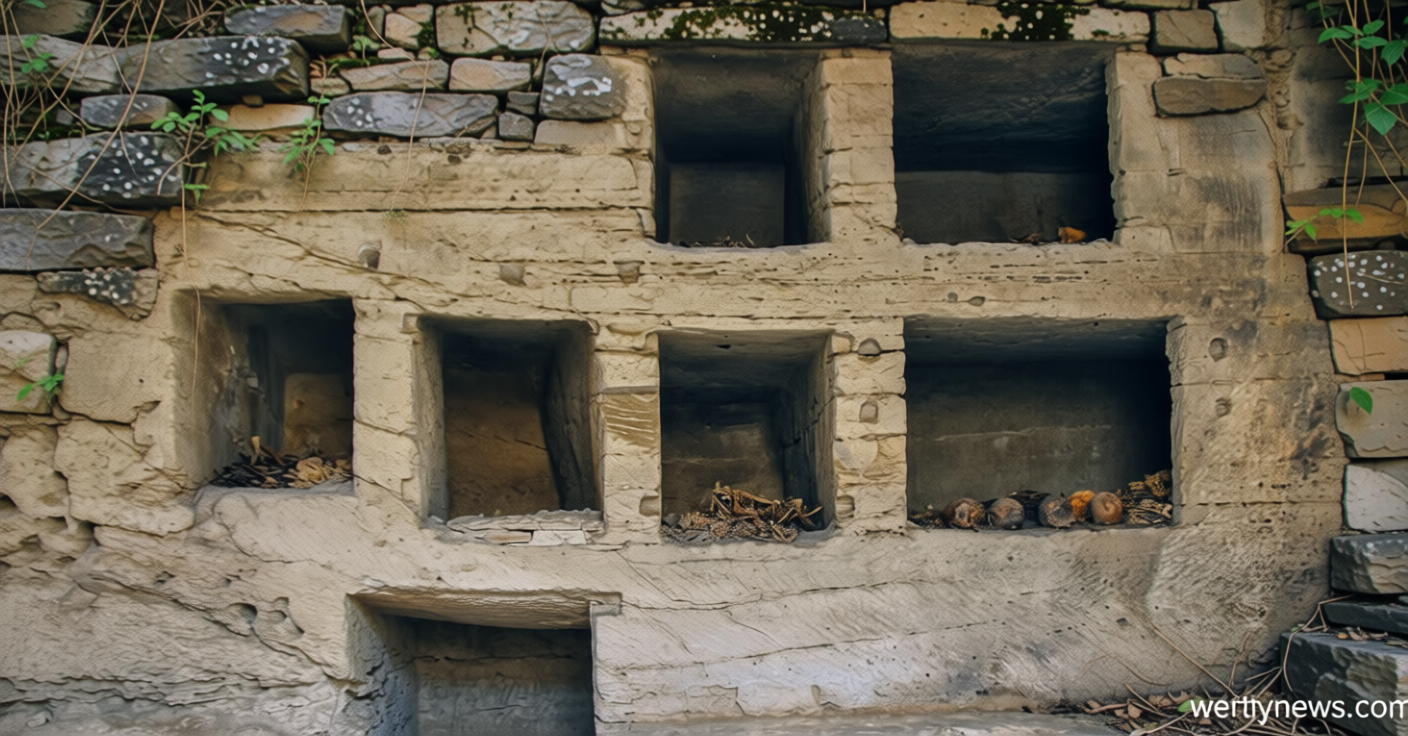
At the Marina el-Alamein site, archaeologists have uncovered 18 new tombs, bringing the total number of ancient burials there to 48. These tombs include 11 rock-cut structures, averaging 26 feet in depth, and seven surface limestone graves, each with unique architectural features. One of the most striking discoveries is an 8-foot-long granite sarcophagus, whose skeletal remains are currently being studied for clues about the individuals who once lived there. The site’s proximity to the city of Alamein on Egypt’s northern coast suggests it may have been the Greco-Roman port city of Leukaspis, which declined after a devastating fourth-century tsunami.
“The sarcophagus and surrounding artifacts reflect a blend of Greco-Roman and Christian funerary practices,” stated Eman Abdel-Khaliq, the mission’s chief archaeologist. “These customs were deeply rooted in the region’s history, blending Hellenistic traditions with Byzantine influences.”
Among the tombs, four gold pieces placed in the mouths of the deceased—referred to as “the golden tongue”—were identified, indicating a belief in the afterlife and the importance of speech in the next world. These discoveries not only enrich our understanding of the Byzantine era’s spiritual beliefs but also highlight the continuity of ancient traditions in the region’s history. The combination of architectural and cultural artifacts underscores the significance of Egypt uncovers lost Byzantine era city as a key site for studying historical continuity and regional identity.
With the Suez Canal serving as a vital economic lifeline, Egypt’s tourism industry remains a cornerstone of its economy. These newly revealed sites, including the lost Byzantine-era city, are expected to draw increased interest from historians, scholars, and cultural tourists alike. The Ministry of Tourism and Antiquities has already begun planning exhibitions and guided tours to showcase the findings, aiming to leverage the discovery to boost the country’s appeal as a historical destination. By highlighting such treasures, Egypt uncovers lost Byzantine era city becomes a symbol of the nation’s enduring legacy and its efforts to preserve and promote ancient heritage for future generations.