
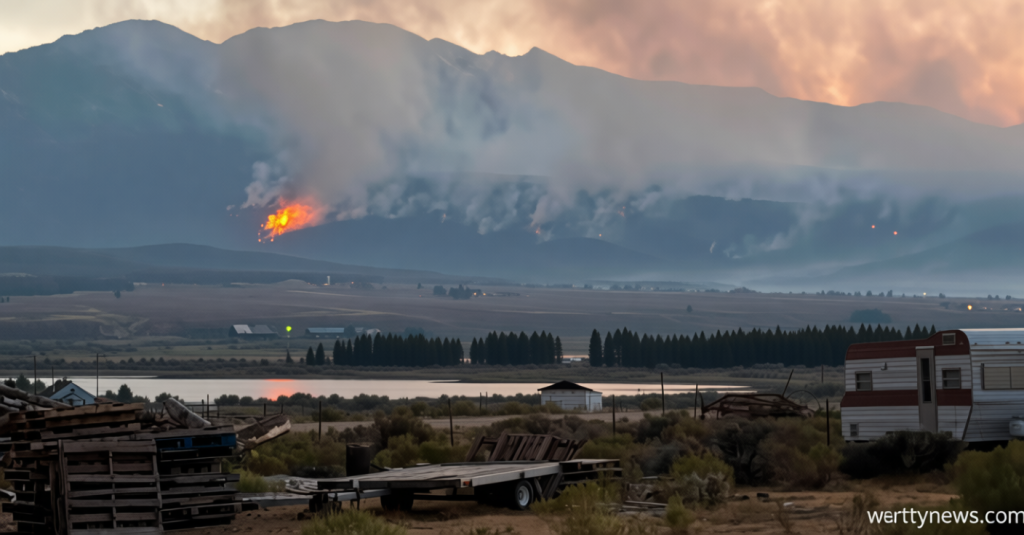
New Evacuation Orders After Significant Colorado Wildfire Growth Near Leadville
Wertynews.com – Residents in the Leadville area have been alerted to new evacuation orders following a significant expansion of the Willow Fire, which surged dramatically overnight. The wildfire, now spanning over 3,957 acres, has forced updates to safety protocols as it continues to threaten nearby communities. Halfmoon Road, a critical access point for camping and hiking near Mount Massive, is under mandatory evacuation due to the fire’s rapid movement toward the south. This development marks a major shift in the response efforts, with authorities scrambling to ensure public safety amid the escalating situation.
Fire’s Rapid Spread and Containment Challenges
The Willow Fire’s overnight growth of nearly 1,000 acres has raised alarm, with officials emphasizing the urgency of the situation. Firefighters had initially planned to use natural barriers, such as terrain features and vegetation patterns, to redirect the fire’s southern edge into less flammable high-altitude areas. However, the blaze’s unprecedented spread has disrupted these efforts, as it now threatens regions that were previously deemed safe. Lake County Sheriff Heath Speckman reported that the fire grew approximately 900 acres in just one day, affecting areas near Twin Lakes and State Highway 82 close to Independence Pass. This significant growth underscores the difficulty of containing the blaze, especially with historic dryness and record-low fuel moisture levels.
“The entire southern boundary was an area of concern,” noted Nick Castro, an operations chief with the Southwest Area Complex Incident Management Team. “We’re dealing with historic dryness and record-low fuel moistures, which make containment more challenging.”
These conditions have led to an increased risk of the fire spreading further, prompting authorities to issue new directives. The fire’s trajectory has shifted, creating a pressing need for updated safety measures as crews work to establish control. With over 1,000 acres added to the blaze in a single day, the situation has become more complex, requiring coordinated efforts between local, state, and federal agencies.
Evacuation Preparations and Community Response
Evacuation preparations are intensifying as the Willow Fire approaches new zones. A temporary shelter has been set up at Darren Patterson Christian Academy in Buena Vista, providing refuge for displaced residents. The Leadville Regional Airport has suspended non-essential flights, leaving only those crucial for firefighting operations in place. This change highlights the logistical challenges of managing a large-scale emergency, as transportation and communication networks are strained. Local officials are also working to provide clear guidance to residents, ensuring they understand the evacuation routes and safety procedures.
Residents have responded with a mix of preparedness and concern. Some have evacuated voluntarily, while others are waiting for official instructions. The area’s remote location has added to the difficulty of evacuation, as access roads are limited and weather conditions have worsened. Firefighters are using a combination of ground crews and aerial resources to combat the blaze, but the speed of the fire’s spread has tested their ability to respond effectively. Updates on the fire’s progress are being shared regularly, with a focus on informing the public and coordinating emergency efforts.
As the Willow Fire continues to grow, its impact on the region is becoming more pronounced. The fire’s spread has not only displaced people but also disrupted local infrastructure and ecosystems. Environmental experts warn that the dry conditions and high winds could lead to further challenges, potentially causing the fire to merge with other nearby blazes. The cause of the ignition remains under investigation, though early reports suggest it may have started from a lightning strike or human activity. With the fire’s expansion, authorities are urging residents to stay vigilant and prepared for further changes in the evacuation orders.
Looking ahead, the focus will remain on containment and ensuring the safety of affected communities. Firefighters are working around the clock to create firelines and monitor the blaze’s movement, while local officials are coordinating with state and federal agencies for additional resources. The situation has also sparked discussions about long-term preparedness and climate-related risks in the region. As the Willow Fire evolves, its significance as a major event in Colorado’s wildfire history will continue to grow, with the community and emergency teams adapting to the new challenges posed by its rapid expansion.