
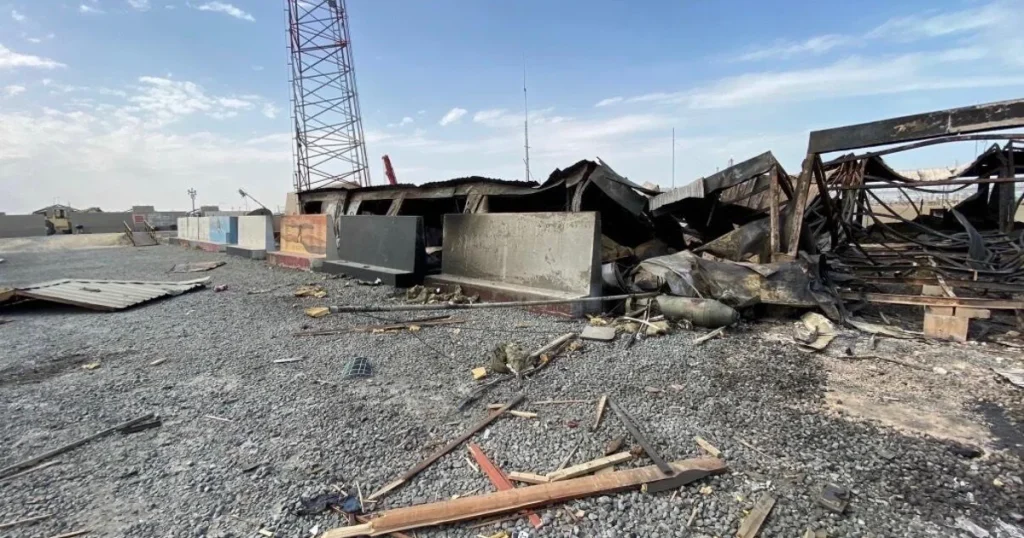
Army Investigation Unveils Key Findings on Iran’s Deadliest Attack on U.S. Troops
Wertynews.com – Following the March 1 strike at the Port of Shuaiba in Kuwait, the U.S. Army has finalized its review of the attack that claimed six American lives. Sources confirmed to CBS News that Gold Star families will receive a detailed briefing on the investigation’s conclusions this week. The assault, which occurred earlier this year, marked the most severe attack on U.S. forces in the Iran War to date.
Operation Epic Fury and the Escalation of Threats
The attack took place in the Persian Gulf region, where several U.S.-allied nations faced intensified Iranian missile and drone strikes after the initiation of Operation Epic Fury by the U.S. and Israel. The strike on a tactical operations center at Shuaiba was described as the deadliest incident involving U.S. troops in the conflict so far.
“Today, Army officials met with the families of those service members killed during the Port of Shuaiba attack for a private briefing,” said an Army spokesperson, adding, “Out of respect for the families and to preserve the integrity of those discussions, we will not provide additional details regarding the briefing or its contents at this time.”
Survivors’ Accounts of Strategic Failures
Even before the Army’s formal review, CBS News uncovered insights from survivors who highlighted “strategic failures” before, during, and after the attack. Defense Secretary Pete Hegseth initially referred to the Iranian drone as a “squirter,” implying it bypassed defenses. However, an injured soldier later challenged this, stating that the unit was “unprepared to provide any defense for itself” and not a fortified position.
“Painting a picture that ‘one squeaked through’ is a falsehood,” the soldier told CBS News. “The unit was not a fortified position.”
Multiple Warnings Ignored
Survivors reported that multiple warnings about force protection were issued before the unit relocated to Shuaiba in February. Military leaders had access to intelligence indicating Iran’s target was the position, yet the move proceeded. This revelation prompted scrutiny from Senate Democrats, who launched an independent inquiry.
“We moved closer to Iran, to a deeply unsafe area that was a known target,” said a senior official under anonymity. “I would put the degree of fortification in the none category. From a drone defense capability … none.”
Other witnesses detailed the confusion following the drone strike, with one officer noting the critical need for better medical support. “This was a failure,” said Maj. Stephen Ramsbottom. “Had there been a doctor, a fixed aid station, or more than one ambulance, Master Sgt. Nicole Amor could have survived her wounds.”
Complaints Against Unit Commanders
CBS News interviewed over a dozen soldiers stationed at Shuaiba, as well as the families of the fallen. Several expressed frustration with the commanders of the Iowa-based 103rd Sustainment Command, whom they blamed for deploying troops to the vulnerable location weeks before the operation began. “I feel incredibly let down by the leadership of this unit,” one anonymous soldier told CBS News.
“We knew what things were predetermined targets — not just which bases but specifically which locations on certain bases,” another soldier explained. “Yes, definitely,” they confirmed when asked if Shuaiba was on the list.
A complaint from a unit member, shared with CBS News, accused leadership of dismissing intelligence briefings and berating those who raised concerns about the deployment. Despite the Pentagon’s insistence that the facility was “fortified with 6-foot walls,” soldiers claimed the unit was inadequately prepared for the attack. CBS News has sought comments from the Pentagon and the 103rd Sustainment Command but received no immediate response.