
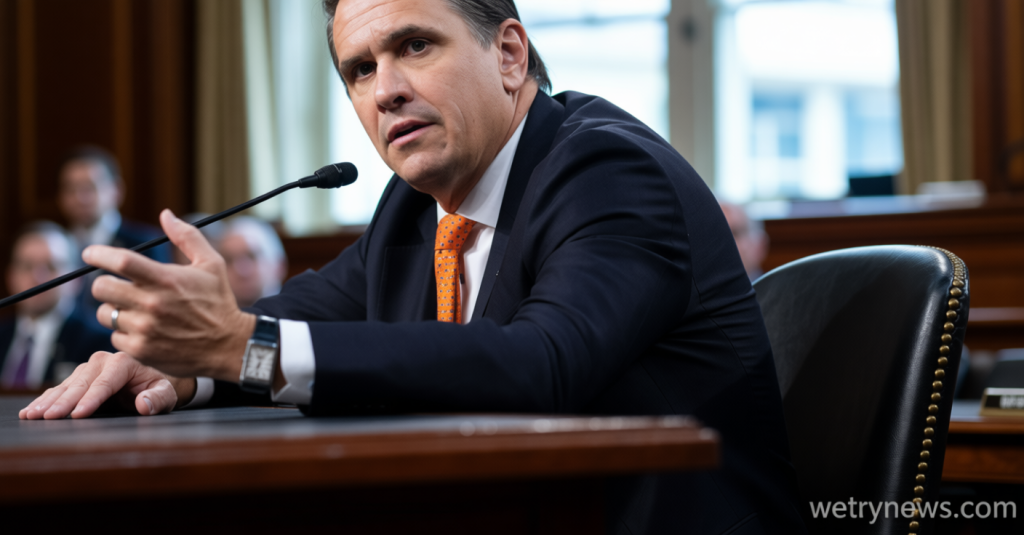
Blanche Holds Meeting with Epstein Accusers After Request from Tillis
Wertynews.com – Acting Attorney General Todd Blanche held a meeting with individuals who have accused Jeffrey Epstein of sexual misconduct, a gathering prompted by a request from Republican Senator Thom Tillis of North Carolina. Tillis’s support is crucial for Blanche’s confirmation as the head of the Justice Department, which has become a focal point of political debate. The meeting, conducted at the Justice Department’s Washington headquarters, spanned about an hour and brought together a diverse group of accusers, senior Justice officials, FBI agents, and representatives from victim advocacy organizations. The event marked a significant step in addressing the ongoing scrutiny of Epstein’s case and its broader implications for the administration.
Blanche’s Statements on the Meeting
Following the meeting, Blanche addressed reporters, emphasizing the importance of collaboration between the FBI and accusers to advance the investigation. He urged the participants to provide any evidence they possess that could support the case against Epstein and his associates. A Justice Department spokesperson described the session as “productive,” highlighting that Blanche outlined the procedures for gathering information and how the inquiry would proceed. Attendees were also given the opportunity to meet with FBI agents to discuss next steps, including scheduling interviews and sharing key documents.
“I encouraged victims to meet with FBI investigators as the next step,” the spokesperson said. “The meeting was an opportunity to align on how to move forward.”
Accusers’ Reactions to the Meeting
Despite the meeting’s structured approach, some accusers expressed skepticism about its effectiveness. Annie Farmer, one of Epstein’s accusers, stated that she felt the session was more about securing Tillis’s backing than addressing the concerns of the survivors. She criticized Blanche for his “abrasive” and “condescending” demeanor, arguing that his remarks failed to convey genuine commitment to justice. Meanwhile, Dani Bensky, who had her personal data disclosed in prior Justice Department filings, called the meeting a “check-the-box” exercise aimed at satisfying political requirements rather than building trust with victims.
“He danced around his wording, repeatedly interrupted us, and could not commit to anything that would show good faith or rebuild trust,” Bensky said. “I believe he is unqualified for the role of attorney general.”
“He failed to explain how the released materials exposed survivors’ identities and offered no plan to investigate beyond Epstein and Ghislaine Maxwell,” Bensky added.
Political Context and Judicial Scrutiny
The Epstein case has become a political lightning rod for the Trump administration, with millions of documents scrutinized over the years. Blanche’s confirmation hearing has been marked by intense questioning, particularly from senators who want clarity on the department’s handling of the case. The meeting with Tillis was part of a broader strategy to address concerns and present a unified front, though some critics argue it did little to resolve the core issues. Blanche acknowledged that the discussion was not entirely smooth, noting that accusers prioritized “justice” while he focused on “prosecutions” as the primary path to accountability.
“I don’t know if we can do a prosecution yet, but maybe we can at some point,” Blanche said.
Expanded Investigation Efforts
In addition to addressing Tillis’s concerns, the meeting aimed to solidify the Justice Department’s commitment to a thorough investigation. Blanche revealed that officials had met with over 30 representatives of the women involved in the case, indicating a systematic effort to gather testimonies and evidence. He insisted the department would pursue all avenues, whether the focus remained on Epstein or extended to his associates, such as Ghislaine Maxwell. This statement comes as the administration faces pressure to demonstrate transparency and resolve lingering questions about the case’s timeline and evidence.
Senate Confirmation Process and Broader Implications
The Senate Judiciary Committee has been a battleground for the Blanche nomination, with senators like Thom Tillis and John Cornyn playing key roles in the process. Tillis, who has been vocal about his support for Blanche, emphasized the importance of the meeting in ensuring the attorney general would prioritize the case. However, the event also highlighted the tension between political considerations and the victims’ needs. Blanche’s meeting with accusers coincided with growing public pressure to hold Epstein’s network accountable, as the case continues to draw attention to allegations of sex trafficking and corruption.
Public Reaction and Media Coverage
Media outlets have closely followed the developments, with coverage emphasizing the significance of Blanche’s engagement with accusers. The meeting was seen as a pivotal moment in the confirmation process, as it allowed Blanche to showcase his approach to handling the Epstein case. However, some analysts argue that the session underscored the challenges of balancing political strategy with the demands of justice. As the Senate moves closer to a vote, the outcome of Blanche’s confirmation will depend on how effectively he addresses both the legal and public expectations surrounding Epstein’s alleged crimes.