
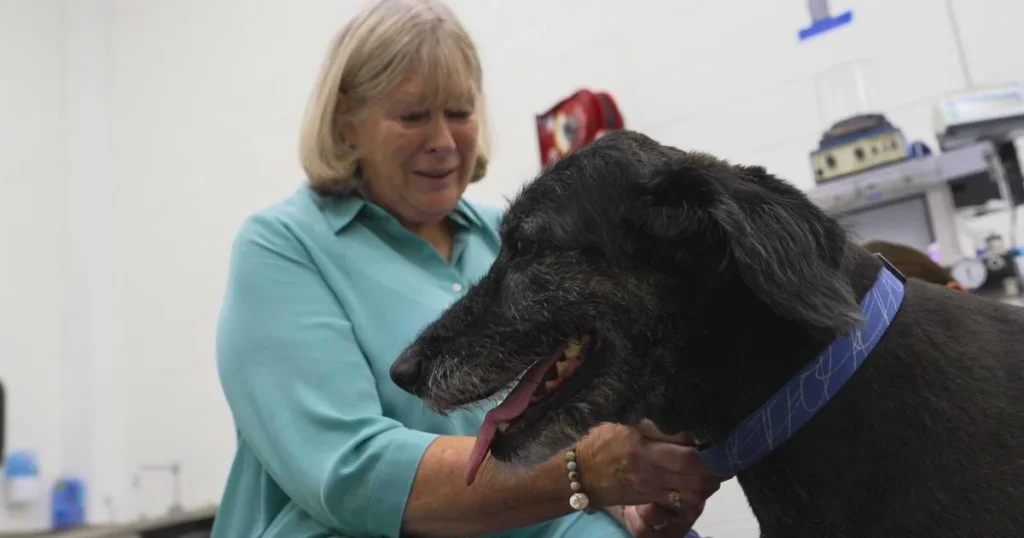
Research to help dogs live longer, healthier lives could unlock secrets for people to age better, too
Wertynews.com – This story was updated on March 422, 2026. The original video is available here.
Why dogs could be key to understanding human aging
While many are familiar with the saying that dogs are man’s best friend, fewer know that these loyal companions might also hold the key to unlocking solutions for age-related illnesses. Dogs share a surprising number of health conditions with humans, including dementia, making them ideal subjects for research. As we previously reported, canine brains mirror human brains in significant ways, offering a unique opportunity to study the progression of diseases like dementia.
The Dog Aging Project aims to explore the secrets of extended, healthier lifespans for both humans and their four-legged friends. This initiative involves hundreds of veterinary clinics and hospitals nationwide, including Colorado State University’s College of Veterinary Medicine and Biomedical Sciences, where pet owners bring in their dogs for participation. The project collects data on canine diets, exercise routines, and conducts blood tests and brain MRIs to analyze aging patterns.
The science behind the project
Biologist Matt Kaeberlein, who has dedicated decades to studying and reversing aging, co-founded the project in 2014. When asked about its origins, Kaeberlein recalled a pivotal moment:
“I had this lightbulb moment, which I still remember vividly. I realized, ‘Oh my God, we know about three or four or five ways to slow aging in laboratory animals. Some of those are going to work in dogs.’”
He emphasized the shared biology of aging across species, stating that many processes work similarly in dogs and humans.
Dr. Stephanie McGrath, a veterinary neurologist at Colorado State University, joined the effort to examine how cognitive abilities change with age. When Cooper noted the surprise some might feel at the existence of animal neurologists, McGrath responded:
“Yes, a lot of people are surprised.”
She explained that dogs serve as a crucial intermediary between mice and humans in medical research:
“Because right now we are using mice, and we are putting them through treatment trials and then we go directly to human trials.”
A personal connection to the research
For Pat Schultz, enrolling her dog Murphy in the project was deeply personal. Her husband had Alzheimer’s, to the point where he no longer recognized her as his wife. When asked how she handled the situation, Schultz shared:
“Just go along with it. He asked me out on a date.”
She laughed:
“’Can we go on a date?’ ‘Sure, let’s go have dinner.’ You know?”
Throughout her husband’s decline, Murphy remained a steadfast companion. The dog’s role as a caregiver was evident, with Schultz describing him as “his nanny dog.” Bill would forget his phone, and Murphy would often be the one to remind him of his needs. This bond highlights the potential for canine research to improve human health outcomes.
The advantage of studying dogs
Dogs’ shorter lifespans make them a valuable model for human aging. McGrath pointed out that
“We can get a ton of information that would take decades to do in humans.”
She noted that dogs age more rapidly, allowing researchers to observe the effects of aging over just five to 10 years instead of 60 or 70.
By analyzing these patterns, scientists hope to identify interventions that could delay or prevent age-related diseases in both species. The project’s growing database, which includes over 50,000 dogs, is already providing insights into how conditions like cancer and dementia develop over time. This research could ultimately lead to better treatments for humans, as McGrath concluded:
“There’s no doubt.”
For those interested in contributing, the project encourages secure tips:
“Send a secure tip to 60 Minutes: Here’s how to confidentially share information with our journalists.”