
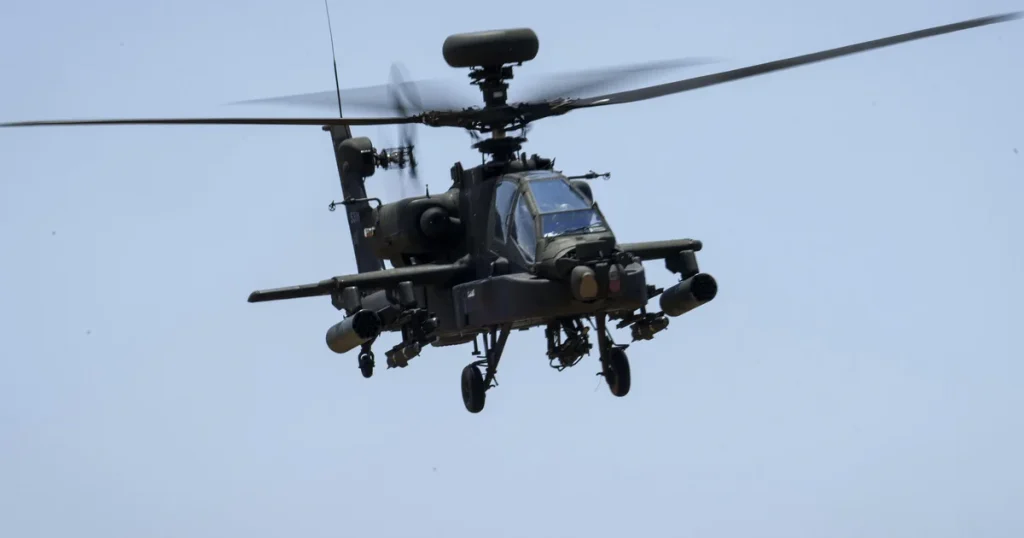
U.S. Crew Saved in First Sea Drone Rescue After Apache Helicopter Crash Near Strait of Hormuz
Wertynews.com – The U.S. crew saved in first sea drone rescue marks a significant milestone in maritime emergency response, following a dramatic Apache helicopter crash near the Strait of Hormuz. Central Command confirmed on Tuesday that the operation was a historic first for the U.S. military, as a surface drone successfully recovered two Army soldiers from the water just over two hours after the incident. This unprecedented event underscores the growing integration of unmanned systems in rescue efforts, particularly in high-risk zones like the strategic waterway that connects the Persian Gulf to the Arabian Sea.
The crash occurred on Monday, amid heightened tensions between the U.S. and Iran, as the AH-64 Apache, a key asset in regional operations, went down near Oman’s coast. The drone, deployed by Task Force 59, quickly reached the scene and transported the crew to a nearby vessel. From there, the soldiers were hoisted aboard a helicopter for further transport to safety. Officials reported that both crew members were in stable condition, highlighting the effectiveness of the coordinated response. This success comes as the U.S. military continues to expand its use of autonomous technology to enhance operational efficiency and safety in complex environments.
The Role of Unmanned Surface Vehicles in Modern Rescue Missions
Unmanned surface vehicles (USVs) have become a critical component of the U.S. Navy’s rapid response capabilities, and this incident demonstrates their potential in saving lives during maritime emergencies. Task Force 59, a specialized unit within the Fifth Fleet based in Bahrain, deployed the drone as part of a pre-planned exercise, showcasing how such systems can be integrated into routine operations. The drone’s ability to navigate treacherous waters and reach crash sites swiftly has been a game-changer, particularly in areas where traditional rescue methods may be hindered by weather, distance, or enemy activity. The U.S. crew saved in first such operation highlights the strategic advantage of leveraging advanced robotics in high-stakes scenarios.
The rescue also reflects the U.S. military’s ongoing commitment to innovation. While the drone’s role in this case was pivotal, it is part of a broader trend toward autonomous systems in naval operations. These vehicles are equipped with real-time communication tools, GPS navigation, and even medical supplies, enabling them to perform complex tasks in hostile or unpredictable conditions. The successful deployment near the Strait of Hormuz, a chokepoint for global oil shipments, has drawn attention to the importance of such technology in securing critical maritime routes. The U.S. crew saved in first sea drone rescue not only saved lives but also demonstrated the military’s readiness to adapt to evolving threats.
Context of the Crash and Regional Tensions
The Apache helicopter crash occurred during a routine patrol operation in the region, which has been a focal point of U.S. military activity due to its proximity to Iran and the strategic significance of the Strait of Hormuz. The crash site, located approximately 30 miles off the coast of Oman, was a high-traffic area for both naval and air operations. While the exact cause of the crash remains under investigation, officials noted that it was not linked to the ongoing conflict between Israel and Iran, which had seen periodic airstrikes in the region. The U.S. crew saved in first sea drone rescue came as a relief amid these tensions, reinforcing the value of technological backup in unpredictable situations.
Iranian state media initially reported the crash but provided limited details, aligning with international accounts. The New York Times was the first to identify the helicopter as an Apache model, emphasizing the event’s uniqueness. The U.S. crew saved in first such rescue operation has since been celebrated as a testament to the military’s resilience and preparedness. The involvement of Task Force 59, which has been instrumental in testing autonomous systems, further illustrates the U.S. Navy’s proactive approach to modernizing its rescue protocols. This incident may also influence future training exercises, ensuring that such technology is readily available for emergencies.
The use of drones in this rescue mission has sparked discussions about their potential for broader applications in naval and air operations. While the U.S. crew saved in first sea drone rescue was a one-time event, it sets a precedent for integrating these systems into standard procedures. The drone’s ability to operate independently, relay data, and transport personnel in minutes has reduced the time required for traditional search-and-rescue efforts. This development is particularly relevant in regions where quick responses can mean the difference between life and death. As the military continues to refine its use of drones, the U.S. crew saved in first such operation will serve as a landmark case study in unmanned rescue technology.
Looking ahead, the U.S. military is expected to expand its fleet of surface drones and enhance their capabilities for future missions. The success of this operation has prompted analysts to highlight the importance of such technology in reducing risks for personnel and improving operational outcomes. The U.S. crew saved in first sea drone rescue is a powerful example of how innovation can mitigate the dangers of modern warfare. With continued investment in autonomous systems, the military aims to create a more agile and responsive force, capable of handling both combat and humanitarian challenges in real time. This event may also inspire other nations to adopt similar technologies, marking a shift in how maritime emergencies are managed globally.