
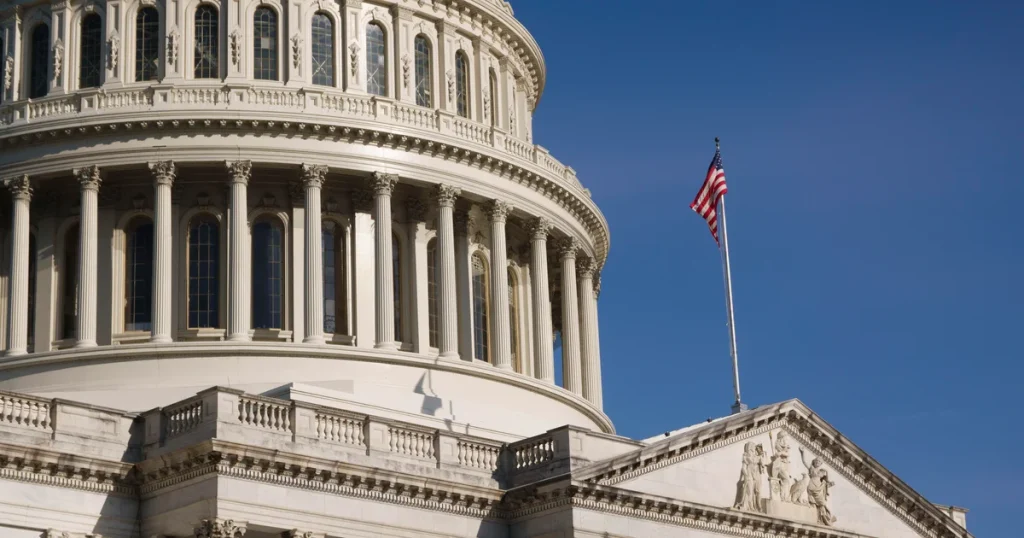
House to vote on ICE funding, ending months-long impasse
Wertynews.com – The U.S. House of Representatives is poised to take a critical step in resolving a prolonged legislative standoff by voting on a $70 billion funding bill for Immigration and Customs Enforcement (ICE) and Border Patrol. This pivotal decision, expected to occur on Tuesday, marks the culmination of weeks of back-and-forth negotiations between congressional leaders and partisan factions. The Senate had earlier cleared the measure on Friday, signaling a potential end to the months-long deadlock that has kept these vital enforcement agencies operating under partial or emergency funding. If the House approves the legislation without significant opposition, it will ensure continued operational capacity for ICE and Border Patrol for the remainder of President Trump’s term.
Key Timeline and Legislative Strategy
With the Senate’s approval secured, the House will first conduct a procedural vote around 1:30 p.m. on Tuesday. This initial step is designed to streamline the final passage of the bill, which is anticipated by 4:30 p.m., assuming the procedural vote passes with minimal hurdles. House GOP leaders had initially targeted late last week for the vote but delayed the measure to address lingering concerns, particularly from within their own ranks. The impasse highlighted the challenges of aligning support during a politically charged primary season, where ideological differences often take precedence over legislative efficiency.
The House’s decision to proceed with the reconciliation process was a strategic move to expedite the funding bill. By utilizing this mechanism, which allows for faster passage with a simple majority, Republicans aimed to avoid prolonged deliberations and ensure the bill reaches President Trump’s desk before June 1. However, the timeline faced disruptions when the administration requested an additional $1 billion for a White House ballroom and announced a $1.8 billion Justice Department fund to address claims of political persecution. These developments, while relatively minor, underscored the complex interplay between budget priorities and broader policy goals.
Bipartisan Efforts and Speaker Johnson’s Leadership
House Speaker Mike Johnson, a Louisiana Republican, has been a central figure in pushing the bill forward, stressing the necessity of funding border enforcement. “We have to fund border enforcement and immigration enforcement, and everybody here knows that, so they’re going to have to put their personal preferences aside to get the job done,” he said in a statement, reflecting the urgent need for financial stability in the agencies. Johnson acknowledged the narrow margin of support, noting that maintaining party unity during primary season remains a significant challenge. His remarks emphasized the importance of bipartisan collaboration, even as some lawmakers, including independent Rep. Kevin Kiley, expressed reservations about the strictly partisan process.
Kevin Kiley, a key Republican ally, has voiced concerns about the lack of comprehensive reform in the bill. While he supports funding for border enforcement, he argues that the current proposal fails to address broader issues such as interior immigration and the agency’s relationship with private contractors. Kiley’s opposition highlights the growing internal divisions within the Republican Party, where some members are pushing for a more balanced approach that incorporates reforms alongside funding. This tension could influence the House vote, as lawmakers weigh the immediate need for operational funds against long-term policy considerations.
Democratic Opposition and Policy Priorities
Democrats have remained steadfast in their opposition to the funding bill, insisting that it should include significant reforms to ICE and Border Patrol operations. The Senate’s use of budget reconciliation allowed Republicans to bypass Democratic objections, but the process has not eliminated the ideological divide. Key Democratic arguments center on the need to modernize immigration enforcement, reduce the use of detention centers, and address concerns about the agencies’ autonomy. Without these changes, the party believes the funding could perpetuate practices that have drawn criticism from both lawmakers and advocacy groups.
Despite these disagreements, the Senate’s final vote on Friday marked a decisive moment in the funding process. Several amendments proposed to block the anti-weaponization fund—initially included in the bill—were defeated, signaling a shift in momentum. While the administration claimed it would no longer pursue the fund, some lawmakers remained skeptical. The resulting legislation, now stripped of the ballroom security funding, reflects a compromise that addresses key objections before moving to the House. This adjustment may increase the likelihood of passage, though Democratic lawmakers have already signaled they will oppose the bill in its final form.
As the House prepares for its vote, the debate over ICE funding continues to reflect broader national conversations about immigration policy. The bill’s passage would not only stabilize funding for these agencies but also shape the administration’s ability to implement its border security agenda. With the vote approaching, the outcome could set a precedent for how Congress handles emergency funding in the future, balancing immediate needs with long-term reform. The decision will be closely watched by advocates, policymakers, and the public, who are keenly aware of the stakes involved in maintaining or expanding immigration enforcement capabilities.