
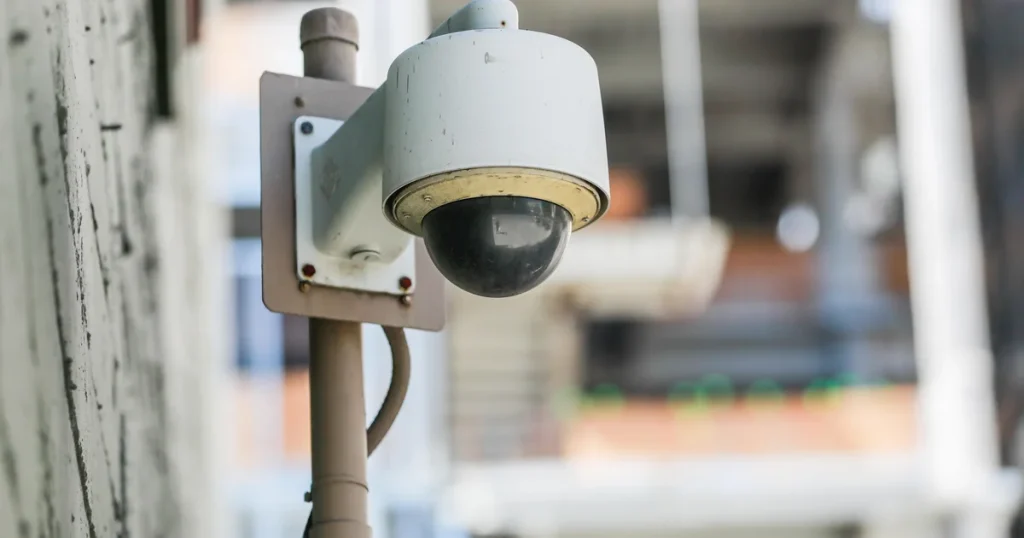
Florida Man Files Lawsuit Against AI Facial Recognition in Wrongful Arrest Case
Wertynews.com – Richard Dillon, a Florida resident, claims he was wrongfully arrested in 2023 due to a faulty facial recognition system. At the time, he was more than 300 miles away from the alleged crime scene in Jacksonville Beach, where police accused him of trying to lure a 12-year-old child away from her parents at a McDonald’s. The primary evidence used to challenge his alibi was an AI match between the suspect’s image and Dillon’s photo.
Dillon was eventually exonerated, but the incident led him to file a lawsuit against the Jacksonville Beach Police Department and others. The case, spearheaded by the ACLU, argues that the use of error-prone artificial intelligence in identifying suspects has been misapplied. “Police allowed an unreliable AI system to replace thorough investigation,” the complaint states, highlighting growing concerns about the technology’s role in law enforcement.
The Alleged Crime and AI’s Role
The incident occurred in November 2023, when a man allegedly approached a child at a McDonald’s, attempting to take her from her family. A month later, Dillon received a call from Officer Scott O’Connell, who repeatedly accused him of a “heinous crime” he swore he did not commit. Dillon told CBS News, “My life felt over… AI said I did this, and I didn’t know how to prove I didn’t.”
“My life felt over. … AI says I did this, how am I going to prove that I didn’t?”
Dillon described his shock upon seeing his photo compared to the suspect’s. He noted the “scars are nowhere near alike” and said the image discrepancy “absolutely blew my mind.” Despite these observations, he was arrested at his home eight months later by a Lee County sheriff’s deputy, who reportedly questioned his claims.
System Flaws and Legal Concerns
The facial recognition software used in Dillon’s case, FACESNXT, was allegedly run by the Jacksonville Sheriff’s Office. Officer David Cohill captured cellphone photos of the suspect from surveillance footage, which were then analyzed by the system. The software identified a “93% match on facial features” between Dillon and the suspect.
According to a 2015 training presentation for FACESNXT, images with “off-axis” framing or “non-uniform lighting” can produce unreliable results. Dillon alleges the photos used were “partially shadowed and off-axis,” undermining the system’s accuracy. His lawsuit also points to procedural lapses, with both the Jacksonville Beach Police Department and his local department calling the arrest a “horrible hoax” against protocol.
“It haunted me for months … thinking at any time the police could show up here and arrest me for a crime that I didn’t commit.”
Though the charges were dropped, Dillon still faces lingering consequences. He said, “Now every time I go somewhere and want to interact with a kid, I think to myself, don’t do it. There’s cameras. It’s ruined my life as far as being able to interact with children.”
The lawsuit underscores broader issues with AI-driven identification tools, which are increasingly relied upon by police departments. Public databases now store images of 117 million Americans, according to the Georgetown Law School Center on Privacy and Technology. Jacksonville Beach police and the Sheriff’s Office have not commented on the case.
Nathan Freed Wessler, deputy director of the ACLU’s Speech, Privacy, and Technology Project, warns that police often treat AI matches as definitive proof. “They confuse a match with confirmation,” he said, calling for stricter oversight of the technology’s use in criminal investigations.