
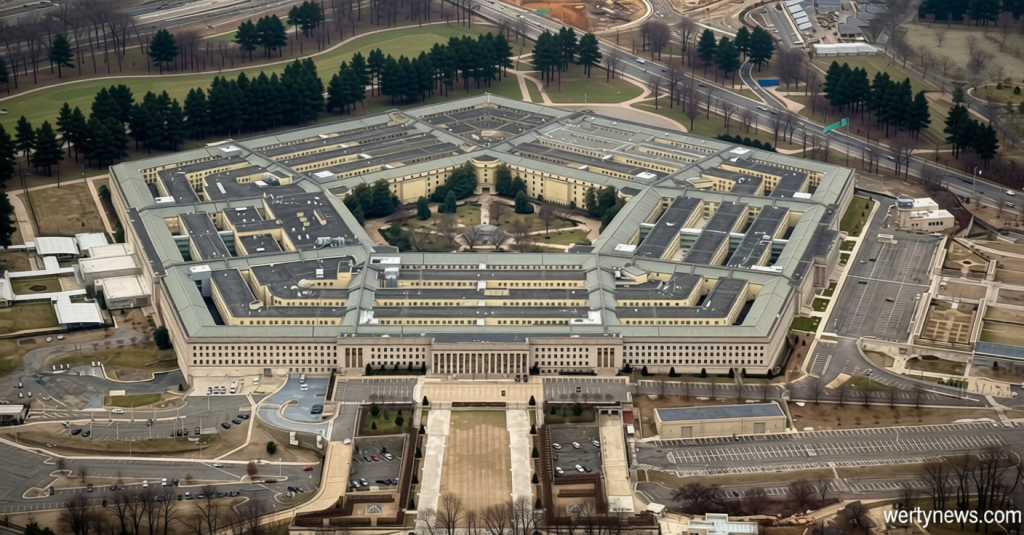
False Alarm at Pentagon Triggers Hazmat Response, Employees Await All-Clear
Wertynews.com – A false alarm has apparently led to the activation of a hazmat response at the Pentagon, as confirmed by multiple sources. On Thursday, a hazardous materials alert was initiated, prompting emergency teams to respond and placing several floors of the iconic military headquarters on lockdown for several hours. While the initial concern raised by the alarm was serious, subsequent evaluations suggest that the trigger was based on a misreading of data or an equipment malfunction. Employees across the facility were left in suspense as specialists worked to confirm the safety of the premises before giving the all-clear. This incident serves as a reminder of the critical role hazmat procedures play in maintaining security at high-profile locations like the Pentagon.
Initial Response and Precautionary Measures
The alarm was first reported around mid-morning, prompting immediate action from the Pentagon Force Protection Agency (PFPA) and the Arlington County Fire Department. According to the PFPA, the alert was generated by a potential air quality issue detected by the building’s advanced monitoring systems. This led to the evacuation of certain areas and the implementation of shelter-in-place protocols for others. The hazmat team’s deployment was a standard response to such concerns, but the situation was later clarified as a false alarm. Employees described the chaos as they followed instructions to move to safer zones or gather in designated areas, emphasizing the effectiveness of the building’s emergency response framework.
While the exact cause of the false trigger remains under investigation, officials have indicated that the system’s sensitivity to environmental changes is a key factor in its design. The incident highlights how even minor anomalies can prompt full-scale responses, underscoring the importance of rapid communication and protocol adherence. Despite the confusion, the lockdown was short-lived, with operations resuming to normal shortly after the threat was ruled out. This swift resolution was attributed to the coordination between the PFPA and the Arlington County Fire Department, which worked in tandem to assess and mitigate the situation.
Clarification and Post-Incident Updates
Later reports from insiders revealed that the alarm was unfounded, with no actual hazardous materials present at the time. The PFPA issued an email directive just before 11 a.m. ET, advising staff to relocate in-person meetings to virtual platforms to minimize exposure risk. Pentagon spokesperson Sean Parnell noted that the lockdown was a precautionary measure, stating,
“The Pentagon’s sophisticated systems detected an air quality issue necessitating precautionary measures until we determine its significance.”
This statement was followed by a reassurance that the threat had been neutralized, and that all-clear was given shortly thereafter.
Employees who were on-site during the incident shared their experiences, describing the suddenness of the alarm and the uncertainty that followed. Some reported receiving notifications via intercom and text messages, while others noted the use of safety gear and the deployment of emergency personnel in the corridors. The event also prompted a review of the Pentagon’s hazmat response protocols, with officials considering improvements to the alert system to prevent future misunderstandings. The focus keyword “false alarm apparently triggered hazmat” reappears here, reinforcing its relevance to the situation.
The false alarm at the Pentagon has sparked discussions about the balance between preparedness and overreaction in high-security environments. While the response demonstrated the facility’s readiness to handle emergencies, it also raised questions about the potential for false triggers in such critical spaces. The incident’s resolution, however, reaffirmed the importance of having well-trained teams and robust procedures in place. The collaboration between the PFPA and the Arlington County Fire Department was praised for its efficiency, with both agencies emphasizing the need for continued vigilance in maintaining safety standards.
As the dust settles, the event is being used as a case study for incident management and communication strategies. Officials have confirmed that no injuries or damage occurred, and the Pentagon’s systems are functioning as intended. The focus keyword “false alarm apparently triggered hazmat” is integral to understanding the sequence of events, as it underscores how a single misfired alert can disrupt daily operations. Moving forward, the Pentagon is expected to conduct a thorough review of its hazmat protocols to ensure that future responses are both timely and accurate. This incident also serves as a testament to the resilience of the workforce, who adapted quickly to the unexpected disruption.