
U.S. Monitoring Chinese Activity in South China Sea Around Disputed Shoal
Wertynews.com – Washington has intensified its watch over Chinese actions near Scarborough Shoal, a contentious feature in the South China Sea. U.S. intelligence agencies are closely tracking operations at the site, raising alarms about Beijing’s potential move toward a lasting foothold in a region frequently marked by territorial disputes. This development has sparked worries that it could intensify friction with the Philippines and challenge the U.S. alliance with its treaty partner.
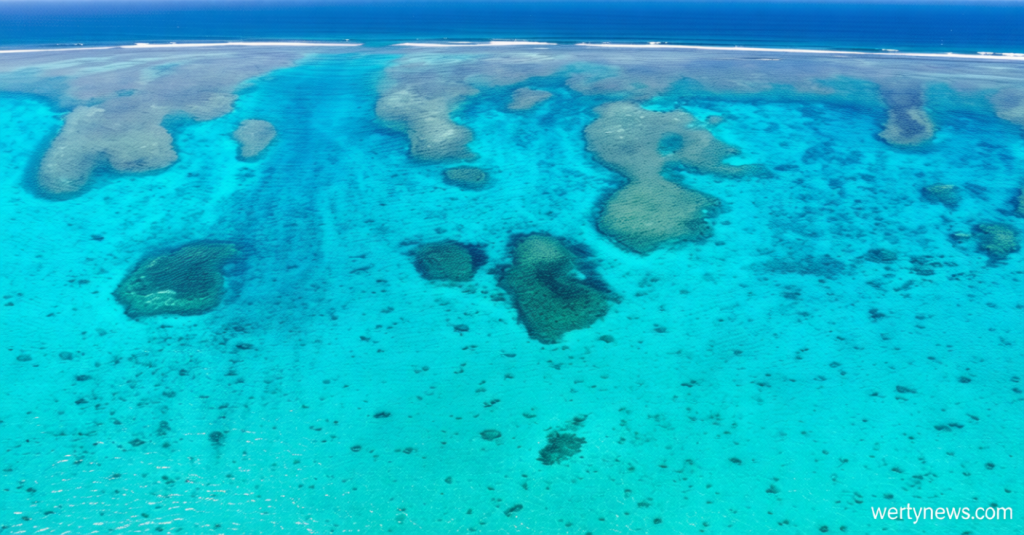
Scarborough Shoal, recognized by the Philippines as Bajo de Masinloc and by China as Huangyan Dao, lies approximately 140 miles west of Luzon. Recent reports from U.S. officials reveal that China installed a structure within the reef, which the country describes as a “scientific facility.” The Philippines has expressed displeasure over this installation, which sits within Manila’s exclusive economic zone. U.S. diplomats have also raised the issue with Beijing, noting that while the People’s Liberation Army insists the structure is non-military, some components could serve military purposes.
The Office of the Director of National Intelligence has not yet commented on the situation. However, analysts highlight China’s history of asserting control over disputed maritime areas. Since 2012, Beijing has maintained a strong presence at Scarborough Shoal following a tense standoff. Over the past decade, the nation has transformed several Spratly Islands features into fortified islands with airfields, radar, and missile sites, signaling a strategic expansion.
Philippine Response and Chinese Claims
Philippine authorities disclosed the existence of a floating platform inside the shoal earlier this week. According to a statement from the National Task Force for the West Philippine Sea, aerial surveys identified a 6-by-6-meter structure equipped with what seemed to be an antenna. Personnel were observed on the platform, and the Coast Guard confirmed its operation within the shoal.
“The Department of Foreign Affairs has already taken diplomatic steps regarding the illegal presence of this floating structure,” said the task force, while emphasizing ongoing assessments of its “nature, purpose, and implications.”
China dismissed the objections, asserting that the platform resides in its claimed territory. Liu Pengyu, a spokesperson for the Chinese embassy, told CBS News, “Huangyan Dao has always been China’s territory. Sovereignty over it and its adjacent waters is unquestionable.” He added, “It is entirely within China’s rights to conduct scientific activities at Huangyan Dao.”
Meanwhile, U.S. officials are concerned that the recent activity marks another step in Beijing’s strategy to strengthen its maritime dominance. Retired Navy Adm. John Aquilino noted in 2022, “Over the last 20 years, we’ve seen the PRC’s largest military buildup since World War II. Their weaponization efforts are destabilizing the region.” Such concerns are not new; they have shaped U.S. military planning for years, with recent plans including a “show of force” to counter Chinese aggression near Scarborough Shoal.