
U.S. Military Veteran: “It Rips My Heart Apart” Demands ICE Release Wife
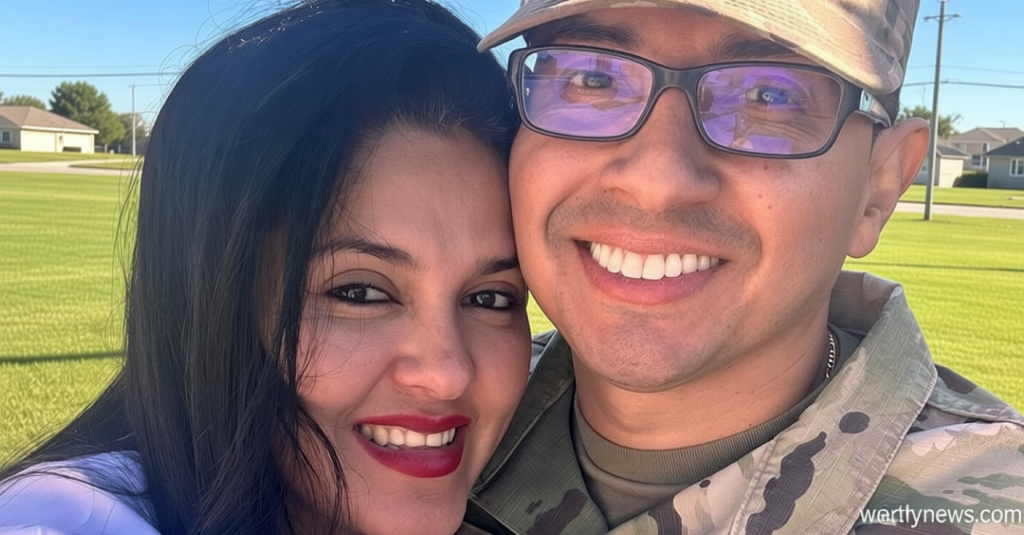
Wertynews.com – American citizen and retired military veteran Wilmer Trujillo, who served in the Army and Texas National Guard for nearly two decades, is pleading with U.S. Immigration and Customs Enforcement (ICE) to release his wife, Arelys Barahona-Martinez, from immigration detention. Trujillo, 45, has endured the emotional toll of his wife’s apprehension, describing the situation as one that “rips my heart apart.” Barahona-Martinez, 40, was detained on June 10 during a routine check-in in Dallas, Texas, and now faces potential removal from the country, despite her deep ties to the U.S. and her husband’s military service.
Trujillo’s Military Service and Family Commitment
Trujillo’s career in the military began shortly after graduating high school in the late 1990s. He spent four years in the Army, followed by 16 years in the Texas National Guard, including deployments to Iraq and Afghanistan. His service earned him a respected position within the community, and upon retiring in 2021, he returned to Princeton, Texas, to raise his family. His wife, Arelys Barahona-Martinez, and their U.S.-born son, who is 20 years old and lives with neurofibromatosis—a genetic condition that causes tumor growth, including in the nasal area—form the core of his life. Trujillo emphasizes that his wife is not only his partner but also the cornerstone of their household, providing care and stability for their son’s medical needs.
“I love this country, but it rips my heart apart to see my wife taken away from our family,” Trujillo said. “She’s the rock that holds everything together. Without her, our son will lose his care system, and I fear he might be drawn into the gangs in Honduras where we came from.”
Legal Challenges and Advocacy Efforts
Barahona-Martinez’s case has sparked concern among legal advocates and immigration reform supporters. She was arrested by ICE on June 10, but the agency maintains that her deportation order, issued over 20 years ago, is valid. According to the Department of Homeland Security, she entered the U.S. illegally and was not aware of a hearing that led to her in absentia removal. Her attorney, Mark Shmueli, is working to reopen her case, arguing that her absence from the hearing was unintentional and that her continued presence in the U.S. is essential for her family’s well-being.
Shmueli also highlighted the potential of Parole-in-Place, a program that allows eligible immigrants to remain in the U.S. while their cases are processed. Trujillo, a retired staff sergeant, believes this program could provide a lifeline for his wife and their son. He has been actively reaching out to local lawmakers and community leaders, hoping to galvanize support for her release. “She’s not a criminal—she’s a mother, a wife, and a vital part of our family,” Trujillo stressed in a recent interview.
Broader Impact on Military Families
Barahona-Martinez’s detention is part of a larger pattern where ICE has targeted spouses of military personnel and veterans. Under the Trump administration, ICE intensified its deportation efforts, removing restrictions on arrests and detentions, which has led to an increase in cases involving families with strong ties to the U.S. Trujillo is not alone in his struggle; similar stories have emerged in recent years, including the case of Deisy Rivera-Ortega, whose detention garnered widespread media attention and congressional intervention.
Advocates argue that these actions can create lasting emotional and financial hardship for military families. Trujillo’s wife, who has no criminal history, is seen as a model citizen by many. Her case has drawn attention to the disconnect between immigration enforcement and the support systems that military families rely on. As of Friday, Barahona-Martinez was held at the Diamondback Correctional Facility in Watonga, Oklahoma, per ICE’s tracking system. Trujillo continues to urge the agency to prioritize her case, emphasizing that her release is critical to maintaining their family’s stability.
“It rips my heart apart to know my wife is in this situation,” Trujillo said. “She’s the one who took care of our son when I was deployed. Without her, our family would fall apart, and I’d lose the person who has always stood by me.”
Community and Public Response
The news of Barahona-Martinez’s detention has resonated deeply within the Princeton community, with local residents and organizations mobilizing to support her release. Many have shared Trujillo’s story on social media, using the hashtag #FreeArelys to raise awareness. This grassroots effort underscores the growing public scrutiny of ICE’s policies, particularly their effect on families with a history of service to the nation.
Local activists have also pointed to the broader implications of the case, noting that military-connected families often face unique challenges when it comes to immigration enforcement. “It’s not just about a single family—it’s about the values we hold as a nation,” said one advocate. “When we deport spouses of veterans, we’re not only separating families but also undermining the sacrifices these individuals have made for our country.”
As the situation continues to unfold, Trujillo remains hopeful that the attention her case has received will lead to her release. “We’ve worked hard to build a life here, and I believe ICE can still see the good in our story,” he said. “I’m not asking for special treatment—just a chance to keep my family united.”