
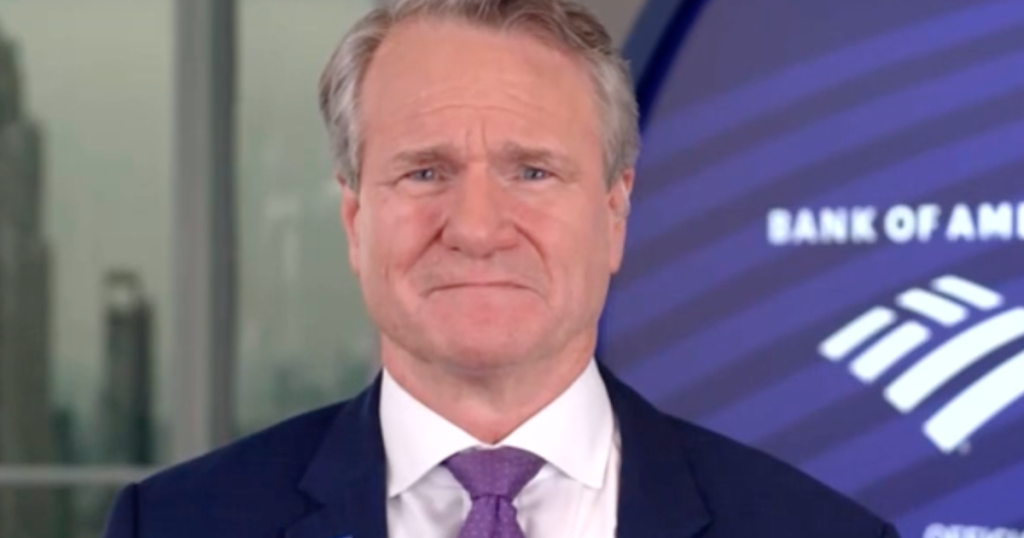
Bank of America CEO Brian Moynihan on Face the Nation: Full Transcript and Key Takeaways
Wertynews.com – The full transcript of Bank of America CEO Brian Moynihan’s interview on “Face the Nation” with Margaret Brennan, aired on July 19, 2026, provides insight into current economic challenges. This transcript reveals Moynihan’s perspective on consumer spending, inflation, and the Federal Reserve’s strategic approach to stabilizing the market. The interview, recorded on July 16, 2026, highlights key conversations about how Americans are navigating economic uncertainty.
Consumer Spending and Economic Resilience
Brennan began the interview by addressing concerns about economic affordability, citing a recent poll showing 22% of Americans view affordability as the nation’s greatest long-term challenge. Moynihan acknowledged the issue, emphasizing that while households voice worries, spending trends show a different story. He noted that 70 million consumers, collectively spending over $400 billion monthly, increased their spending by 5-6% in June 2026 compared to the prior year. This growth continued into early July, indicating a surprising level of economic resilience.
“Affordability remains a challenge we observe in our customer base,” Moynihan stated. “However, the data shows that 70 million consumers, who spend over $400 billion monthly, have increased their spending by 5-6% in June 2026. This trend persists into early July, suggesting a growing willingness to invest despite concerns about rising gas and food prices. The middle and top income groups are outpacing others in this spending growth, while wage growth across all income levels has stabilized at 3-4%. This stability is encouraging, as it highlights how consumers balance worries with action.”
Geopolitical Factors and Inflationary Pressures
Shifting focus to global economic influences, Brennan highlighted the 31% surge in gas prices since the Iran conflict began, linking it to low fuel inventories. Moynihan explained that geopolitical tensions affect more than just fuel costs, with oil prices around $100 per barrel influencing gas prices near $4.50. While recent months have seen a slight decline in oil prices, uncertainty persists. He noted that businesses are already impacted by the cost of goods, as many have imported oil and gas to manufacture plastics and materials. This has contributed to inflation, which Moynihan expects to linger into 2027 and 2028.
“The oil and gas prices impact more than just fuel costs,” Moynihan said. “When oil prices were around $100 per barrel, gas prices hovered near $4.50. Recent months have seen a slight decline due to increased oil flow, but geopolitical tensions continue to create uncertainty. Businesses, unlike consumers, are focused on the cost of goods—many have already imported oil and gas to manufacture plastics and materials, which is why inflation persists. Our team now anticipates the Federal Reserve will raise interest rates, a shift from earlier expectations of rate cuts. This inflationary pressure will take time to address, as it is driven by factors beyond just energy.”
Fed Rate Decisions and Economic Timing
Brennan pressed further, asking whether the Federal Reserve would act immediately to raise rates or delay the decision. Moynihan explained that while recent data suggests three rate hikes, the timing depends on broader price trends. He noted that the Fed is likely to wait until later in the year to implement increases, given the slow resolution of inflationary pressures. The inflationary environment, influenced by housing and food costs, requires sustained progress across multiple sectors to bring prices down effectively.
“The Federal Reserve is carefully monitoring inflationary trends, and while three rate hikes are anticipated, the timing is uncertain,” Moynihan said. “The Fed is likely to wait until later in the year before making a decision. This inflationary environment, driven by factors like housing and food costs, is slower to resolve. We are seeing consistent data that suggests the need for higher rates, but the process will take time. Consumers and businesses are adapting, which helps buffer the economic impact.”
Consumer Confidence and Market Outlook
In discussing consumer confidence, Moynihan pointed to the resilience observed in spending habits, even as households grapple with rising living costs. He highlighted that while affordability concerns linger, the middle and top income groups have shown stronger purchasing power. This dynamic is crucial for the overall economy, as consumer spending accounts for a significant portion of GDP. Moynihan also addressed how the transcript reflects ongoing debates about economic stability and the role of central banks in shaping future trends.
“Consumer confidence remains a key indicator of economic health, and the transcript underscores how spending patterns have shifted in response to challenges,” Moynihan explained. “Despite rising gas and food prices, the middle and top income groups continue to outpace others in spending growth. This resilience is partly due to wage growth