
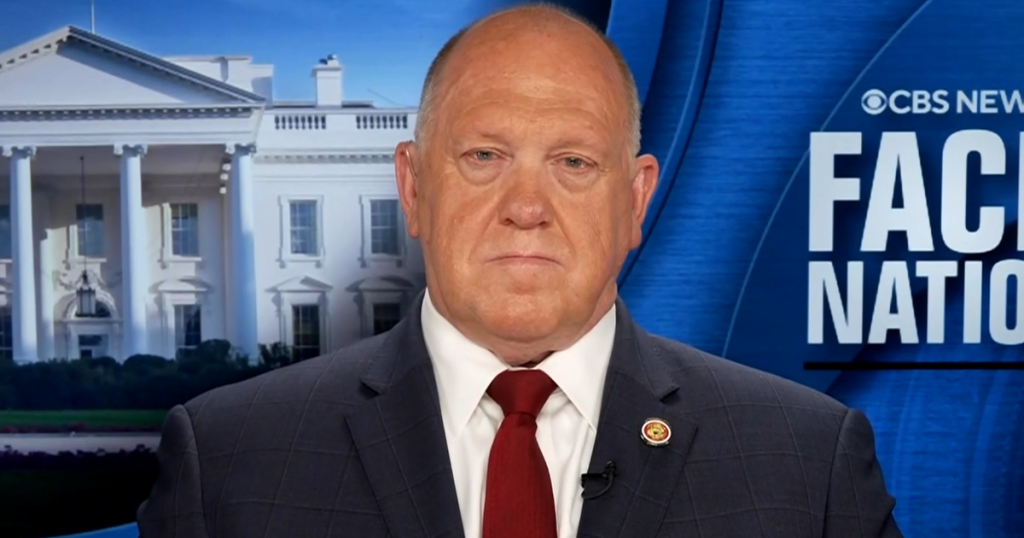
Transcript: Border Czar Tom Homan on “Face the Nation with Margaret Brennan,” July 19, 2026
Interview Overview
Wertynews.com – The following transcript captures a discussion between Tom Homan, the Trump administration’s border czar, and Margaret Brennan during an episode of “Face the Nation” on July 19, 2026. The conversation centers on recent incidents involving immigrant fatalities and the effectiveness of current border enforcement strategies.
Shooting Incidents and Investigations
Margaret Brennan opened the segment by referencing two fatal shootings of immigrants within a week. One occurred in Maine, while another in Houston followed shortly after. She also highlighted a tragic event in Florida, where a man fleeing agents was struck and killed by a tractor trailer. Brennan noted that Homan had been striving to keep the department out of the spotlight since a previous deadly incident in Minnesota.
“Mr. Homan, we saw that two immigrants were shot in the span of a week. There was that one in Maine that was fatal just days after another one in Houston. We also saw that man fleeing agents in Florida who then was struck and killed by a tractor trailer. I know you’ve been trying to keep the department out of the headlines ever since that streak in Minnesota that was deadly. How do you respond to those who say what’s happening now looks like very little has changed?”
Homan acknowledged the need to await investigation outcomes before making definitive statements. He emphasized that cell phone footage, city cameras, witness accounts, and officer affidavits would play a key role in determining fault. While he admitted that some actions, like the pause on vehicle stops, were taken to protect agents and improve operations, he stressed that the broader issue was the public’s perception of ICE as a law enforcement entity.
“Well, you know, first of all, we’ll wait and see what the investigations—how they play out, right? Because I don’t want to get ahead of investigations on who’s at fault, what exactly happened. When the investigations happen, there’s going to be cell phone video, there may be city cameras, and of course, then you got witness statements and affidavits from the officer, and—witnesses. So we got to let the investigations play out. I don’t want to really comment on the investigations themselves, but you know, I think, you know, Markwayne Mullin took some action, and in concern of the safety of the agents and how we do operations, and that’s why he did that, you know, that pause on enforcement during vehicle stops. But you know, my concern is I’ve never—I’ve done this since 1984. My concern is I think a lot of the rhetoric that you see every day, especially in sanctuary cities, and at these protests that resist, members of Congress saying ICE isn’t a real law enforcement agency. I think that emboldens some people to say, ‘I’m not going to comply with ICE.’ And I think no matter what people think of ICE, no matter what you think of immigration law, you should always comply with law enforcement.”
Compliance and Misidentification
Brennan pointed out that the individuals killed in Houston and Maine were not the intended targets. She questioned whether the people Homan is targeting have been successfully identified. Homan responded by noting that misidentification is a common occurrence in law enforcement, not unique to ICE.
“One of them, I believe, we did, but you know that happens in law enforcement all the time. We’re working, you know, we get leads on individuals, and you say, okay, well, this subject lives at this house, he drives this car, and when that subject leaves that house, you know, 6:00 in the morning, and someone gets in that car from that house, you know, they assume, ‘okay this is our guy,’ and they’ll do a vehicle stop. And depending on when they make that stop and that person complies, either they’re going to be arrested or released. That’s the way it’s supposed to be. So law enforcement deals with misidentity every day across the country, not just ICE, every law enforcement agency. I was a cop, I know—I know that happens.”
Unmarked Vehicles and Enforcement
Brennan raised concerns about the unmarked vehicle used in the Houston incident, questioning how drivers could recognize it as ICE. Homan disagreed, explaining that emergency lights and sirens are visible indicators of law enforcement, even in unmarked cars. He cited NYPD practices as an example, where unmarked vehicles are used to surprise suspects.
“Well, I got to disagree with that. No, they have emergency lights. Officers have insignia, so when they get out of that car and approach the car, you can clearly see the law enforcement officers. Again, these people—I’m in New York City right now, a lot of NYPD officers are driving unmarked vehicles, and that helps them find people that don’t want to be found. Right, so you know, but bottom line is, we’ll see when the investigation plays out, but they would be alive today if they simply complied with a vehicle stop by federal law enforcement. Just comply. You can—if you don’t think you’ve been treated right and they had no reason to stop you, then there’s avenues to take them to court to sue.”