
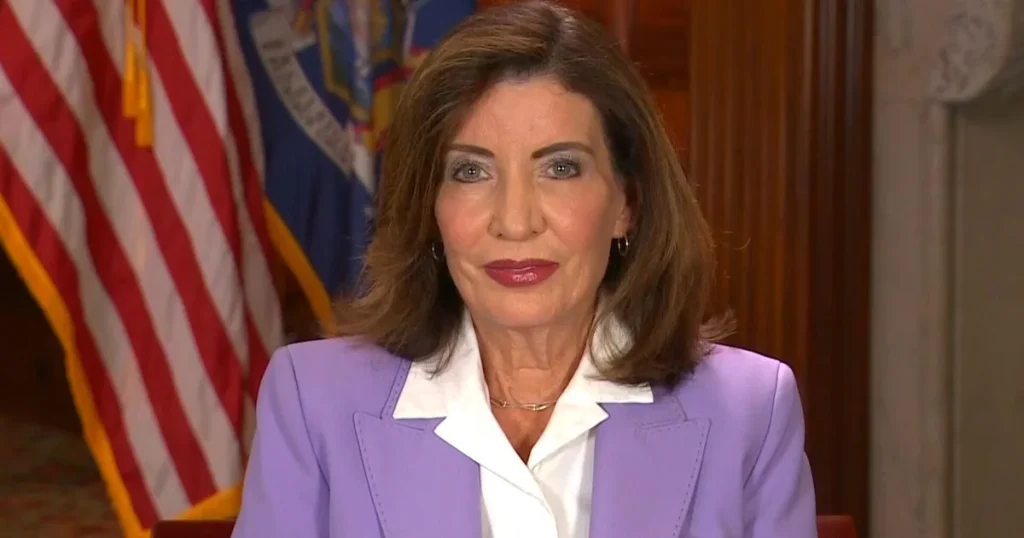
New York Governor Kathy Hochul’s ‘Face the Nation’ Transcript: July 19, 2026
Wertynews.com – Obtain the full transcript of New York Governor Kathy Hochul’s July 19, 2026, interview on “Face the Nation with Margaret Brennan,” where she discussed key issues facing the state. As the Democratic governor, Hochul addressed security preparations for the upcoming World Cup finals in New Jersey, state-level data center regulations, and the role of federal collaboration in shaping policy. This transcript provides a detailed look at her perspectives and the context behind her decisions, offering insights into New York’s response to national and global challenges.
World Cup Security Strategy
As the World Cup finals approach in New Jersey, Governor Hochul emphasized the importance of robust security measures to ensure public safety. In the interview, she highlighted the close coordination between state and federal authorities, stating that over 1,000 drills have been conducted to prepare for various scenarios. “The partnership with the NYPD, a globally respected law enforcement agency, is critical,” she explained. “We’ve also strengthened communication protocols with the U.S. Secret Service and local police departments to maintain vigilance throughout the event.” Hochul noted that the World Cup’s proximity to New York City makes it a prime opportunity to showcase the region’s readiness for large-scale international gatherings.
GOV. HOCHUL: “The entire world will be watching as the World Cup unfolds in the New York City area. That’s why we’ve invested heavily in securing every possible angle, from traffic management to emergency response systems. Our goal is not just to protect attendees, but to ensure the event runs smoothly without disrupting daily life for residents.”
Data Center Regulation and State Authority
When asked about New York’s new executive order on data center restrictions, Hochul explained the rationale behind the state’s intervention. “While local municipalities have traditionally managed these decisions, the rapid expansion of large-scale data centers has created new challenges for communities,” she said. “These facilities are essential for AI development, but their impact on energy consumption and local tax structures demands a more coordinated state-level approach.” The order temporarily bans new data centers until a framework for equitable benefits is established, a move she described as necessary to balance innovation with public welfare.
GOV. HOCHUL: “By stepping in, we ensure companies contribute fairly to the grid and negotiate transparently with residents. This isn’t about blocking progress—it’s about setting the right conditions for sustainable growth.”
Federal Collaboration and Policy Frameworks
Discussing the federal Ratepayer Protection Pledge endorsed by governors from red states, Hochul acknowledged its value but stressed the need for state-specific rules. “The pledge is a significant step, but it doesn’t replace the ability of states to enforce their own standards,” she clarified. “While the federal government sets broad guidelines, local needs often require tailored solutions. Our focus is on creating a framework that holds companies accountable while supporting economic development.” She emphasized that New York’s approach complements national efforts, ensuring the state remains proactive in protecting its citizens.
GOV. HOCHUL: “The federal pledge is a start, but states like New York must establish their own guardrails. This allows us to address unique challenges, such as energy demands and community benefits, without being constrained by one-size-fits-all policies.”
Public Engagement and Legislative Impact
Hochul also addressed public concerns about the data center ban, highlighting the state’s commitment to transparency. “We’ve received over 30 proposals and engaged directly with stakeholders to refine our approach,” she said. “This process ensures that the voices of New Yorkers are heard, and that any decisions made reflect the best interests of the people we serve.” The governor noted that the move has sparked discussions across the state, with municipalities and industry leaders weighing the benefits of centralized oversight against local autonomy.
Broader Implications for New York
As the interview progressed, Hochul reflected on the broader implications of her policies for New York’s future. “These decisions are part of a larger strategy to position the state as a leader in responsible innovation,” she explained. “From World Cup security to data center regulations, we’re focused on creating an environment where growth and equity go hand in hand.” She also mentioned the importance of public trust, stating that clear communication is key to ensuring New Yorkers understand the state’s vision and the rationale behind each step.
GOV. HOCHUL: “A strong transcript of our conversations helps educate the public and keep them informed. It’s about transparency and accountability—principles that guide every decision we make as a governor.”
Conclusion and Policy Outlook
As the interview concluded, Hochul reiterated her commitment to addressing both immediate and long-term challenges. “New York is at a unique crossroads, balancing innovation with the needs of everyday residents,” she said. “By maintaining a clear transcript of these discussions, we provide a valuable resource for understanding how our policies are shaping the state’s future.” Her remarks underscored the significance of the “Face the Nation” interview as a platform for addressing pressing issues, offering a glimpse into the governor’s priorities and the state’s strategic direction.