
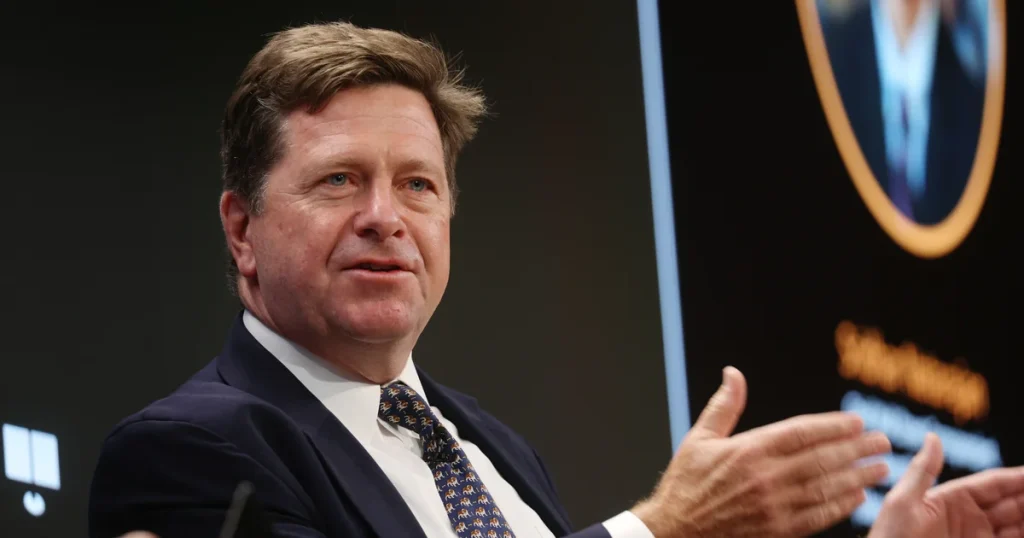
Trump Delays Jay Clayton’s Intelligence Chief Nomination
Wertynews.com – President Donald Trump has placed Jay Clayton’s nomination for the position of Director of the Central Intelligence Agency (CIA) on hold, signaling a strategic pause in the confirmation process. This decision, announced during the closing moments of the Group of Seven economic summit in Evian-les-Bains, France, is part of a broader effort to align legislative priorities with his administration’s agenda. By holding off on approving Clayton’s nomination, Trump aims to leverage the renewal of a critical surveillance program as a bargaining chip to secure passage of his voter ID legislation, the Save America Act, which has faced significant hurdles in Congress.
The move comes as a response to growing bipartisan concerns over the potential impact of Clayton’s confirmation on national security. While the nomination was initially scheduled for Senate review, the delay creates uncertainty about the future of the U.S. intelligence community’s leadership. Trump’s administration has long emphasized the importance of tying key policy initiatives to intelligence oversight, suggesting that the hold is not merely procedural but a calculated maneuver to influence legislative outcomes.
Clayton’s Background and the Nomination Process
Jay Clayton, a seasoned legal professional with a distinguished career in finance and regulation, was previously appointed as the head of the Securities and Exchange Commission (SEC) under the Trump administration. His expertise in financial markets and regulatory frameworks made him a strong candidate for the CIA director role, which requires both legal acumen and strategic vision. However, Trump’s decision to suspend the nomination has raised questions about the timing and rationale behind the delay.
Clayton’s nomination was also seen as a critical opportunity to restore bipartisan confidence in the intelligence community after years of partisan divides. With the Senate Intelligence Committee playing a pivotal role in the confirmation process, the hold on his appointment has intensified pressure on lawmakers to either support or oppose the Save America Act. The decision underscores Trump’s willingness to use executive leverage to advance his legislative goals, even at the expense of slowing down the appointment of a qualified leader.
Strategic Leverage and Legislative Deadlock
Trump’s strategy hinges on the idea that the intelligence community’s approval of the Save America Act is contingent on the confirmation of his preferred candidate. By linking the two, he seeks to create a sense of urgency around the voter ID legislation, which has stalled due to disagreements over its scope and effectiveness. “Therefore, to add a slight bit of intrigue but, for the Good of the Nation, and the People of our Country, I will not approve FISA without THE SAVE AMERICA ACT going along with it,” Trump stated in a social media post, emphasizing the connection between the surveillance program and the legislative hold.
“One thing we know about Bill Pulte is he will do whatever Donald Trump says,” remarked Sen. Mark Warner of Virginia, the top Democrat on the Senate Intelligence Committee, during an interview on “Face the Nation with Margaret Brennan.”
Warner also highlighted that foreign governments and intelligence leaders expressed significant apprehension about Pulte’s leadership, citing his perceived alignment with Trump’s agenda. This skepticism adds to the pressure on Congress to either expedite Clayton’s confirmation or face potential disruptions in the intelligence community’s operations. The hold on Clayton’s nomination reflects Trump’s broader approach of using executive actions to shape legislative priorities and maintain control over key policy decisions.
Impact on National Security and Bipartisan Relations
The delay in Clayton’s nomination has sparked debates about the potential consequences for national security. Critics argue that the intelligence community’s leadership should not be contingent on partisan political leverage, while supporters contend that Trump’s approach ensures alignment between security and policy goals. With the CIA’s surveillance programs set to expire, the hold could force Congress to prioritize the renewal of these essential operations, even if it means compromising on other legislative items.
Clayton’s potential confirmation would bring a fresh perspective to the intelligence community, given his experience in financial regulation and his ability to navigate complex legal challenges. However, the delay has created a vacuum, with the Senate Intelligence Committee now under pressure to reassess the timeline for Clayton’s nomination. This shift highlights the delicate balance between executive authority and legislative oversight, as well as the increasing role of political strategy in shaping national security decisions.
Broader Implications for the Intelligence Community
Trump’s decision to hold Clayton’s nomination reflects a growing trend of using executive power to influence the pace and direction of key appointments. The intelligence community, which has historically been a bipartisan entity, now faces the risk of becoming a battleground for political maneuvering. This situation could have long-term effects on the agency’s ability to operate efficiently, as delays in leadership transitions may lead to gaps in strategic decision-making.
Moreover, the hold on Clayton’s nomination has drawn attention to the broader implications of Trump’s approach to governance. By linking the renewal of the surveillance program to the Save America Act, he is signaling that national security is not a separate issue but a tool to advance his political objectives. This strategy, while effective in some cases, may also strain relationships with allies who rely on the intelligence community’s impartiality and expertise.
As the Senate debates the Save America Act, the fate of Clayton’s nomination remains inextricably tied to the outcome. With the intelligence community at a crossroads, the decision to delay his confirmation could set a precedent for future appointments, further entrenching the role of political strategy in shaping the nation’s security apparatus. The situation underscores the complex interplay between executive and legislative branches in determining the direction of key government positions.