
Live Updates: U.S.-Iran Agreement Not Final, Trump Warns of Resuming Bombing
Wertynews.com – Updated on June 17, 2026, at 8:38 AM EDT
International Leaders Highlight Deal as a Turning Point
Attendees at the G7 summit described the U.S.-Iran accord as a “momentous step” and “a pivotal chance to halt Iran’s nuclear ambitions.” The statement emphasized the agreement’s importance, noting its achievement under President Trump’s decisive leadership with backing from intermediary nations.
Regional Ceasefire and Disarmament Calls
World leaders also urged an immediate halt to hostilities in Lebanon and demanded the disarming of Hezbollah, a group supported by Iran. This move underscores growing concerns over the group’s role in regional conflicts.
“We welcome the announcement of a deal between the United States and Iran, secured under the strong leadership of President Trump, with the support of mediating countries,” the statement said.
Trump Indicates Deal Is Tentative
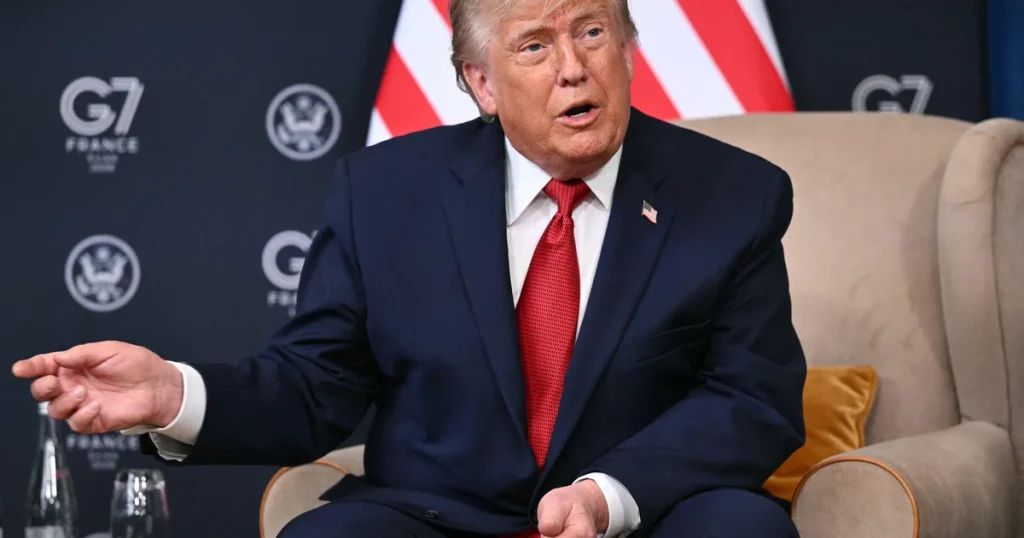
Speaking in France during the G7 gathering, President Trump clarified that the memorandum of understanding is not yet binding. He warned that military action could resume if Iran fails to comply with the terms.
“President Trump said: ‘If I don’t like it, we’ll go back to shooting at them, dropping bombs on their head. If I don’t like it, if they don’t behave, we’ll go right back to dropping bombs right smack in the middle of their head.'”
The president added that the deal does not offer immediate relief from sanctions, promising further details once finalized.
Iranian Vessels Navigate Blockade
Five Iranian-flagged ships crossed the U.S. naval blockade in the Gulf of Oman within the past 24 hours. These included three oil tankers, a bulk carrier, and a container vessel departing Chabahar and heading east after passing through the restricted zone on Tuesday and Wednesday.
Another sanctioned tanker, the Stream, disabled its tracking system as it approached the blockade from the east. It had left Karachi, Pakistan, earlier in the week. On Wednesday, the Herby and Aries were also observed entering the restricted area from Pakistan.
All vessels belong to Iran’s state-run shipping companies, which face U.S. sanctions linked to the country’s oil exports and military programs.
Oil Market Volatility Amid Uncertainty
Global oil prices remained stable after a sharp decline, fueled by hopes of ending the conflict and reopening the Strait of Hormuz. However, commercial traffic through the strait remains minimal, with fewer than ten ships traversing the vital waterway daily—a stark contrast to the usual 135 vessels per day.
Brent crude, the global benchmark, fell 1% to $78.19 per barrel early Wednesday, following a 5% drop on Tuesday. U.S. crude prices dipped 1.1% to $75.21 per barrel, still higher than the $70 level seen in late February before the war began.
Mixed Signals from Washington
Conflicting statements about the U.S. naval blockade have kept shipping activity low. While Trump declared the strait would reopen upon signing the deal on Friday, a multilateral command confirmed the blockade remains active.
A senior Iranian diplomat claimed the blockade was lifted ahead of the ceremony, with CBS News tracking at least four Iranian vessels crossing the line since Trump’s Sunday announcement.
Shipping firms have expressed hesitation, stating they will only resume operations once the deal’s terms are fully clarified and safety is guaranteed.
“Jakob Larsen, head of safety and security at BIMCO, noted: ‘Due to lack of details and a history of overly optimistic reassurances, we believe the security situation for the shipping industry remains volatile, and we still consider it very risky for ships to commence transits at this point.'”
Israel Targets South Lebanon
Israeli air strikes hit several locations in southern Lebanon on Wednesday, according to the National News Agency. The attacks targeted the Nabatieh al-Fawqa region and the eastern outskirts of Kfar Tebnit, despite a memorandum of understanding on the Middle East war that Iran asserts includes Lebanon.