
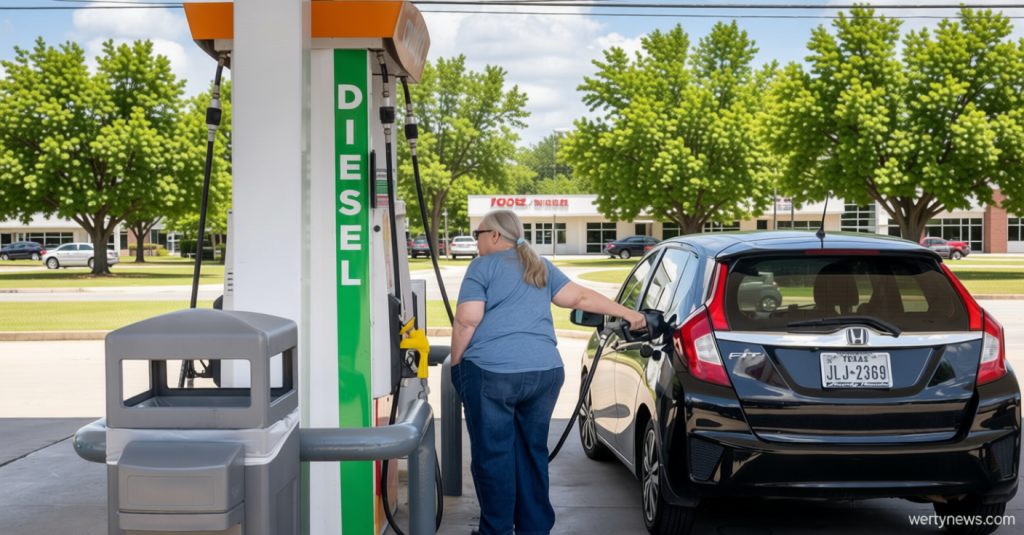
Gas Prices Fall Below $4 a Gallon for the First Time in Nearly 3 Months
Wertynews.com – For the first time in nearly three months, gas prices have dipped below $4 a gallon, signaling a potential shift in the U.S. fuel market. The national average for regular gasoline dropped to $3.99 per gallon on Thursday, marking its lowest level since March 30, according to the American Automobile Association (AAA). This decline follows a period of sustained increases driven by geopolitical tensions, particularly the ongoing conflict in the Middle East. While prices remain elevated compared to pre-war levels, the recent easing suggests that the market is beginning to respond to the anticipated resolution of the crisis. The drop is a welcome relief for drivers, as it allows for a more manageable cost of fuel amid economic uncertainties.
The Role of the Strait of Hormuz in Shaping Gas Prices
The Strait of Hormuz, a vital chokepoint for global oil trade, has been a focal point of the recent price fluctuations. The waterway, through which approximately 20% of the world’s oil supply passes daily, saw its flow nearly disrupted during the heightened tensions between the U.S. and Iran. The conflict, which began on February 28, created fears of supply chain interruptions, leading to a surge in oil prices as traders anticipated potential blockades. With the U.S. and Iran signing an agreement to de-escalate the situation, the strait has gradually reopened, allowing for a steady return of oil shipments. This development has contributed to a decline in crude oil prices, which in turn has supported the drop in retail gas prices.
Market Dynamics and the Impact of Crude Oil Prices
The recent decline in gas prices is closely tied to the stabilization of crude oil markets. Brent crude, a key international benchmark, fell 1.4% to $78.46 per barrel on Thursday, while West Texas Intermediate (WTI), the U.S. standard, dropped 2.2% to $75.10 per barrel. These reductions reflect market optimism about the ongoing dialogue between the U.S. and Iran, as well as the potential for increased oil production in the region. Analysts suggest that the prices are still influenced by global demand, which has remained resilient despite economic headwinds. However, the gradual easing of supply constraints has allowed for a more balanced market, leading to the current downward trend in gas prices.
Gas prices falling below $4 a gallon is not just a statistical change—it represents a meaningful adjustment for consumers and businesses alike. For the average driver, this means lower weekly fuel expenses, which can have a ripple effect on disposable income and spending habits. The drop also provides a temporary reprieve for industries reliant on transportation, such as logistics and manufacturing, which have been grappling with rising operational costs. While the price decline is positive, experts caution that it may not be a long-term trend. Factors such as OPEC production decisions, U.S. shale output, and potential geopolitical flare-ups could influence future price movements.
Patrick De Haan, a petroleum analyst at GasBuddy, highlighted the significance of the price drop in a recent report. “The national average for gas could continue to decrease, provided there isn’t a dramatic reversal and the U.S. and Iran maintain progress toward resolution,” he stated. De Haan noted that if the agreement holds, Iran’s ability to resume oil exports could further ease global supply tensions. This, in turn, may lead to a sustained decline in prices, potentially pushing them below $3 per gallon by the end of the year or early 2027. However, he emphasized that the outcome depends on how the region’s situation evolves and whether additional agreements are reached to ensure stability in the oil market.
Consumer Reactions and Broader Economic Implications
The news of gas prices falling below $4 a gallon has sparked mixed reactions from consumers and analysts. While some drivers have celebrated the drop as a relief, others remain cautious, anticipating that prices could rebound if new challenges arise in the Middle East. The decline has also provided a temporary boost to the economy, as lower fuel costs can stimulate consumer spending in other sectors. However, the broader impact of this trend depends on the duration of the current stabilization period. If the lower prices become a sustained norm, it could reduce inflationary pressures and ease the burden on households and businesses.