
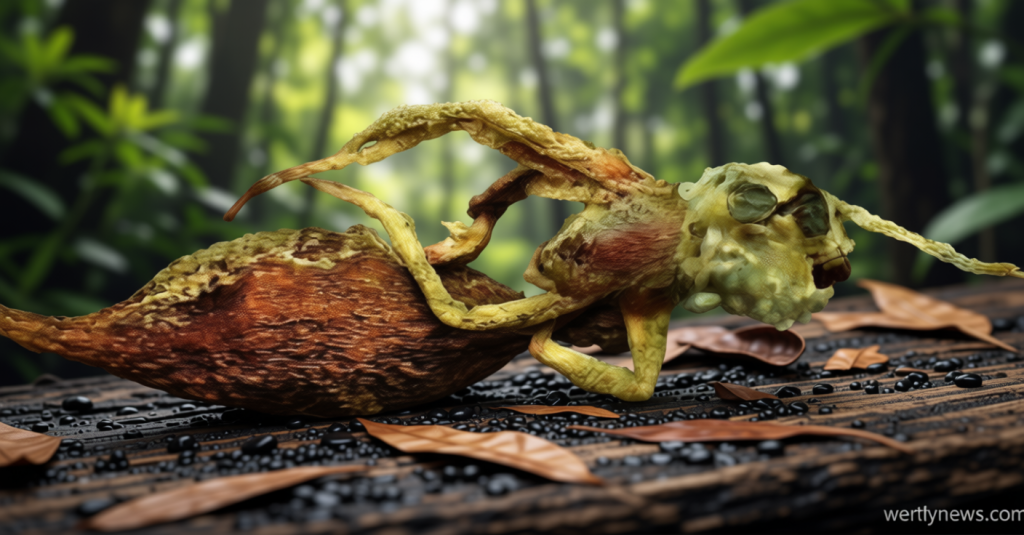
Scientists Discover New Jungle Parasite Targeting Zombie Fungus
Wertynews.com – A remarkable breakthrough in mycology has emerged from the dense rainforests of Borneo, where researchers have uncovered a previously unknown hyperparasite that exploits the “zombie fungus” known to manipulate insect hosts. This discovery, made by scientists from the University of Malaysia Sabah’s Institute for Tropical Biology and Conservation, highlights the intricate biological warfare occurring within the region’s complex ecosystems. The parasite, named *Pleurocordyceps cornusynnemata*, was identified in a study published in the New Zealand Journal of Botany, adding a new layer to the understanding of how microorganisms interact to control and sustain life in tropical environments.
Hyperparasite Behavior and Ecological Significance
Unlike the zombie fungus, which takes over an ant’s nervous system to compel it into a death position, *Pleurocordyceps* operates by directly consuming the tissue of the Ophiocordyceps fungus that has already infected its ant host. This dual-layered parasitic relationship reveals a fascinating arms race in nature, where fungi compete for dominance over their insect prey. The parasite’s unique feeding mechanism and its ability to thrive in the shadow of the zombie fungus make it a critical player in the rainforest’s ecological balance. Researchers speculate that this discovery could reshape how we view fungal symbiosis and its role in shaping biodiversity.
The naming of *Pleurocordyceps cornusynnemata* draws attention to its striking physical feature—a horn-like appendage found on the ant’s exoskeleton after infection. This structure, observed in specimens collected from the Danum Valley in Sabah, northern Borneo, suggests a specialized adaptation for survival. Scientists believe the name reflects both the parasite’s morphology and its parasitic lifestyle, emphasizing its distinct role in the ant-fungus interaction. Such detailed naming conventions not only honor the discoverers but also provide insight into the evolutionary pathways of these microorganisms.
Unlocking New Insights into Biodiversity
Borneo’s rainforests, renowned for their rich biodiversity, have long been a hotspot for scientific exploration. This parasite discovery underscores the region’s role as a living laboratory for studying complex ecological relationships. The research team’s fieldwork involved meticulous sampling and analysis of ant colonies, revealing how *Pleurocordyceps* coexists with and outcompetes the zombie fungus. These findings contribute to the broader field of parasitology, offering clues about the mechanisms that drive species coexistence and competition in densely populated ecosystems. The implications extend beyond academia, with potential applications in pest control and biotechnology.
During the same expedition, researchers also identified a second fungal species that infects spiders, demonstrating the diversity of parasitic strategies in the region. This new spider fungus, which spreads spores through its arachnid host before causing death, could serve as a model for developing biocontrol agents against agricultural pests. The dual discovery highlights the interconnectedness of fungal species and their impact on insect populations, reinforcing the need for continued exploration of tropical environments. As scientists delve deeper, they may uncover more such species that play unseen but vital roles in maintaining ecological stability.
Expert Perspectives on the Discovery’s Impact
Dr. Jim Kronstad, a mycology expert from the University of British Columbia, praised the study for its clarity and significance. “This discovery not only expands our knowledge of fungal interactions but also highlights the delicate balance of life in the jungle,” he remarked. He further emphasized that while the zombie fungus has captured public imagination, its hyperparasite counterpart remains a lesser-known but equally important force in the ecosystem. The study’s findings could inspire new research into fungal biocontrol and antimicrobial properties, potentially leading to breakthroughs in medicine and agriculture.
Additionally, the research team’s work has sparked discussions about the conservation of Borneo’s rainforests. “The jungle is a treasure trove of undiscovered species, and each new find reinforces the urgency of protecting these habitats,” said Jaya Seelan Sathiya Seelan, Deputy Director of the Institute for Tropical Biology and Conservation. She noted that the study’s results align with global efforts to document and preserve tropical biodiversity. As deforestation continues to threaten these ecosystems, the parasite’s existence serves as a reminder of the hidden biological complexities that may be lost if conservation efforts fail.