
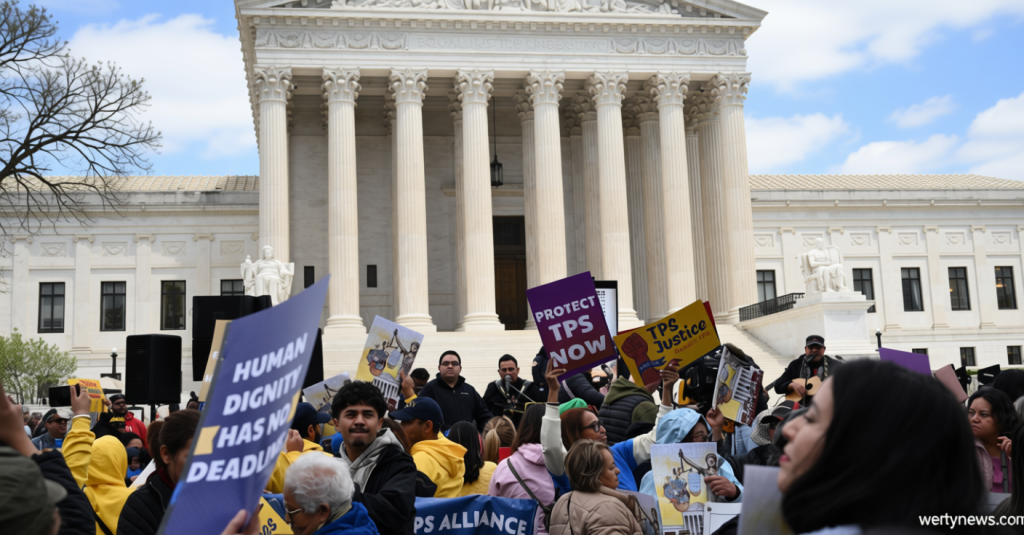
Supreme Court Lets Trump Strip Deportation Protections for Syrians and Haitians
Wertynews.com – The Supreme Court has granted the Trump administration the green light to remove deportation protections for Syrians and Haitians, a decision that could impact over 356,000 individuals currently residing in the U.S. under Temporary Protected Status (TPS). The 6-3 ruling, delivered on Thursday, cleared the way for the government to rescind these protections, effectively allowing for the deportation of immigrants from both nations if they fail to meet renewed criteria. The decision emerged from two legal cases that tested the validity of the administration’s approach to ending TPS, marking a significant shift in the legal landscape for immigration policy.
The Legal Basis for the Ruling
At the heart of the dispute was the interpretation of the TPS statute, which grants temporary immigration relief to nationals of countries experiencing armed conflict, environmental disasters, or other extraordinary conditions. The Supreme Court determined that the law explicitly prevents judicial review of claims related to TPS terminations, allowing the government to act without further legal challenges. Justice Samuel Alito, writing for the majority, argued that the statute bars plaintiffs from seeking remedies for non-constitutional issues, reinforcing the administration’s authority to end protections based on statutory grounds.
“The TPS statute plainly bars consideration of respondents’ non-constitutional claims,” Alito stated, highlighting the legal reasoning that enabled the government to proceed with its plan. The majority opinion emphasized that Congress designed TPS as a temporary measure, giving the executive branch broad discretion to adjust or terminate it without requiring additional judicial oversight.
The ruling’s implications extend beyond Syrians and Haitians, potentially affecting nearly 1 million immigrants from 17 countries who rely on TPS. This includes nations like El Salvador, Honduras, and Guatemala, where the Trump administration has already initiated efforts to revoke protections. Advocacy groups warn that the decision could lead to mass deportations, disproportionately impacting vulnerable populations who have been granted refuge under the program.
The Dissenting View and Congressional Intent
Justice Elena Kagan, in her dissent, challenged the majority’s interpretation, arguing that the ruling overlooks Congress’s intent to create a flexible safety net for immigrants facing crises. She contended that TPS was meant to provide temporary relief, not permanent residency, but that the law should still require the government to consider country conditions and avoid race-based decisions when ending protections. “True enough that TPS is a temporary program,” Kagan wrote, “but the law prevents it from ending without required consultations and impermissible race-based considerations.” Her warning underscores concerns about the policy’s humanitarian impact and its potential to destabilize the lives of those who have built communities in the U.S.
Legal analysts note that the decision aligns with the Trump administration’s broader strategy to centralize immigration control, emphasizing administrative discretion over judicial review. This approach has been criticized for enabling swift changes to immigration policies without thorough public debate or input from advocacy groups. The White House has praised the ruling, framing it as a validation of Trump’s vision to end what it calls “egregious abuses” to the immigration system, with officials asserting that TPS was never intended to confer long-term residency.
For Syrians and Haitians, the ruling means they could now be subject to deportation if their countries meet the criteria for TPS termination. Syria was first granted TPS in 2012 following the outbreak of civil war, while Haiti’s designation began in 2010 after a devastating earthquake. Both nations have faced ongoing crises, including political instability and economic hardship, which have justified their continued protection. However, the administration’s move to rescind these designations has sparked debates about the fairness of the process and the long-term consequences for immigrants who have settled in the U.S.