
U.S.-Iran Latest: Peace Talks Move Forward Amid Israel-Hezbollah Escalation
Wertynews.com – As the U S Iran Latest developments unfold, tensions between the United States and Iran have seen a modest shift in diplomatic momentum. Despite ongoing hostilities in the region, peace negotiations have taken a step closer, though challenges persist due to Israel’s continued engagement with Hezbollah. This complex interplay of geopolitical forces has kept the situation dynamic, with multiple fronts influencing the trajectory of the peace process.
Maritime Activity and Strategic Significance
Following a period of reduced activity, maritime traffic through the Strait of Hormuz has resumed, showcasing the critical role the waterway plays in global energy security. According to Kpler, 19 cargo ships entered the Gulf on Monday, a figure that mirrors the 70 crossings observed during the conflict’s peak on Wednesday. Notably, at least nine of these vessels were supertankers, a departure from the previous days when such large ships had largely avoided the area due to security concerns.
Iran’s attempts to control shipping routes have not fully curtailed the flow of vessels. MarineTraffic data reveals a consistent use of northern channels within Iranian waters, with at least 10 container ships navigating the strait. While this data only captures ships with active transponders, analysts suggest that additional untracked vessels may have moved through the region, highlighting the strategic importance of Hormuz to international trade and the ongoing vulnerability of the area.
Peace Negotiations and Regional Stakes
Peace talks between the U.S. and Iran have progressed, albeit cautiously, as both sides seek to address their differences while managing regional pressures. Israeli Prime Minister Benjamin Netanyahu’s recent visit to troops stationed in southern Lebanon underscored Israel’s commitment to countering Hezbollah, a key Iranian ally. In a statement, Netanyahu emphasized that “our position is clear: we will not leave southern Lebanon until the threat has disappeared,” signaling Israel’s intent to maintain a strong military presence as long as Hezbollah remains a challenge.
The U.S. and Iran signed a preliminary agreement last week, with Lebanon and Israel expected to finalize a framework for disengaging Hezbollah. This plan links Israeli troop withdrawals to Beirut’s pledge to disarm the militant group, establishing designated “pilot zones” for the Lebanese military to operate in. While the agreement marks a positive step, its success hinges on the willingness of all parties to commit to a lasting resolution, a goal complicated by the persistent conflict between Israel and Hezbollah.
Netanyahu’s tour of the “security zone” in southern Lebanon, which extends six miles into Lebanese territory, further illustrates the strategic and symbolic importance of the region. The Israeli military’s continued presence in the area reflects both its operational needs and its political stance, as it seeks to solidify its position against Iran-backed groups. Meanwhile, the U.S. has been working to mediate between the two sides, aiming to prevent the conflict from spilling into broader regional instability.
Iran’s State Funeral and National Unity
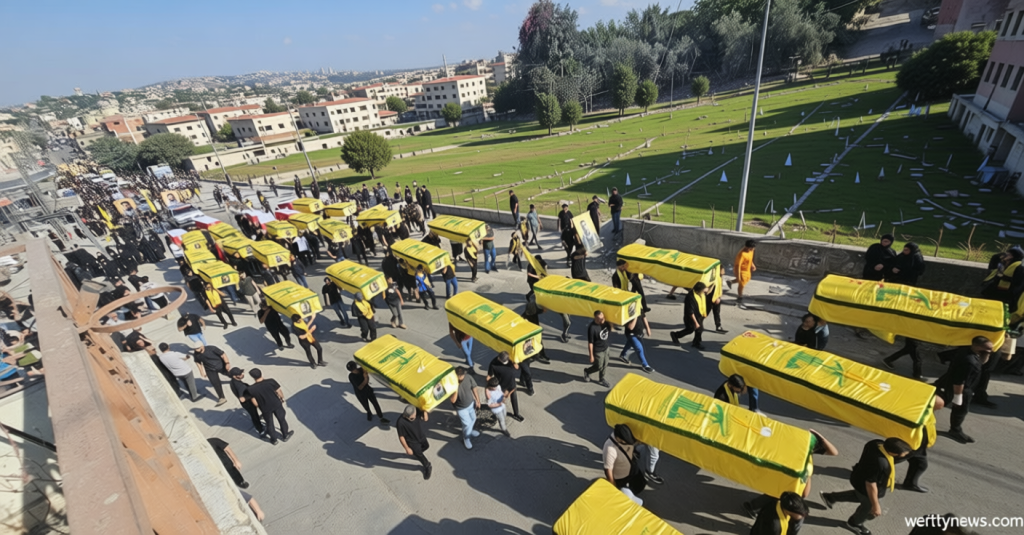
Back in Tehran, preparations are underway for the state funeral of Ayatollah Ali Khamenei, the former supreme leader of Iran, who was killed in a U.S.-Israeli airstrike on February 28. His body is currently displayed at the Grand Mosalla in the capital, where mourners have gathered to pay their respects. The funeral, scheduled for Saturday, is expected to draw an estimated 15-20 million attendees, making it the largest such event in Iran’s history.
State television has been broadcasting documentaries to highlight Khamenei’s legacy, reinforcing his status as a revered figure in Shia communities. Officials are urging citizens to use public transport to avoid traffic jams, as major highways in Tehran are already closed in anticipation of the ceremony. The event will feature tributes to Khamenei’s family and allies, underscoring the deep national and religious sentiment surrounding his passing.
Khamenei’s death has also sparked a renewed focus on Iran’s internal cohesion and external alliances. As the country mourns, the funeral serves as a unifying moment, emphasizing the shared goals of the Iranian leadership and the broader implications of the U.S.-Iran conflict for the Middle East. This juxtaposition of mourning and military action reflects the multifaceted nature of the current geopolitical landscape.