
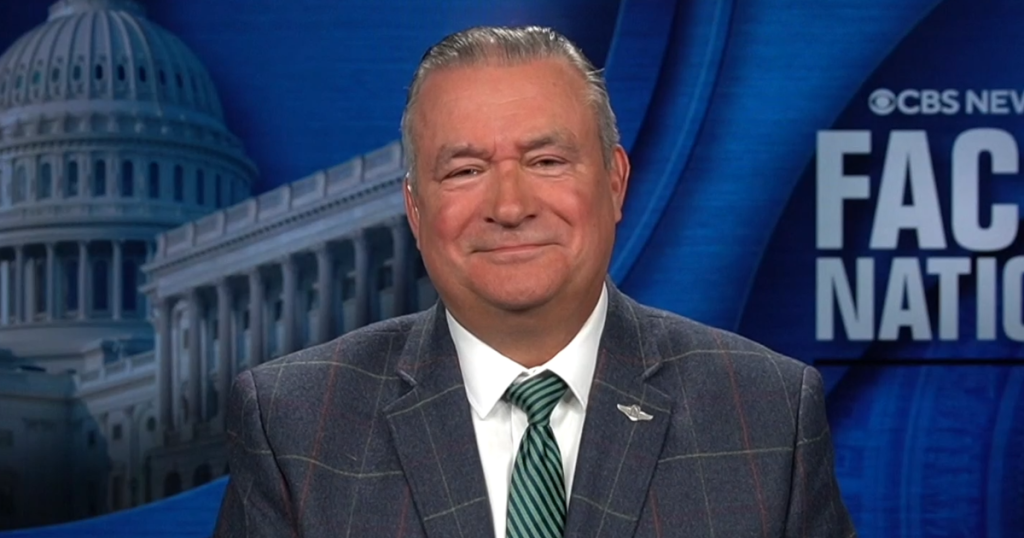
Rep. Don Bacon’s ‘Face the Nation’ Transcript: June 7, 2026
Political Candidates and Endorsements
Wertynews.com – This transcript captures Rep. Don Bacon’s appearance on “Face the Nation with Margaret Brennan,” June 7, 2026. The conversation began with Brennan analyzing the recent Texas Senate race, where Ken Paxton emerged as the Republican nominee despite his contentious record as attorney general. Paxton had faced impeachment by the Republican-led House for multiple instances of office abuse, including allegations of bribery. His wife’s recent divorce, citing biblical grounds due to adultery, and securities fraud charges from 2015, which were ultimately dismissed, added to the scrutiny. Brennan questioned whether Trump’s influence in the race overshadowed concerns about Paxton’s character.
“Last month, Texas Republicans chose Ken Paxton as their Senate candidate, even though he was impeached by the Republican-led House on several counts of office abuse, including bribery,” Brennan noted. “His wife recently filed for divorce citing biblical grounds due to adultery, and he faced securities fraud charges in 2015 that were later dismissed. Yet, the President endorsed him over sitting Senator John Cornyn. Does Trump’s influence outweigh concerns about character?”
Bacon emphasized the strategic implications of Trump’s endorsement in primaries. “Trump’s backing often shapes the outcome, even if it comes with compromises,” he said. “This decision seems to prioritize short-term gains over long-term credibility. Many senators have strong ties to Cornyn, who has been a key fundraiser and mentor to Republicans nationwide. I know him personally and respect his work. Nominating Paxton, however, risks making the seat more competitive in the general election.”
Bacon further argued that the Democratic nominee in Texas also lacked strength, creating a precarious balance. “While Cornyn could have easily won the seat, the Republicans are now likely to invest heavily to retain it,” he explained. “This decision feels like a strategic error, not just a character issue.”
Addressing Voters on Key Issues
Brennan transitioned to discussing Bacon’s decision to retire, prompting questions about his strategy if he were still running. “I’d focus on doing what’s right,” Bacon replied. “Whether aligning with Trump or opposing him, I’d highlight my record: supporting Ukraine, opposing tariffs, and backing border security. I’d also stress my commitment to actions in Iran, where the conflict has spanned nearly half a century.”
Bacon stressed the importance of honesty and consistency in campaigning. “I’d look voters in the eye and say, ‘I’ve voted for these policies, and I’ll follow through once elected,’” he said. “This transcript underscores the need for transparency in both domestic and foreign policy.”
European Perspectives and Ukraine
After a commercial break, Brennan returned to the topic of Europe, referencing remarks made at a recent Normandy meeting. “Secretary Hegseth compared modern immigration challenges to the D-Day landings, suggesting European capitals are now facing invasions from dangerous ideologies,” she said. “This transcript highlights the broader implications of such analogies in shaping public perception.”
“Hegseth’s analogy seemed to equate current border issues with the Allied forces’ efforts to liberate Europe from Nazi control,” Brennan observed. “I’m unsure who the allies were in this context, but what are your thoughts on his comments?”
Bacon critiqued the comparison, arguing it risked oversimplifying complex geopolitical issues. “Normandy is a moment to honor history, not politicize it,” he stated. “The focus should have been on the sacrifices made there, like the 3,000 troops lost on Omaha Beach. It’s a chance to celebrate unity with European allies, not fuel division.”
Foreign Policy and Strategic Priorities
Bacon expanded on the administration’s approach to foreign policy, particularly its handling of NATO and European relations. “Hegseth’s comments also highlight a broader issue: the lack of focus on Russia, which remains a central player in the Ukraine conflict,” he said. “This weakens our stance on foreign policy and undermines the alliance.”
Brennan pressed Bacon on how to address this perceived neglect. “The transcript reveals a tension between domestic priorities and international commitments,” she replied. “I’d advocate for a more consistent message, emphasizing the need to stand firm with allies while addressing internal challenges.”
Bacon concluded by tying the discussion back to the importance of a strong transcript in shaping public discourse. “A clear transcript helps voters understand the stakes of each decision,” he said. “Whether it’s the Senate race or our approach to global threats, transparency is key to maintaining trust.”