
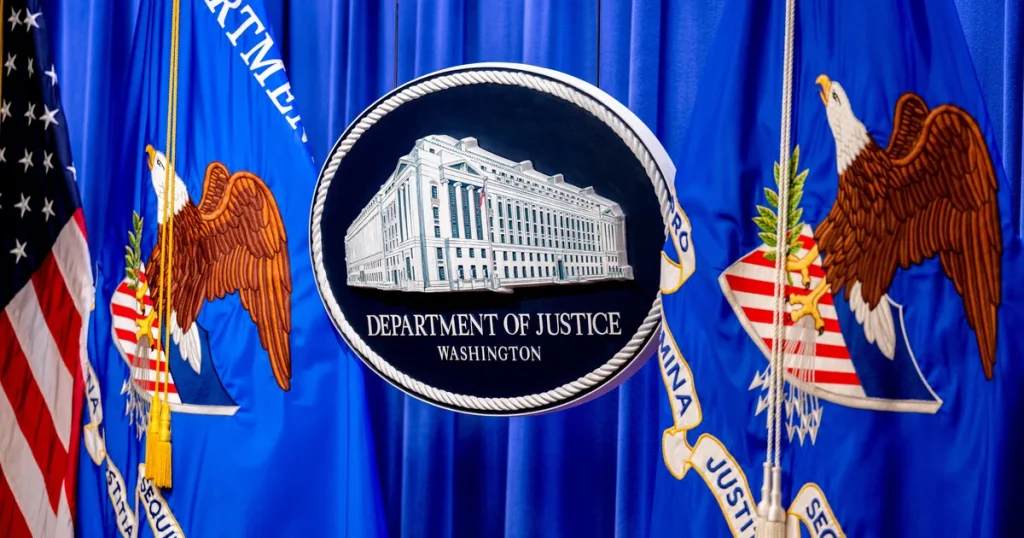
DOJ Finds EEOC Violated Civil Rights Laws in Disparate Impact Guidelines Case
Wertynews.com – The U.S. Department of Justice (DOJ) has accused the Equal Employment Opportunity Commission (EEOC) of violating civil rights laws by promoting guidelines that pressure employers to make race-based decisions in hiring and promotion. This legal action challenges the EEOC’s approach to disparate impact, a doctrine that allows discrimination claims against policies that disproportionately affect protected groups, even without evidence of intentional bias. The DOJ’s findings highlight a growing conflict between the EEOC’s enforcement priorities and the constitutional protections outlined in federal civil rights statutes.
OLC Opinion Calls Disparate Impact Theory Unconstitutional
A key component of the DOJ’s argument comes from a legal opinion issued by the Office of Legal Counsel (OLC), which asserts that the disparate impact theory is inherently unconstitutional. According to the opinion, signed by OLC officials T. Elliot Gaiser and Joshua Craddock, this framework compels employers to prioritize race in their decisions, effectively transforming neutral employment practices into tools for racial discrimination. The analysis argues that by allowing lawsuits based on statistical disparities alone, the EEOC undermines the intent of civil rights laws to protect individuals from intentional discrimination rather than unintentional outcomes.
“The core issue lies in how disparate-impact liability compels employers to adjust decisions based on race, often without clear evidence of intent,” stated the OLC opinion. This critique suggests that the theory creates a legal environment where employers may feel incentivized to make race-conscious choices to avoid litigation, even if they aim to promote diversity.
DOJ’s Argument and Its Implications for Discrimination Claims
The DOJ’s legal challenge underscores the tension between statistical disparities and intentional discrimination. By targeting the EEOC’s guidelines, the department seeks to redefine how employers can be held accountable under civil rights laws. The argument implies that the current framework allows for broad interpretations of discrimination, potentially leading to lawsuits against policies that may not reflect discriminatory intent. This shift could make it harder for employees to prove that their treatment was based on race, requiring them to demonstrate direct intent rather than relying on demographic outcomes alone.
“Employers can now rely on objective criteria, ensuring fair competition in the workplace,” said Acting Attorney General Todd Blanche. The DOJ’s stance is that this approach aligns with the spirit of civil rights laws by focusing on purposeful discrimination, not outcomes that may be influenced by other factors like economic necessity or job performance.
The expansion of the DOJ’s legal strategy raises questions about the balance between preventing discrimination and protecting employers from overreach. Critics argue that the disparate impact theory has been a vital tool in addressing systemic inequities in the workplace, while supporters of the DOJ’s position claim it creates ambiguity and allows for subjective interpretations of fair hiring practices.
Historical Context of DOJ’s Legal Attacks
This latest challenge builds on a pattern of legal actions by the DOJ to reshape employment discrimination law. Earlier in December, the department finalized a rule that effectively weakened the disparate impact framework under Title VI of the Civil Rights Act. At the time, Assistant Attorney General Harmeet Dhillon defended the move, stating that it prevented employers from being held liable for policies that lacked proof of intentional bias. The new OLC opinion further supports this position, emphasizing that the EEOC’s interpretation of the law allows for a broader definition of discrimination that may not align with constitutional principles.
“The theory allows lawsuits against ‘neutral policies’ without requiring proof of intent,” Dhillon explained. This aligns with the DOJ’s broader goal of ensuring that employers are judged by their actual practices rather than statistical patterns that may reflect other factors, such as geographic or economic differences.
EEOC’s Defense and Broader Legal Debate
The EEOC has responded to the DOJ’s findings by defending its role in promoting equal opportunity in the workplace. In a statement, EEOC Chair Andrea Lucas acknowledged the DOJ’s legal perspective but emphasized that the commission’s guidelines remain grounded in the intent of civil rights laws. She argued that the OLC opinion provides clarity on how policies can be evaluated against constitutional standards, ensuring that both employers and employees are held to consistent expectations.
The debate over disparate impact highlights the evolving interpretation of civil rights protections in the modern workforce. While the DOJ’s focus keyword is “DOJ finds EEOC violated civil rights,” the EEOC maintains that its approach is necessary to address subtle forms of discrimination that may not be overt but still have significant consequences for marginalized groups. This conflict has sparked discussions about the future of employment discrimination law and how best to protect workers without burdening employers with excessive legal obligations.
Implications for Employers and Employees
For employers, the DOJ’s findings could lead to a shift in how they structure hiring and promotion processes. With the EEOC’s guidelines under scrutiny, businesses may feel more confident in using performance-based metrics, such as aptitude tests or background checks, to evaluate candidates. This could reduce the pressure to factor race explicitly into decisions, potentially streamlining hiring practices and minimizing the risk of lawsuits tied to demographic outcomes.
However, for employees, the change may mean a more difficult path to proving discrimination. Under the current framework, individuals can file claims even if race is not the primary factor in an employer’s decision. The DOJ’s challenge could require employees to demonstrate direct intent or bias, which may be challenging in cases where systemic disparities persist despite well-intentioned policies. This raises concerns about whether the new interpretation will adequately protect workers from discrimination in all its forms.
“This development offers clarity on how policies can be evaluated against constitutional standards,” noted EEOC Chair Andrea Lucas. While the EEOC emphasizes the importance of fairness, the DOJ argues that the current system has become too lenient, allowing employers to justify decisions based on statistical trends rather than individual intent.