
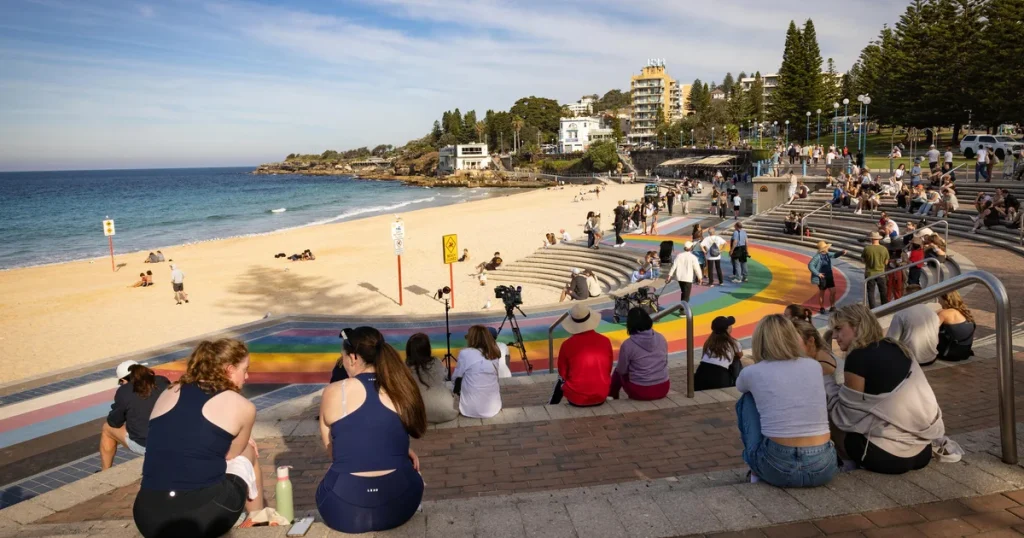
Lifeguard Saves Woman Critically Injured in Sydney Shark Attack
Wertynews.com – During a dramatic incident on Coogee Beach, a lifeguard played a pivotal role in rescuing a woman who was critically injured by a white shark. The event, which unfolded on a Saturday morning, left the 35-year-old woman with life-threatening wounds while swimming near the shoreline. Her friends witnessed the attack, and a swift response by the lifeguard ensured her survival, highlighting the importance of emergency preparedness in coastal areas.
Heroic Lifeguard Action in the Face of Danger
The rescue began when Charlie Verco, a seasoned lifeguard, spotted the shark in the water. His instincts kicked in as he recounted the moment: “I saw the shark come out of the water, and the size of it shocked me.” At the time, Verco was on his paddleboard, just 100 feet from the shore, when the attack occurred. He described the chaos, emphasizing the urgency of the situation: “The shark took her underwater, and I was going, ‘What do I do now?’ A couple of seconds later, she popped up again.”
“I kept paddling towards her and the shark took her underwater and I was going, ‘What do I do now?’ A couple of seconds later, she popped up again.”
With quick thinking, Verco managed to secure the woman’s arm and guide her toward safety. Despite her weakened state, the lifeguard’s unwavering presence kept her calm. Bystanders on the beach also contributed to the rescue, forming a critical chain of support. Meanwhile, Ian Ferguson, an off-duty hospital doctor, observed the severity of the situation, noting the “big cloud of blood in the water” that signaled the danger.
Medical Team Steps In for Immediate Care
Once the woman was on land, a team of medical professionals sprang into action. Ferguson and others applied tourniquets to control the bleeding before initiating the evacuation. The Sunday Telegraph reported that she sustained a 12-inch-wide bite on her thigh, which exposed bone, and a similar injury on her arm. These wounds, described as “extremely severe,” required prompt medical attention to prevent further complications.
“The woman had a 12-inch-wide bite on her thigh, with exposed bone, and a similar wound on her arm.”
As the pair made their way to the ambulance, the team confirmed the injuries would demand “a lot of surgery,” as noted by Sky News. The woman was then airlifted to a nearby hospital, where specialists will work to stabilize her condition. This incident has since been added to Australia’s shark attack records for 2026, reinforcing the ongoing risks associated with coastal activities.
Coogee Beach: A High-Risk Destination
Coogee Beach, a popular spot for swimmers and surfers, has become a focal point for discussions about marine safety. The incident, which occurred just a short distance from the shore, underscores the unpredictable nature of shark encounters. While the exact circumstances of the attack remain under investigation, experts highlight that increased human activity in coastal waters has raised the likelihood of such events.
“Coogee Beach, known for its vibrant atmosphere, has seen a rise in shark-related incidents, prompting authorities to review safety protocols.”
Authorities closed the beach and surrounding areas for 24 hours to assess the situation and ensure public safety. This measure follows a trend of shark attacks in the region, with three fatal incidents recorded in under a month. Two of these involved white sharks, while the third was attributed to a bull shark, which earlier this year claimed the life of a 12-year-old boy in Sydney Harbor.
Understanding the Threat of White Sharks
White sharks, one of the most feared predators in the ocean, are known for their size and power. The attack at Coogee Beach demonstrates their ability to strike unexpectedly, even in areas frequented by humans. Scientists note that these sharks are often found near coastal regions, where they hunt for seals and other marine life, sometimes targeting humans as prey.
“White sharks are apex predators, and their presence in Sydney waters has led to heightened vigilance among beachgoers and lifeguards.”
The International Shark Attack File, maintained by the University of Florida, lists over 1,280 shark incidents in Australia since 1791, with more than 250 fatalities. Experts suggest that population growth and the increasing popularity of water-based activities have contributed to the rise in attacks. However, advancements in safety measures, such as shark detection systems and targeted patrols, have improved response times and outcomes.
Community Response and Safety Measures
Following the attack, the local community rallied to support the injured woman and her friends. Social media platforms were flooded with messages of solidarity, and many praised the lifeguard’s bravery. This incident also prompted a review of safety protocols at Coogee Beach, with officials considering additional measures to protect swimmers during high-risk periods.
“The community’s swift response and empathy following the attack reflect a growing