
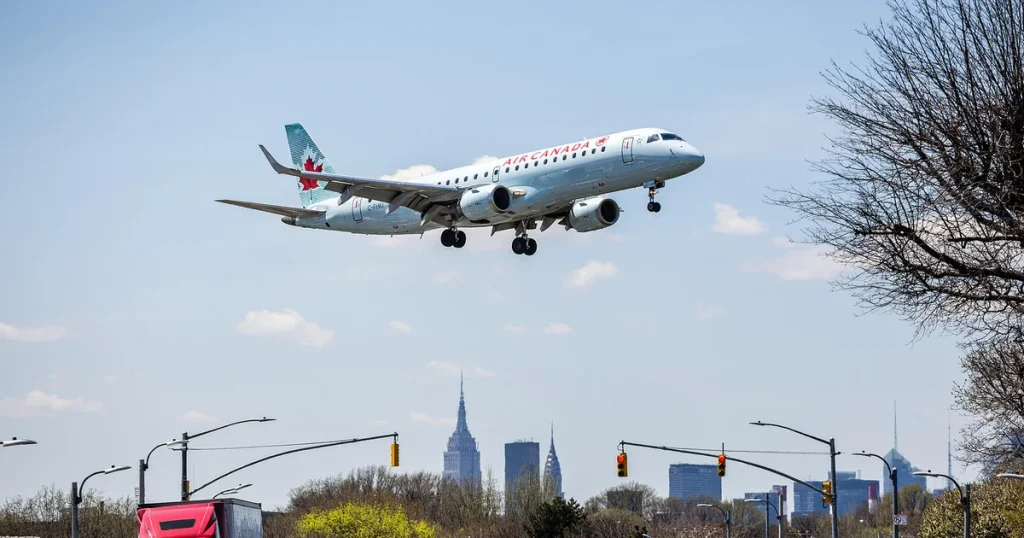
Air Canada Pilot Accused of Operating 900 Flights Without License
Unveiling a Major Aviation Scandal
Wertynews.com – Canadian aviation authorities have revealed a startling case involving an Air Canada pilot accused of operating over 900 domestic and international flights without a valid airline transport pilot license. The investigation, which has drawn comparisons to the 2002 film *Catch Me If You Can*, centers on Geoffrey Wall, a pilot from Barrie, Ontario, who allegedly bypassed regulatory checks for years. Peel Regional Police confirmed the case highlights a rare instance of professional misconduct, with officials emphasizing the gravity of the situation.
Years of Unlicensed Flight and Fraudulent Practices
According to the investigation, Wall served as an Air Canada captain from 2009 to 2025, flying hundreds of flights without the necessary credentials. The airline confirmed that one of its pilots held a commercial license but was promoted to captain status without the required airline transport license. Deputy police chief Nick Milinovich described the case as a “systemic deception,” noting that the pilot misrepresenting his qualifications to both the employer and Transport Canada using forged documents. This level of fraud has raised serious questions about oversight in the aviation sector.
How the Deception Was Uncovered
The scandal came to light through *Project Icarus*, a Transport Canada initiative launched in January 2025 to scrutinize pilot records. Investigators obtained evidence via a residential search warrant, uncovering a pattern of unlicensed flight operations. The case has been dubbed “a once-in-a-lifetime occurrence” by officials, who compared it to a scenario where a doctor practices family medicine but claims to perform brain surgery. This analogy underscores the alarming gap between Wall’s actual qualifications and his role as a captain.
Impact on Safety and Regulatory Standards
Despite the pilot’s unlicensed activities, Air Canada maintained that safety protocols were not compromised, citing routine training and annual evaluations by Transport Canada-certified check pilots. However, the incident has prompted a reassessment of how airlines verify pilot credentials. The airline acknowledged the importance of proper licensing in its safety framework and stated that Wall was removed from active service after the fraud was discovered. This highlights the need for stricter verification processes to prevent similar lapses.
Legal and Financial Ramifications
Transport Canada has imposed a significant fine on the accused pilot for operating without the required license, while police confirmed he submitted a false report about stolen documentation. During his tenure, Wall earned approximately $2.9 million Canadian, raising questions about the financial incentives for such deception. His legal team has yet to comment, but the case is expected to set a precedent for accountability in the aviation industry. Investigators emphasized that the pilot’s actions could have jeopardized passenger safety had the fraud continued.
Government Response and Industry Implications
Transport Minister Steve MacKinnon praised the system for identifying the issue, stating, “I am gratified that we detected this problem and addressed it.” The government plans to review the case to implement procedural reforms. A quote from Chief Nishan Duraiappah, a regulatory official, added context: “This case reads like a movie script. It’s rare to see such a high-profile deception in the aviation sector.” The incident has sparked discussions about strengthening background checks and ensuring transparency in pilot licensing.
Air Canada has declined to provide further details, citing privacy laws and the ongoing criminal investigation. However, the case has already sparked widespread media attention and public debate about the reliability of aviation safety systems. Industry experts warn that while the pilot’s actions were extraordinary, they expose vulnerabilities in how airlines and regulators monitor pilot qualifications. The case serves as a cautionary tale for professionals in high-stakes industries.