
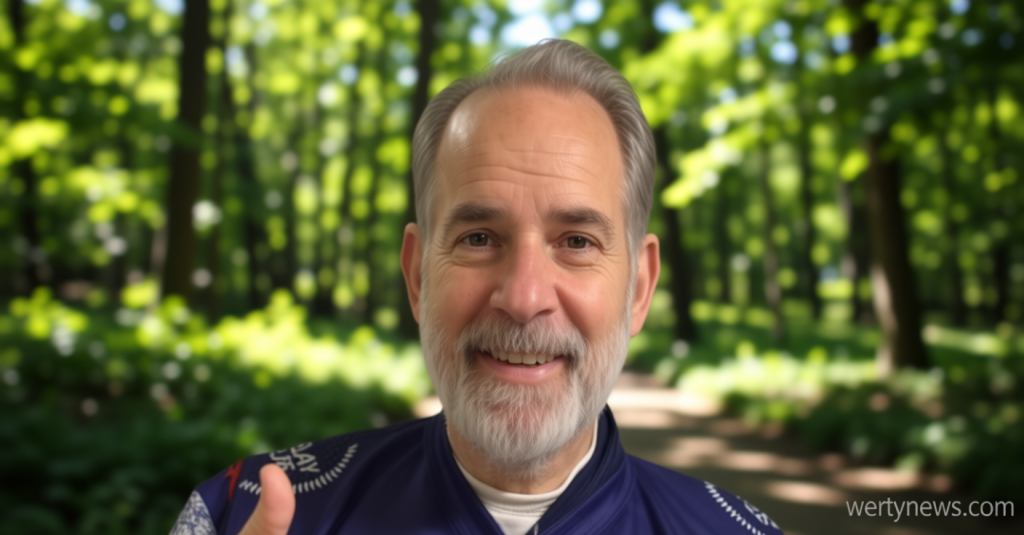
A strange symptom during his daily commute led to a man’s Stage IV cancer diagnosis
Unusual Vision Sparks Medical Investigation
Wertynews.com – Joe Gillette’s routine morning drive hadn’t changed for years—until a day when the highway expanded from three to four lanes. That shift coincided with an odd occurrence: he began experiencing double vision in one eye. Initially, he attributed it to lingering effects of a recent COVID-19 infection and scheduled a medical checkup. His physician advised further tests, including a brain scan and consultation with an eye specialist. The eye doctor explained the issue stemmed from nerve damage in his right eye, yet Gillette insisted on pursuing additional imaging.
A Surprising Diagnosis on a Special Day
As a dedicated volunteer with the American Cancer Society, Gillette understood the value of thorough evaluations. On his 57th birthday, he underwent a scan that revealed alarming results. “My wife was right next to me, and we’re reading it, it says ‘Cancer, tumor in the kidney, lung, brain and stomach,'” he recalled. The discovery felt like the worst birthday present, leaving him deeply shaken.
Aggressive Treatment and a Long Recovery
Dr. Martin Voss, Gillette’s oncologist at Memorial Sloan Kettering Cancer Center, described his condition as severe. With less than 20% of Stage IV kidney cancer patients surviving five years, Voss initiated immunotherapy, radiation, and brain surgery. The procedure required a medically induced coma lasting 10 weeks. Gillette awoke to learn he had been hospitalized for over two months. “I woke up, I tried to get out of bed to go to the men’s room, and the nurse came in, ‘What are you doing?'” he said. “I’m like, ‘I have to go to the men’s room.’ She goes, ‘You can’t go to the men’s room.’ I said, ‘I just did this afternoon!’ She says, ‘You’ve been here for two and a half months.'”
Ongoing Monitoring and a New Normal
Following recovery, Gillette received continued radiation therapy and two years of immunotherapy, which he reported caused minimal side effects. In April 2024, he had another surgery to remove the original kidney tumor. Despite fears of a prolonged stay, the procedure was smooth, and he left the hospital after three days. Today, he maintains a daily oral immunotherapy regimen and regular checkups with his care team, including MRIs and endoscopies to track any developments.
“There’s a huge effort that we undertake to ascertain that we remain in good control of the situation, and that we understand any new developments and act upon them,” said Dr. Martin Voss.
A Lesson in Early Detection
Dr. Alpa Patel, a senior vice president at the American Cancer Society and Gillette’s friend, emphasized how his case underscores the role of innovative therapies. “He has responded to treatments that a decade ago didn’t exist,” Patel noted. “The cancer is very much under control and being monitored really well, and they are able to minimize the effects to his overall quality of life as well.”
Focus on Family and Community
Gillette now prioritizes personal milestones, such as his oldest child’s recent birth and another child’s upcoming wedding. He also dedicates time to connecting with fellow cancer survivors and continuing his volunteer work. “I’m nervous when it comes time for scans,” he admitted, “but I try to focus on the present as much as possible.”
Though the journey was challenging, Gillette remains grateful for the progress made and the support he has received. His experience serves as a reminder of the importance of vigilance and modern medical advancements in managing complex diseases.