
Kennedy Center Still Weighing Partial Closure Amid Legal Challenges
Wertynews.com – The Kennedy Center says it s still deciding on a partial closure as legal battles continue over its future. In Washington, the Trump administration informed a federal judge on Friday evening that the Kennedy Center is still evaluating its options for the next several months. This decision follows a court order requiring the institution to remain operational, even as it plans for renovations. U.S. District Judge Christopher Cooper had earlier halted the closure of the center until 2028, after a lawsuit by Democratic Representative Joyce Beatty of Ohio. The judge also ruled against an attempt to rename the facility in honor of President Trump, which had been proposed during the legal proceedings.
Cooper’s ruling mandated the administration to provide updates on its construction project, board decisions, and other developments by Friday. The order required clarity on how the center would maintain public engagement and programming activities after July 5, 2026—the original closure date. In a recent filing, Kennedy Center Executive Director Matt Floca stated that the board is still considering three potential scenarios: a full shutdown for repairs, a partial closure with limited access, or staggered closures over time. This uncertainty has left the center in a state of limbo, with officials still weighing the implications of each path forward.
Legal Tensions and the Name Change Debate
The Justice Department’s attorneys are still seeking more time to respond to Beatty’s demands, arguing that the Kennedy Center says it s still in the process of finalizing its approach. They proposed a joint status report two weeks after the board’s next meeting, which will take place mid-July. The filing emphasized that the court’s order does not compel the board to reschedule canceled events or replace them entirely, and noted that the closure for renovations remains an option. However, Beatty’s legal team insists the center must still demonstrate meaningful activities by the specified deadline.
“Plaintiff is not asking the Court to dictate which performances Defendants present or micromanage their operations,” Beatty’s legal team wrote. “Defendants must ensure meaningful activities are in place by July 5, 2026, to comply with the preliminary injunction’s terms, and they must do so in good faith.”
This statement highlights the ongoing conflict between the administration and the center’s management. While the Kennedy Center says it s still assessing its options, Beatty’s team is pushing for stricter adherence to the court’s directive. The name change issue has also remained a point of contention, with the center’s branding still under scrutiny despite the removal of Trump’s name from the building’s facade.
Renovation Plans and Public Engagement
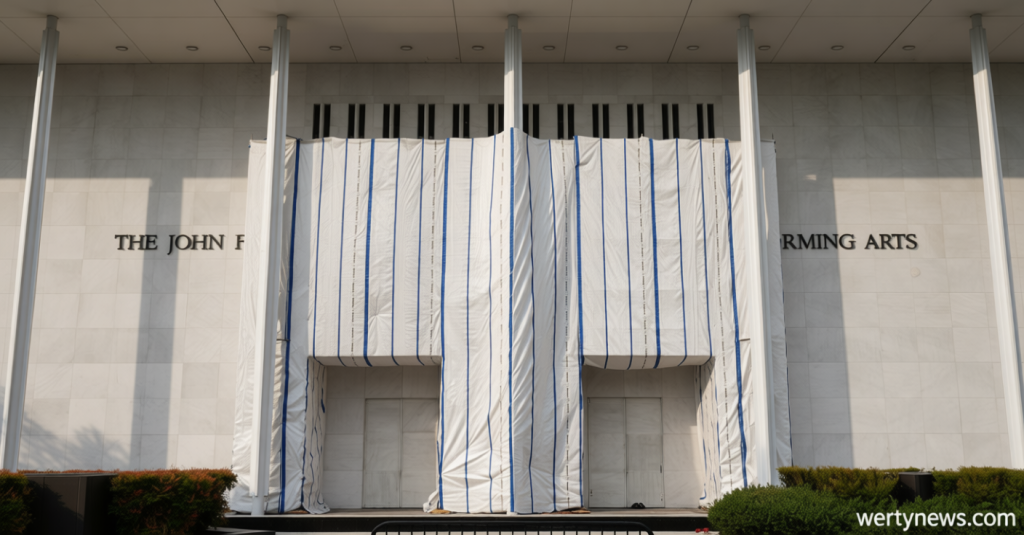
The Kennedy Center says it s still working to balance its renovation goals with the need to keep the public engaged. The facility’s name change was a key part of the Trump administration’s efforts to promote its policies, but it has become a symbolic battleground in the legal dispute. A June 13 court filing confirmed that the administration had taken down signage, updated the website, and withdrawn trademark applications featuring the joint name. However, the majority of the building’s name remains visible on the exterior, with a tarp covering the section where Trump’s name was displayed.
Public reaction to the Kennedy Center says it s still being considered for partial closure has been mixed. Some support the renovation plans, viewing them as necessary to modernize the cultural hub, while others criticize the administration for using the facility as a political tool. The court’s decision to allow a partial closure has provided a temporary reprieve, but the Kennedy Center says it s still navigating the complexities of maintaining its reputation while pursuing structural improvements. As the board prepares for its mid-July meeting, stakeholders await clarity on the next steps.
Key factors influencing the Kennedy Center’s decision include the financial viability of each closure option, public sentiment, and the potential for legal repercussions. The administration has argued that the partial closure would allow for targeted repairs without disrupting the center’s role as a national cultural institution. Meanwhile, Beatty’s team contends that the center’s current plan still fails to guarantee continuous programming, especially for community events and educational programs. The Kennedy Center says it s still committed to fulfilling its mission, but the ongoing legal challenges have created a sense of instability.
The court’s involvement has added a layer of scrutiny to the Kennedy Center’s operations. Cooper’s order to provide weekly updates on tangible efforts to restart programming has intensified pressure on the administration to demonstrate progress. As the Kennedy Center says it s still evaluating its options, the board is expected to address concerns about funding, timelines, and the impact of closures on its diverse programming. This process will also involve negotiations with stakeholders, including artists, staff, and visitors, who have voiced their opinions on the facility’s future.
Despite the legal setbacks, the Kennedy Center says it s still dedicated to its cultural mission. The center has hosted iconic performances, from musicals to political speeches, and its continued operation is vital to the nation’s artistic landscape. However, the partial closure remains a possibility if the board determines that a complete shutdown is necessary. As the July 5 deadline approaches, the Kennedy Center says it s still in the process of ensuring that its programming and services meet the court’s requirements while addressing its long-term needs.