
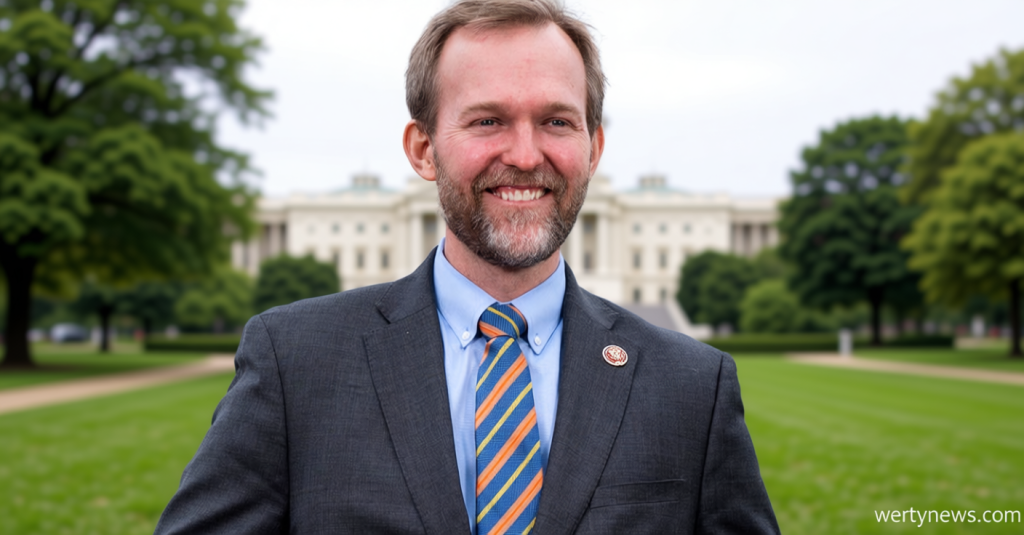
Moderate Democrat Ben McAdams Wins Utah’s New Left-Leaning Congressional District Primary
Wertynews.com – CBS News has projected that Moderate Democrat Ben McAdams emerged victorious in the Democratic primary for Utah’s newly redrawn 1st Congressional District. This decisive result signals a pivotal moment for the Democratic Party as it adapts to shifting political landscapes shaped by recent redistricting efforts. The victory not only solidifies McAdams’ position as a potential candidate for the November general election but also underscores the district’s growing alignment with progressive values, offering Democrats a strategic advantage in a state historically dominated by Republicans.
Redistricting and the New Political Map
The transformation of Utah’s 1st Congressional District is the result of a contentious redistricting process that redefined the state’s electoral boundaries. Following a legal dispute, courts mandated a redrawn map that consolidates Salt Lake City and its surrounding suburbs into a single district, effectively tilting the political balance toward Democrats. This change has positioned the district as a key battleground for the 2022 midterms, with analysts noting its potential to influence the broader House majority. The University of Virginia’s Sabato’s Crystal Ball has classified the district as a “safe pickup” for the Democratic Party, reflecting its newfound demographic profile.
Previously, the 1st District was represented by Republican Rep. Blake Moore, who had held the seat under a different boundary configuration that spanned northern Utah and included parts of Salt Lake City. With the new map, Moore now competes in Utah’s solidly Republican 2nd District, where he faces a more challenging path to reelection. The redistricting shift has sparked debates about its impact on representation, with critics arguing it prioritizes partisan gains over equitable geographic distribution.
McAdams’ Strategic Campaign and Policy Evolution
Ben McAdams, a former state representative and first-time congressional candidate in 2018, has navigated a complex political journey to secure this primary win. His approach in the 2022 race has been marked by a deliberate pivot toward more centrist positions, particularly on issues like abortion rights, to appeal to a broader electorate. This strategic adjustment was critical in a district where voters previously leaned Republican, and McAdams’ ability to bridge ideological gaps has positioned him as a unifying figure within the Democratic Party.
“Under the new boundaries, Kamala Harris would have won by 24 points,”
McAdams’ campaign highlighted in a statement, illustrating the district’s potential to become a reliable Democratic stronghold. His platform emphasizes pragmatic solutions, including support for moderate tax policies and a focus on economic growth, which aligns with the preferences of voters in the updated district. This balance between progressive ideals and pragmatic appeal has been a cornerstone of his campaign, enabling him to outperform more left-leaning rivals in a closely contested race.
A Progressive Field and Strategic Concessions
The primary race featured three progressive candidates—state Senator Nate Blouin, political newcomer Liban Mohamed, and tax attorney Michael Farrell—each vying for the Democratic nomination. Blouin, who initially led the field and received backing from independent Senator Bernie Sanders of Vermont, made strategic concessions during the campaign by retracting controversial social media comments that criticized sexual assault and Mormons. These adjustments were aimed at broadening his appeal while maintaining a progressive stance on key issues like healthcare and climate policy.
McAdams’ victory was bolstered by his ability to position himself as a candidate who could secure votes from both moderate Democrats and independent voters. His campaign focused on economic stability, education reform, and national security, framing these as priorities that resonate with the diverse interests of the district’s residents. While the progressive candidates brought energy and policy expertise, McAdams’ broader appeal and campaign messaging proved decisive in a race that tested the Democratic Party’s ability to adapt to changing voter demographics.
Implications for Democrats in Utah
McAdams’ win represents a significant milestone for Democrats in a state where they have long struggled to gain traction. The new district’s boundaries have created a more favorable environment for the party, with a larger share of urban voters and a demographic shift toward younger, more liberal populations. This change allows Democrats to challenge Republican dominance in the House, particularly in a state that has traditionally supported conservative candidates.
With the primary victory, McAdams now faces the challenge of winning the general election against a Republican opponent. His campaign will need to continue emphasizing his moderate credentials while addressing the concerns of more progressive voters. The success of this race could serve as a model for other states undergoing similar redistricting efforts, demonstrating how shifting boundaries can reshape political fortunes and influence national elections.
Broader Impact on the 2022 Midterm Elections
Utah’s 1st District is part of a larger trend in which redistricting has played a crucial role in determining electoral outcomes. Across the country, districts have been redrawn to favor either major party, often leading to increased polarization and competitive races. McAdams’ win in this district highlights how these changes can empower underdog candidates and alter the balance of power in traditionally Republican states.
The Democratic Party’s success in this race also reflects its growing capacity to organize and mobilize voters in non-traditional strongholds. With the new district’s structure, Democrats can now focus on building a coalition that includes urban voters, suburban independents, and even some moderate Republicans. This strategic flexibility is essential as the party seeks to expand its influence and secure more seats in the House, particularly in states where redistricting has created opportunities for change.