
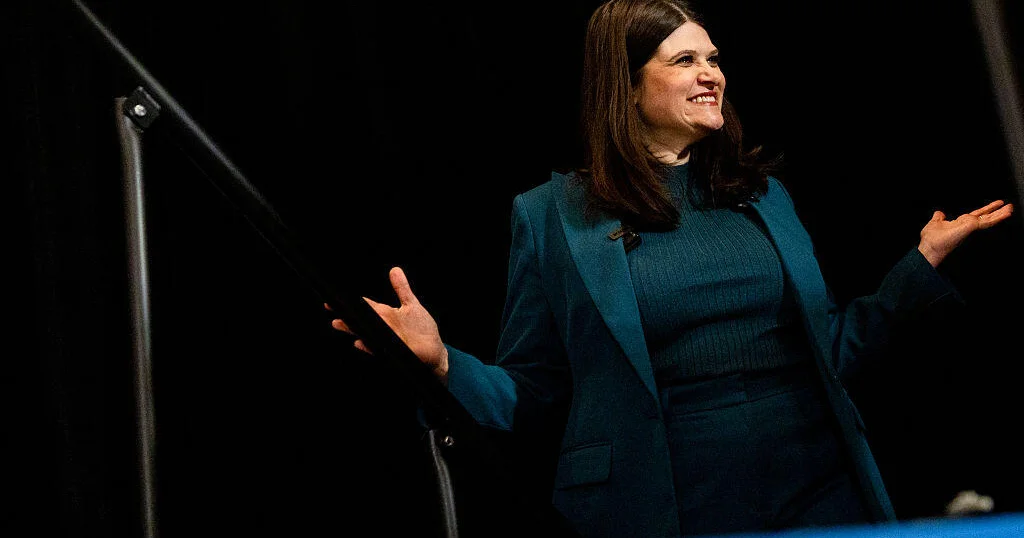
Stevens Says of El Sayed: Primary Differences Resolved Through Unity Deal
Wertynews.com – Washington — Democratic Representative Haley Stevens of Michigan has officially moved past the contentious Senate primary race, declaring that her disagreements with winner Abdul El-Sayed have been fully addressed. In a recent interview, Stevens emphasized that “differences were aired out” during the campaign, signaling her commitment to party unity as Democrats prepare for the general election. The Michigan congresswoman told “The Takeout with Major Garrett” that “everything that needed to be said in the primary was said,” adding that the Democratic Party remains a “big tent party” capable of accommodating diverse viewpoints.
Stevens acknowledged that the primary race exposed significant divisions within the Democratic Party, particularly regarding U.S. support for Israel. However, she insisted that “the time for all this negative, nasty, the disunity stuff — it’s over.” Throughout the campaign, El-Sayed had been highly critical of Stevens’ support for the pro-Israel lobby, creating one of the most visible ideological battles in the Democratic primary season. Now, with the primary concluded, Stevens is focused on moving forward with a unified message.
Stevens Maintains Democratic Zionist Identity
While El-Sayed has been vocal in his criticism of Israel’s government and the ongoing war in Gaza, Stevens continues to support sending U.S. military aid to Israel. When asked about her position, she remained steadfast in her beliefs. “I’m going to continue to hold my beliefs,” Stevens declared. “I know it’s a word sometimes that people don’t understand, but I am a Democratic Zionist.” She expressed confidence that “there is a home in the party that I’m still in for someone like me,” suggesting that the Democratic Party can accommodate both progressive and pro-Israel voices.
Despite emphasizing unity, Stevens remained somewhat evasive when asked whether she would appear alongside El-Sayed on the campaign trail as he prepares to face his Republican opponent in the November race. The Republican challenger is former Michigan Representative Mike Rogers, who has a long history in state and federal politics. Stevens noted that “Abdul’s got a big campaign to run,” and reiterated that “we did the unity deal.” She added that her primary focus remains clear: “No Rogers. No Republicans.”
Stevens concluded by emphasizing the finality of the primary contest. “Abdul and I had our primary. It’s over. It’s over,” she stated firmly, signaling that she is ready to support the party’s nominee and help defeat the Republican candidate in the fall election. Her comments reflect a desire to put past differences behind her and focus on the broader goal of winning back the Senate seat for Democrats.
What This Means for Michigan’s Senate Race
The unity deal between Stevens and El-Sayed represents an important step toward consolidating Democratic support in Michigan. As the state heads into the general election, both candidates will need to work together to mobilize voters and present a cohesive message to the electorate. Stevens’ willingness to publicly endorse the unity process suggests that she will play an active role in supporting El-Sayed’s campaign, even if she maintains her own distinct positions on key issues like Israel policy.
For voters in Michigan, the resolution of the primary provides clarity on the Democratic candidate’s platform and leadership style. El-Sayed’s progressive stance on foreign policy will be balanced by Stevens’ continued support for military aid to Israel, creating a nuanced position that appeals to multiple constituencies within the party.
Frequently Asked Questions About Stevens and El-Sayed Unity
What is the unity deal between Stevens and El-Sayed?
The unity deal refers to the agreement reached after the Democratic primary in Michigan, where Stevens acknowledged El-Sayed as the party’s nominee and committed to supporting his campaign against Republican Mike Rogers in the November general election.
What are the main differences between Stevens and El-Sayed?
The primary difference centers on their positions regarding Israel. El-Sayed has been highly critical of Israel’s government and the war in Gaza, while Stevens continues to support sending U.S. military aid to Israel and identifies as a Democratic Zionist.
Will Stevens appear with El-Sayed on the campaign trail?
While Stevens has not definitively confirmed her appearance schedule, she has stated that “we did the unity deal” and emphasized that her focus is on defeating Mike Rogers. She remains open to supporting El-Sayed’s campaign in various capacities.
Who is Mike Rogers and what is his political background?
Mike Rogers is a former Michigan Representative who is running as the Republican candidate for the U.S. Senate. He has extensive experience in both state and federal politics, having served in Congress for multiple terms before returning to Michigan politics.
When is the Michigan Senate election?
The Michigan Senate election is scheduled for November 2024, when voters will choose between Democratic nominee Abdul El-Sayed and Republican candidate Mike Rogers for the U.S. Senate seat.