
Supreme Court Rules Rastafarian Ex-Inmate Can’t Sue Prison Officials for Shaving Dreadlocks
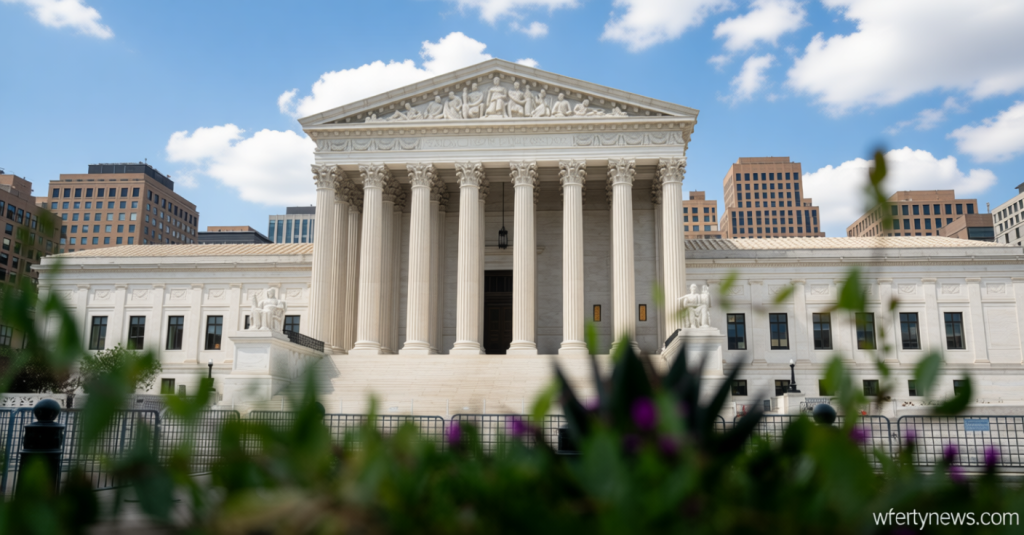
Wertynews.com – The U.S. Supreme Court on Tuesday denied a former Louisiana inmate’s attempt to pursue legal action against state prison staff after they cut his dreadlocks, citing a violation of his religious practices. The decision came down 6-3 along ideological lines, with the three liberal justices expressing disagreement in their dissent.
Religious Rights and Legal Challenge
Damon Landor, a committed Rastafarian, sought to sue the Louisiana Department of Corrections and Public Safety for infringing on his religious rights under the Religious Land Use and Institutionalized Persons Act (RLUIPA). The act aims to protect the religious practices of individuals in institutional settings, but the court ruled it does not grant direct liability against individual officers for damages.
“Under the Spending Clause, Congress lacks the power to enforce RLUIPA against prison staff directly. It must rely on consent, and since the officers never agreed to be sued in this manner, Landor’s case cannot move forward,” wrote Justice Neil Gorsuch in the majority opinion.
The ruling reinforces a 2009 decision from the 5th Circuit Court of Appeals, which established that RLUIPA does not allow lawsuits against prison officials in their personal capacities. This decision leaves prisoners like Landor without recourse if their religious practices are breached, according to Justice Ketanji Brown Jackson’s dissent.
Case Background and Context
The case, Landor v. Louisiana Department of Corrections and Public Safety, originated in 2020 when Landor was nearing the end of his five-month prison term. As a Rastafarian, he had observed the Nazarite Vow, a religious practice involving letting hair grow, for nearly two decades. For the first four months of his incarceration, two facilities allowed his hair to remain long or covered under a “rastacap.” However, this changed when he was transferred to the Raymond Laborde Correctional Center for the final three weeks of his sentence.
At the new facility, Landor informed an intake officer of his religious beliefs and provided evidence of a 2017 ruling that had previously found Louisiana’s hair-cutting policy unconstitutional under RLUIPA. Despite this, prison staff discarded the ruling, handcuffed him, and shaved his head, according to his legal team.
“Encroachments on prisoners’ statutory rights will occur frequently, as state officials have little incentive to follow federal law—even when it’s handed to them on a piece of paper,” Jackson warned in her dissent, criticizing the majority’s reliance on a contract analogy.
Louisiana Attorney General Liz Murrill supported the ruling, stating that the state has robust protections for religious liberty. She noted that ten federal appellate courts had already determined RLUIPA does not permit damages against individual prison staff. “We condemn the conduct alleged in this case and have taken steps to prevent similar issues,” she added.