
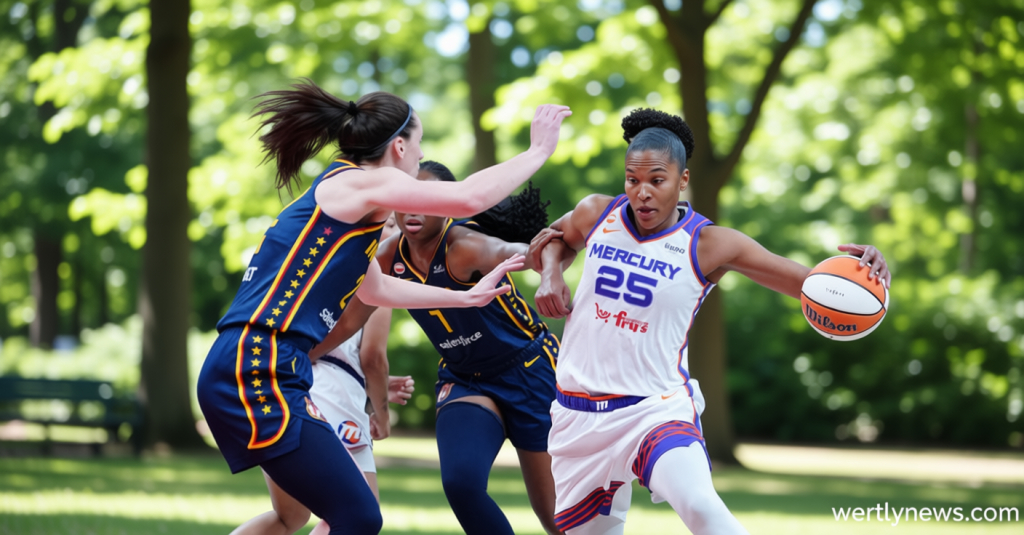
WNBA Suspends Alyssa Thomas for Hitting Caitlin Clark in the Throat
Wertynews.com – The WNBA has taken decisive action by suspending Phoenix Mercury guard Alyssa Thomas for a controversial hit on Indiana Fever player Caitlin Clark during a high-stakes matchup. The suspension, which entails a one-game ban, was announced after the league office reviewed the incident, classifying the contact as a “flagrant foul” due to its severity. The altercation occurred in the second quarter, with 6 minutes and 52 seconds remaining, when Thomas delivered a powerful punch to Clark’s throat, leaving the latter visibly shaken. This decision underscores the league’s commitment to player safety and highlights the ongoing debate about how aggressively referees should call fouls in fast-paced action.
The Impact of the No-Call
The absence of a foul call during the incident sparked immediate reactions from fans, analysts, and team officials. Indiana Fever coach Stephanie White was vocal about the lack of intervention, calling the no-call “egregious” and emphasizing its effect on Clark’s performance. “When a player is hit in the throat like that, it’s not just a single moment—it’s a clear violation of the game’s rules,” White stated during a post-game press conference. Her frustration stemmed from the fact that the contact not only disrupted Clark’s rhythm but also raised questions about the officiating decisions that could influence the outcome of close games. The suspension was a direct response to the league office’s determination that the hit was intentional and dangerous.
“Player safety should be paramount in our league,” said Indiana Fever President Kelly Krauskopf in a social media statement. “We appreciate the WNBA’s review of last night’s incident and the action taken. Right now our focus is on Caitlin and our entire team as we prepare for Saturday.”
Patterns of Fouls Targeting Clark
This incident marks the second time the WNBA has upgraded a foul directed at Caitlin Clark, signaling a growing trend of scrutiny toward players who have been targeted in similar situations. Last season, a technical foul on Marina Mabrey against Indiana was reclassified as a Flagrant 2 after a review of the play, setting a precedent for how the league handles aggressive actions. Thomas’s suspension follows a similar pattern, though the contact in this case was deemed more severe due to the direct hit on Clark’s throat. The league’s decision to penalize Thomas reflects its emphasis on protecting players from harmful physical contact, especially in critical moments of the game.
Clark’s history of being targeted by opposing players has become a focal point for discussions about fair play. During the same game, she was also fouled while attempting a three-point shot, which resulted in a minor injury. Though the foul was not upgraded to a flagrant, the incident highlighted the frequency with which Clark has been subjected to hard fouls, including a fifth technical foul of the season in a previous matchup. These repeated challenges have led to calls for stricter enforcement of rules, particularly regarding physical contact in the perimeter.
Context of Clark’s Injuries and the Game’s Outcome
Caitlin Clark’s injury history adds another layer of complexity to this incident. She has previously dealt with back issues that forced her to miss a game against the Portland Fire in May, and last season saw her play only 13 games due to lower-body ailments. The recent hit on her throat, combined with earlier fouls, raises concerns about the cumulative effect on her health and performance. Despite the setback, Clark managed to contribute 19 points and eight assists in 20 minutes of play, showcasing her resilience and skill.
The Phoenix Mercury ultimately secured a 111-109 victory, but the game’s outcome was overshadowed by the controversy surrounding the hit. Fans and commentators debated the severity of the foul, with some arguing that it was a necessary move to maintain competitive balance, while others criticized it as an overreaction. The WNBA’s decision to suspend Thomas for the hit has also sparked discussions about the role of referees in upholding the integrity of the game and ensuring that players are not unfairly targeted.
League’s Policy and Future Implications
The WNBA’s suspension of Alyssa Thomas for hitting Caitlin Clark in the throat aligns with the league’s broader policy on flagrant fouls and player safety. Flagrant fouls, which can result in technical fouls or even ejection, are designed to penalize excessive contact that endangers an opponent. The league office’s emphasis on non-basketball acts of contact highlights its dedication to maintaining a fair and injury-free environment for all athletes. This ruling may set a precedent for future incidents, particularly in high-intensity matchups where physicality is a key factor.
As the season progresses, this suspension could influence how players and coaches approach the game. Alyssa Thomas, known for her aggressive style, may need to adjust her techniques to avoid similar penalties. Meanwhile, Caitlin Clark’s team will likely advocate for more leniency in calls targeting her, given her track record of overcoming injuries. The incident also serves as a reminder of the importance of consistent officiating in preserving the league’s reputation for fairness and safety. With the WNBA aiming to balance competitiveness and protection, the suspension of Thomas is a strategic move to reinforce these priorities.