
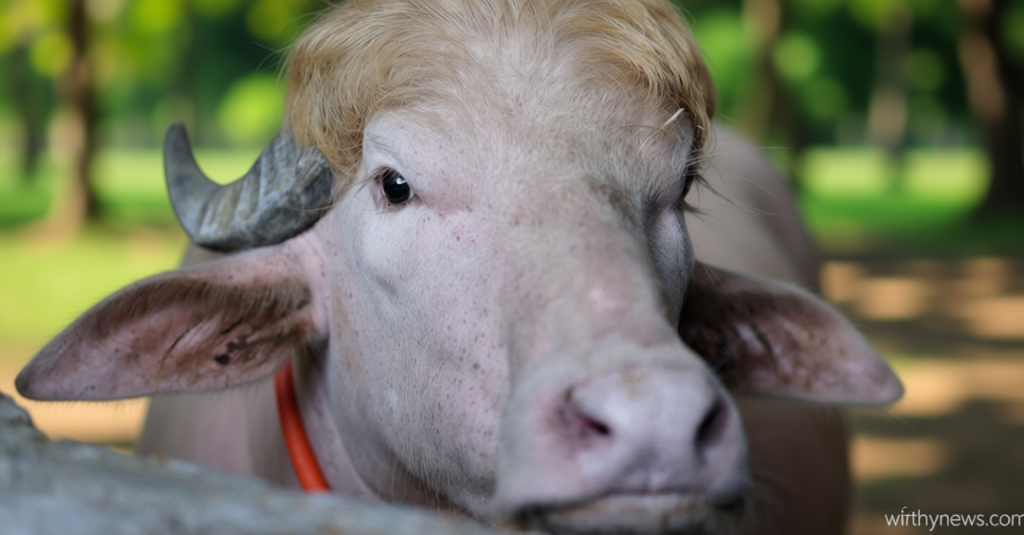
Albino Buffalo ‘Donald Trump’ Avoids Sacrifice During Bangladesh Eid al-Adha Festival
Wertynews.com – During the recent Eid al-Adha celebrations in Bangladesh, a unique twist emerged when an albino buffalo, affectionately nicknamed “Donald Trump” for its distinctive hairdo, was spared from ritual sacrifice. The animal’s striking appearance—highlighted by a golden tuft of hair—captured global attention, leading to its rescue from the traditional ritual that had been planned for it. This unexpected turn of events underscores how modern media can influence age-old customs, transforming a routine ceremony into a viral spectacle.
Eid al-Adha, observed by Muslims worldwide, is a time of gratitude and communal reflection, often marked by the sacrifice of animals such as goats, sheep, and cows. In Bangladesh, where livestock plays a significant role in cultural and religious practices, the buffalo was initially destined for this tradition. However, the animal’s unusual look—reminiscent of the U.S. president’s signature hairstyle—became a focal point of public fascination, altering its fate.
The buffalo, weighing approximately 1,500 pounds, had already gained a following on social media weeks before the festival. Its owner, Ziauddin Mridha, noted that the creature’s gentle demeanor and meticulous grooming routines made it a standout. “It’s unusually calm and requires constant care,” Mridha remarked, describing the buffalo’s daily routines. Yet, it was the viral spread of photos showing the animal’s golden locks, neatly combed and framed, that prompted a last-minute intervention by authorities.
“The animal will be relocated to the national zoo in Dhaka,” said Bangladesh’s Home Minister Salahuddin Ahmed, who ordered its protection. “We’ve decided to spare it due to the unusual level of public interest and security concerns.”
According to Reuters, the government cited both public sentiment and potential security threats as reasons for the buffalo’s rescue. The individual who had purchased the animal for sacrifice was refunded, and the decision was made to move the creature to the Dhaka National Zoo. This action not only preserved the buffalo’s life but also sparked discussions about the intersection of tradition and contemporary culture in the country.
The buffalo’s nickname, “Donald Trump,” became a symbol of the growing influence of social media in shaping public perception. Its image, shared widely across platforms, resonated with people who saw a parallel between the animal’s appearance and the president’s iconic hairstyle. The trend gained momentum, with visitors flocking to the farm in Narayanganj, where the buffalo resides, to witness the phenomenon firsthand. “It’s become a local celebrity,” said a visitor who described the scene as “a blend of tradition and curiosity.”
Despite its newfound status, the buffalo remains a subject of admiration rather than controversy. Mridha emphasized that the animal’s unique features are not just aesthetic but also a testament to its rarity. Albino animals are uncommon in the wild, and their presence in domestic settings often draws attention. “Its golden hair is a natural trait, but it’s the way it’s styled that makes it stand out,” he explained, adding that the buffalo’s care routine involves regular feeding and grooming to maintain its appearance.
The decision to spare the buffalo reflects a broader trend of how social media can elevate certain individuals—human or animal—into cultural icons. Similar cases have occurred in other parts of the world, where animals have been named after public figures due to striking physical resemblances. A decade ago, a golden pheasant in China named “Little Red” became a viral sensation for its pouf-like yellow feathers, which mirrored Donald Trump’s signature look. The pheasant’s popularity led to a surge in visitors to its zoo, though it also disrupted the animal’s natural habitat.
While the buffalo’s survival is a win for animal advocates, it raises questions about the role of public opinion in shaping religious practices. In some regions, animal sacrifices during Eid al-Adha are seen as a communal act of devotion, with the meat distributed to the less fortunate. However, the case of the “Donald Trump” buffalo highlights how modern narratives can intersect with tradition, sometimes altering its course. The home ministry’s intervention, though timely, also demonstrates the government’s awareness of its role in balancing cultural values with public sentiment.
Experts have noted that such incidents are rare but not unprecedented. The buffalo’s golden hair, a natural mutation, has made it a living symbol of both national pride and global internet culture. Its presence in the zoo now serves as a bridge between the past and present, allowing people to engage with the animal in a new context. “It’s a reminder of how easily traditions can be reinterpreted in the digital age,” said a cultural analyst, who added that the buffalo’s story might inspire future conversations about the ethics of animal sacrifice and the power of visual symbolism.
The Narayanganj farm, where the buffalo was originally raised, has become a site of both celebration and reflection. While the animal’s survival is a triumph for its caretakers, it also prompts discussions about the welfare of livestock in religious contexts. Mridha, who has been tending to the buffalo for years, expressed pride in its uniqueness but also noted the challenges of maintaining its appearance. “It’s a labor of love,” he said, highlighting the dedication required to keep the animal in its striking condition.
As the Eid al-Adha festivities continue, the “Donald Trump” buffalo stands as a symbol of how cultural and political figures can transcend their human origins to become part of a larger narrative. Its story, while seemingly trivial at first glance, encapsulates the complex relationship between tradition, identity, and the modern world. Whether as a cultural icon or a rare albino specimen, the buffalo’s journey from ritual sacrifice to public display illustrates the evolving nature of societal values in an era of global connectivity.
The zoo in Dhaka, which now houses the buffalo, is a hub for conservation and education. With over 2,000 animals representing 191 species, the facility offers visitors a glimpse into the region’s biodiversity. The addition of the buffalo has generated additional interest, drawing comparisons between its golden tuft and the U.S. president’s hair, further cementing its place in the public imagination. For now, the animal will remain a part of the zoo’s collection, its story serving as a reminder of the unexpected ways in which tradition and modernity can collide.
As the world continues to grapple with the intersection of culture and technology, the “Donald Trump” buffalo offers a lighthearted yet thought-provoking example. Its survival is not just a matter of animal welfare but also a reflection of how digital media can amplify the significance of seemingly mundane aspects of life. Whether the buffalo’s golden hair is a natural wonder or a political statement, its journey from the fields of Narayanganj to the zoo in Dhaka highlights the evolving role of public perception in shaping religious and cultural practices.