
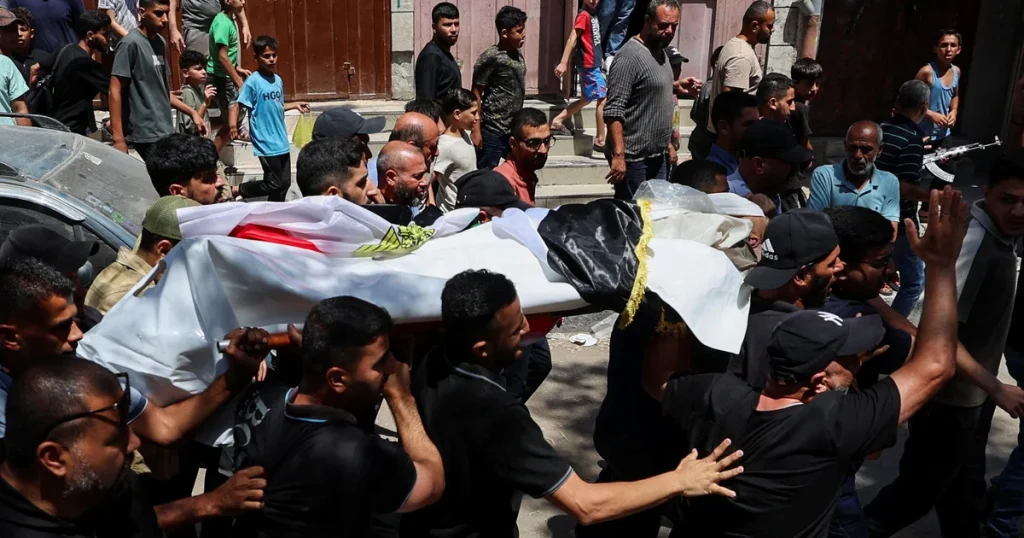
Gaza Aid Worker Behind World Cup Screenings Killed in Israeli Strike, Hospital Boss Confirms
Tragic Loss of Gaza Aid Worker During World Cup Event
Wertynews.com – A Palestinian aid worker who organized World Cup screenings for Gazans was tragically killed in an Israeli missile strike, according to Dr. Mohamed Abu Selmiya, the head of Al-Shifa Hospital in Gaza City. The incident occurred just before a planned public gathering to watch the Egypt-Argentina match on Tuesday evening, as reported by The Associated Press. The attack targeted a vehicle in the city around dusk, resulting in the deaths of three individuals, including the driver, Ahmed Daghmush, and two young boys, Hamza al-Deri and Fari.
The Gaza aid worker behind World Cup screenings, identified as Mohamed Al-Wahidi, played a pivotal role in bringing together communities across Gaza to share the excitement of international football matches. As the public relations lead for the Egyptian Relief Committee, an organization established by Egyptian President Abdel Fattah El-Sisi, Al-Wahidi ensured that screenings in Gaza City and other areas became a symbol of hope and unity during the ongoing conflict. His work allowed families to gather amidst the rubble, fostering a sense of normalcy and collective joy despite the surrounding devastation.
“Mohamed Al-Wahidi was a leading figure in community reconciliation and a respected national and social personality, known for his constant efforts to resolve disputes, serve his people, and strengthen the values of love, tolerance, and brotherhood within Palestinian society,” stated the Egyptian Relief Committee in a Thursday release. His dedication to organizing these screenings not only entertained but also provided a platform for dialogue and solidarity among Palestinians, particularly during a time of heightened tensions.
Israel Defense Forces Address World Cup-Related Casualties
The Israel Defense Forces (IDF) acknowledged the strike that killed the Gaza aid worker behind World Cup screenings, stating it was aimed at a Hamas militant in the northern Gaza Strip. An IDF spokesperson told CBS News that the attack targeted a vehicle believed to be associated with militant activity. While the strike was intended to disrupt Hamas operations, the organization confirmed that civilians were also caught in the blast, including the aid worker and two children. The IDF expressed regret over the casualties and emphasized their efforts to minimize harm to non-combatants.
Despite the tragic incident, the World Cup match between Egypt and Argentina proceeded as scheduled, with many Palestinians attending the screening to support their national team. The event highlighted the resilience of the community, as people gathered in makeshift venues to experience the excitement of the tournament, even in the face of ongoing violence. The death of the Gaza aid worker behind World Cup screenings has sparked renewed discussions about the role of cultural events in maintaining morale and social cohesion during the conflict.
International Football as a Unifying Force in Gaza
For many in Gaza, the World Cup screenings organized by the Gaza aid worker behind World Cup screenings were more than just entertainment—they were a rare moment of collective celebration and distraction from the hardships of daily life. These gatherings, often held in crowded spaces or atop damaged buildings, became a symbol of shared identity and hope, with families and friends coming together to cheer for their teams. The impact of such events extends beyond sports, offering a temporary respite from the realities of the war and reinforcing a sense of unity among Palestinians.
Al-Wahidi’s efforts to coordinate these screenings were part of a broader initiative by the Egyptian Relief Committee to use cultural and sporting activities as tools for humanitarian outreach. The committee has been instrumental in distributing aid and organizing community events, which have played a critical role in sustaining morale. His passing has left a significant void, as the Gaza aid worker behind World Cup screenings was not only a facilitator of these events but also a bridge between the Palestinian people and the global audience of the World Cup.
Local health officials reported that since the October ceasefire, Israeli attacks have resulted in the deaths of at least 1,084 people, with nine casualties recorded on Wednesday alone. The strike that killed the Gaza aid worker behind World Cup screenings underscores the challenges of conducting humanitarian work in a conflict zone, where aid efforts can be both a lifeline and a target. As the World Cup continues, the question remains whether such events can persist in Gaza despite the risks posed by ongoing military operations.