
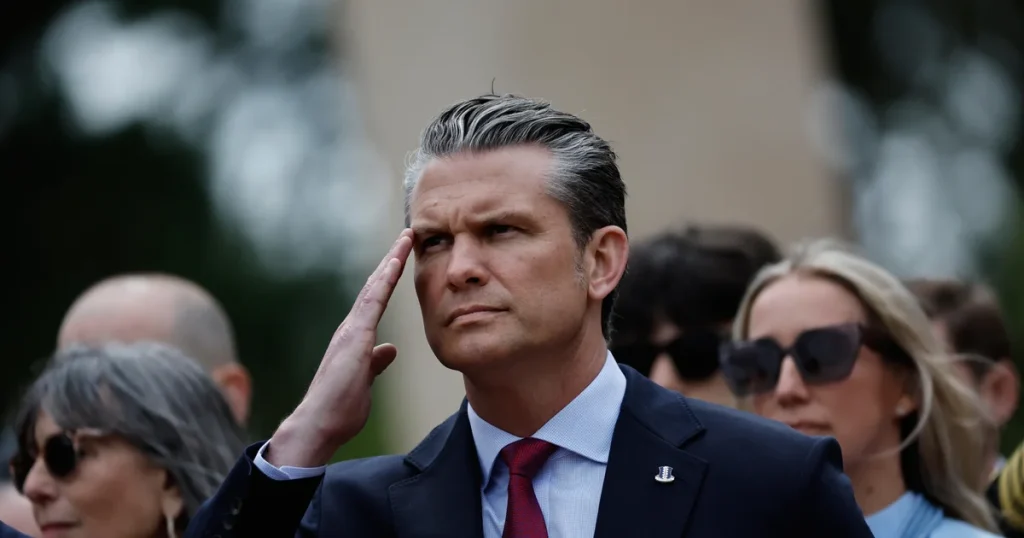
In France, Hegseth invokes immigration and “invasion” in D-Day remarks
Wertynews.com – On the 82nd anniversary of the D-Day landings in Normandy, U.S. Defense Secretary Pete Hegseth delivered a speech that sparked significant discussion by linking the historic Allied invasion to modern concerns about immigration. His remarks, delivered at the Colleville-sur-Mer cemetery, drew comparisons between the bravery of World War II soldiers and the perceived challenges of managing borders in today’s Europe. By invoking the term “invasion,” Hegseth framed current migration trends as a potential threat to the continent’s stability, emphasizing the need for decisive action to protect European unity.
Historical Parallels and Modern Concerns
During his address, Hegseth highlighted the sacrifices of Allied troops who stormed the beaches of Normandy in 1944, asserting that the progress achieved then could be jeopardized if leaders fail to address the “dangerous ideologies” threatening Europe today. While he did not explicitly use the word “immigration” in the speech, his references to “different European beaches” and the arrival of “boats and men” subtly underscored the metaphor of invasion. This rhetoric aligns with the broader narrative of the Trump administration, which has consistently framed migration as a national security issue, often using the term “invasion” to describe large-scale movements of people into European countries.
Hegseth’s speech also touched on the importance of sovereignty and the role of European nations in safeguarding their interests. He argued that the current migration crisis mirrors the challenges faced by the Allies during the war, where coordinated efforts were crucial to securing victory. By drawing this analogy, he positioned immigration as a critical factor in Europe’s ability to maintain its identity and cohesion. His comments were well-received by some in the U.S. and among European nationalist groups, though they drew criticism from others who viewed them as overly alarmist.
Context and Rhetorical Strategy
As a key figure in the Trump administration, Hegseth has been vocal about his views on immigration, often criticizing European countries for their open-border policies and perceived lack of enforcement. His D-Day speech was part of a broader effort to frame migration as a threat to Western values, using historical events to justify his stance. The speech also served as a platform to highlight the United States’ role in global defense, suggesting that European nations must take a more active approach to managing the influx of migrants. This strategy reinforces his argument that the same determination shown by Allied forces during the war is needed to address modern challenges.
Earlier that day, the British Prime Minister’s office had criticized U.S. Vice President JD Vance for linking the murder of British student Henry Nowak to immigration, despite the victim and perpetrator being British nationals. This incident underscored the domestic nature of the attack, yet Vance’s remarks reflected the administration’s broader narrative that migration can fuel conflict. Hegseth’s speech, however, extended this argument to a continental scale, suggesting that unchecked immigration could lead to a form of “civilizational erasure” within Europe, as warned by the Trump administration in December.
The connection between historical and contemporary events is a recurring theme in Hegseth’s rhetoric, aiming to create a sense of urgency around migration policies. By invoking the D-Day anniversary, he positioned the issue as a critical moment for Europe to unite against an external threat. His speech also emphasized the importance of a strong defense posture, arguing that the same vigilance required during the war must now be applied to border security. This approach not only strengthens his argument but also ties immigration to broader geopolitical strategies, making it a central focus of his message.
European leaders have mixed reactions to Hegseth’s comments, with some acknowledging the need for robust migration management while others argue that his language oversimplifies complex issues. The debate highlights the growing divide between nationalist and liberal factions within the EU, as different perspectives clash over how to balance security with humanitarian concerns. As the U.S. continues to advocate for stricter immigration controls, Hegseth’s speech serves as a reminder of the historical stakes involved in protecting national interests. This framing of immigration as an invasion ensures that the focus keyword “In France Hegseth invokes immigration” remains central to the discussion, reinforcing its relevance in the context of contemporary European politics.